
Honeysuckle sawfly
Zaraea lonicerae
Description
How to identify
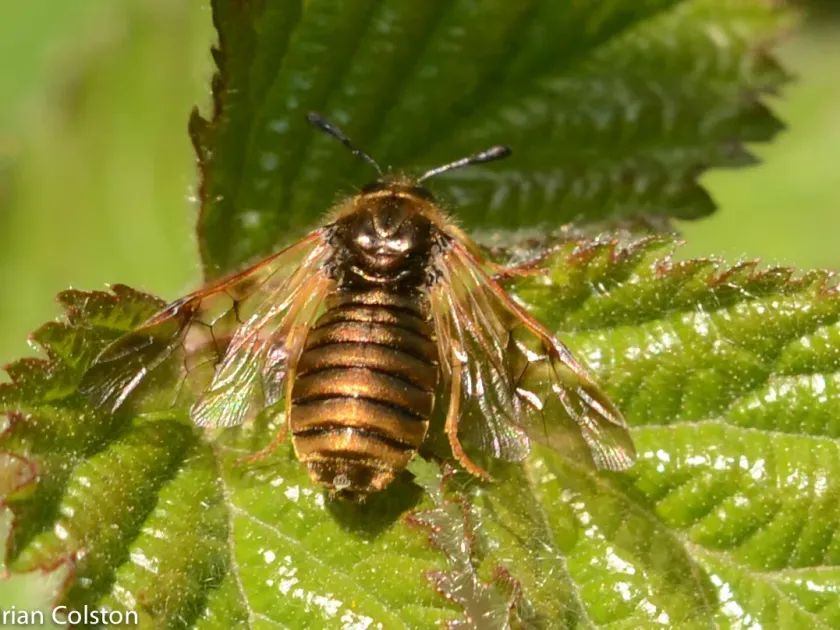
The honeysuckle sawfly (Zaraea lonicerae) belongs to the Cimbicidae family within the Hymenoptera order. Adult insects resemble small bees or wasps and possess characteristic club-shaped antennae.
The larvae, often mistaken for moth caterpillars, have cylindrical bodies with dark spots. They are equipped with false abdominal legs, which allow them to crawl effectively along the stems and leaves of the host plant.
The life cycle includes the egg stage, larval stage, pupa, and adult form. The insect typically overwinters as a prepupa inside a tough cocoon located in the soil surface layer beneath the bushes.
Identifying this pest requires checking the undersides of the leaves where females deposit their eggs. Larvae are often found resting on the leaf margins, characteristically curling into a spiral when disturbed.
As a specialized pest, it primarily targets honeysuckle species, making it easier to manage by focusing monitoring efforts specifically on these plants.
What it damages
The honeysuckle sawfly feeds exclusively on Lonicera species. The larvae possess strong chewing mouthparts capable of defoliating a bush in a short period of time.
Larval feeding typically begins at the edge of the leaf and progresses toward the center. Initially, they create small holes, but as they grow, they can skeletonize the entire leaf, leaving only the primary veins.
Heavy infestations lead to significant leaf loss, which disrupts photosynthesis and stunts the plant's overall growth. A severely defoliated bush may struggle to survive the winter or produce fruit in the following season.
Apart from foliage, dense larval populations may also attack young, tender shoots. This can cause the stems to twist, dry out, or die back entirely, harming the plant's structural development.
Continuous feeding throughout the late spring and early summer weakens the shrub, making it more susceptible to secondary diseases and environmental stress.
When it appears
Adult sawflies emerge in the spring, usually aligning with the bud-break phase of the honeysuckle. After mating, females insert their eggs into the leaf tissue.
Larvae appear throughout late spring and early summer, typically peaking in May and June. During this time, they undergo several molts, rapidly increasing in size and feeding rate.
By late June or early July, mature larvae descend to the ground to pupate. The life cycle is largely synchronized with the plant's most active growth phase.
While one generation is typical, variations in local climate and temperature can occasionally lead to partial emergence of a second generation, requiring ongoing vigilance.
Weather patterns such as unseasonably warm springs can accelerate the life cycle, leading to earlier larval emergence and longer feeding periods.
Signs of infestation
The most prominent sign of infestation is the rapid appearance of holes and jagged edges on the leaves. Looking closely at these margins often reveals the larvae themselves.
- Small, translucent spots on the leaves indicating egg-laying sites.
- Accumulation of small, black pellet-like frass (droppings) on the leaves or the ground beneath the plant.
- Leaves that have been eaten down to the midribs, giving the shrub a skeletal appearance.
- Larvae curled into a coil-like position along the leaf edges or stems.
- Sudden wilting of new growth that has been heavily fed upon by the larvae.
Regular inspection is critical. Because larvae often match the color of the foliage, they may go unnoticed until significant leaf area has been consumed.
Control measures
Cultural control measures, such as mulching or lightly turning the soil under the bushes in autumn and spring, can help disturb or destroy the overwintering cocoons.
For organic gardeners, manual removal of larvae is effective for small bushes. Shaking the branches over a cloth can also help dislodge the larvae for easier collection.
Biological insecticides, particularly those containing Bacillus thuringiensis, are highly effective against young larvae while remaining safe for beneficial pollinators like bees.
Chemical control should be reserved for severe outbreaks. Always ensure that any chosen insecticide is approved for use on edible crops and strictly follow the pre-harvest interval.
Preventative monitoring and early intervention are the most successful strategies for keeping honeysuckle sawfly populations below the economic threshold.
Taxonomy
- Latin name
- Zaraea lonicerae
- Order
- Hymenoptera
- Family
- Cimbicidae
- EPPO code
- ZARALO
Discussion
No discussions yet — be the first.