
American birch sawfly
Cimbex americana
Description
How to identify
The American birch sawfly (Cimbex americana) belongs to the Cimbicidae family within the order Hymenoptera. Adults are large, robust insects often mistaken for hornets due to their size, reaching up to 25 mm in length.
Their bodies are generally black, brown, or yellowish, sometimes featuring pale spots on the abdomen. A distinct characteristic is the club-shaped antenna, which is a signature feature of this family.
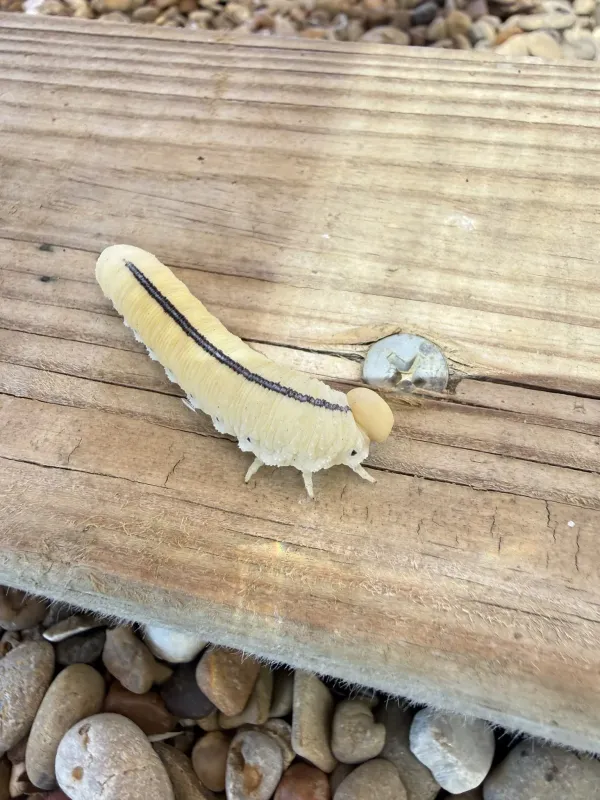
Larvae resemble caterpillars and possess 22 legs, with a greenish body marked by a darker longitudinal stripe down the back. Mature larvae can reach lengths of 50 mm.
Females deposit their eggs directly into the leaf tissue. After hatching, the larvae undergo several growth stages, feeding voraciously on the foliage of the host tree.
Pupation occurs in tough, parchment-like cocoons, which are typically constructed by the larvae in the soil or leaf litter beneath the host tree for winter dormancy.
What it damages
The primary hosts for this pest are birch trees (Betula), though they are also known to feed on willows (Salix), poplars (Populus), and occasionally alder.
The larvae are the primary agents of damage, capable of consuming vast amounts of foliage and causing complete defoliation of branches when present in large numbers.
Heavy defoliation significantly impairs the tree's photosynthetic capability, leading to reduced vitality and weakened overall structure.
Repeated annual attacks can lead to stunted growth, twig dieback, and increased susceptibility to other pests or diseases due to the tree's diminished resources.
In ornamental landscaping and forest nurseries, the aesthetic damage caused by leaf skeletonization is considered a major concern for plant management.
When it appears
Adult sawflies emerge from the soil in late spring or early summer, timed closely with the development of new leaves on the host trees.
The larval feeding stage lasts throughout the summer months, which is the period of peak metabolic activity for the insects.
The species typically completes one generation per year, concentrating its impact on the host plants within a single growing season.
As autumn approaches, the mature larvae descend to the soil and build their protective cocoons, where they will overwinter until the next spring.
The population density is heavily influenced by overwintering conditions, as extremely cold winters without snow cover can cause high mortality in pupae.
Signs of infestation
The first indicator of an infestation is the presence of small, circular or oval oviposition scars on the leaf surface, created by the female while laying eggs.
The most recognizable sign is the presence of the larvae themselves, which are often found resting on leaves and display a curling motion when disturbed.
Large amounts of frass (excrement) accumulating on the lower leaves or the ground beneath the tree provide clear evidence of active feeding.
Noticeable holes in leaves and eventually the complete removal of leaf blades leaving only the main veins signify an advanced stage of infestation.
Early yellowing and premature leaf drop in mid-summer are symptomatic of heavy stress caused by the feeding larvae to the tree canopy.
Control measures
Hand-picking and mechanical removal of larvae are highly effective on small trees and serve as a non-toxic control strategy for homeowners.
For large-scale infestations, the application of registered insecticides during the peak larval feeding phase can prevent significant structural damage.
Biological control agents, such as microbial insecticides containing Bacillus thuringiensis, offer a targeted approach that minimizes harm to beneficial insects.
Cultivating the soil around the base of the tree in late autumn can help expose and destroy overwintering cocoons, effectively reducing the next generation.
Maintaining tree vigor through consistent watering and fertilization is a critical cultural practice that allows trees to better tolerate and recover from damage.
Taxonomy
- Latin name
- Cimbex americana
- Order
- Hymenoptera
- Family
- Cimbicidae
- EPPO code
- CIMBAM
Discussion
No discussions yet — be the first.