
Honeysuckle sawfly
Zaraea inflata
Description
How to identify
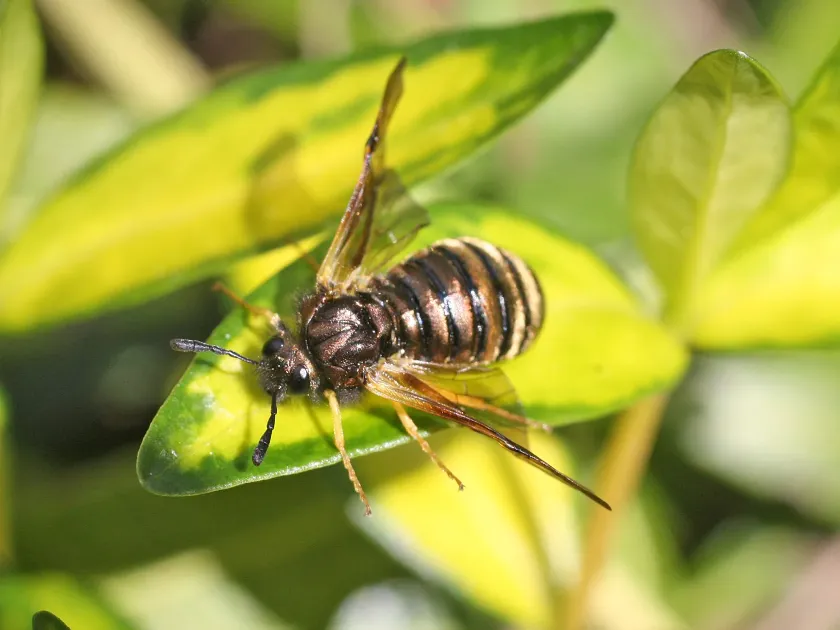
The honeysuckle sawfly (Zaraea inflata) is a member of the Cimbicidae family within the order Hymenoptera. Adult insects resemble small wasps or bees, often featuring clubbed antennae which serve as a distinctive morphological trait for this species.
Adult sawflies typically have dark bodies, sometimes exhibiting a metallic sheen, and measure between 10 and 15 millimeters in length. Their larvae are caterpillar-like but can be distinguished by their anatomy, possessing a greater number of abdominal prolegs than true moth caterpillars.
Larval coloration ranges from pale green to yellowish, frequently marked with dark spots or longitudinal stripes. During their early instars, these larvae are gregarious and often cluster on the foliage, making them easier to spot during a morning inspection of the bushes.
Pupation occurs within dense, parchment-like cocoons. These cocoons can be found attached to plant stems or hidden within the leaf litter and soil surface, which allows the insect to overwinter effectively across different types of garden environments.
The lifecycle consists of one, or occasionally two, generations per year depending on the regional climate. Understanding this lifecycle is critical for timing control measures to prevent massive population outbreaks that can occur if the first generation is left unchecked.
What it damages
The primary hosts for Zaraea inflata are honeysuckle shrubs (Lonicera species), both edible and ornamental. The larvae possess strong, mandibulate mouthparts designed for efficient consumption of leaf tissue, posing a significant risk to the plant's health.
As the larvae feed, they consume the leaves aggressively, often progressing from small holes to complete skeletonization. By leaving only the main veins, they severely impair the plant's ability to perform photosynthesis and produce energy.
Severe infestations can lead to complete defoliation of the honeysuckle bush within a matter of weeks. This rapid loss of foliage forces the plant to exhaust its reserves to produce new leaves, which weakens the root system and reduces overall vigor.
The damage directly impacts the plant's yield of berries and its capacity for floral bud development in subsequent seasons. A repeatedly defoliated plant is significantly more susceptible to environmental stress, secondary infections, and drought.
From an aesthetic perspective, the skeletonized appearance and premature leaf drop caused by the sawfly ruin the ornamental value of honeysuckle hedges and garden specimens, necessitating prompt management upon the first signs of activity.
When it appears
Adult sawflies emerge in early spring, typically during the flowering period of honeysuckle or shortly thereafter. This synchronization allows the emerging insects to locate fresh, succulent foliage immediately for oviposition and larval feeding.
Females deposit eggs by inserting them into the edges of the leaves through small incisions. The eggs are covered in a protective substance, which helps them survive fluctuations in spring temperatures and humidity levels until the larvae hatch.
Larval emergence usually occurs in late spring (May to early June), which is the most critical period for garden monitoring. The larvae undergo several molts as they grow rapidly, causing increasingly visible damage to the plant canopy.
By mid-summer, most larvae complete their development and enter the pupal stage, moving into the soil or sheltered areas of the plant. A second, smaller generation might appear in warmer regions, though the spring peak is usually the most damaging.
Effective control strategies must target the larval stage before they reach their final instar. Gardeners should prioritize inspections during late spring to identify and remove any clusters of larvae before they disperse and cause extensive defoliation.
Signs of infestation
Early warning signs include small, irregular holes on the leaf blades. As larvae grow and their appetites increase, these holes enlarge, eventually causing the edges of the leaves to appear heavily gnawed or scalloped.
The presence of larval frass (small, dark, granular droppings) on the leaves or the ground beneath the bush is a reliable indicator that an active infestation is occurring, even if the larvae themselves are camouflaged on the underside of the leaves.
Look for branches that appear progressively stripped of leaves from the bottom up. In cases of high pest density, the entire shrub can take on a withered or burned appearance, accompanied by a noticeable reduction in new green growth.
Close inspection of the underside of leaves or along the stems often reveals clusters of larvae. Their coloration helps them blend in, so a careful, branch-by-branch check is necessary during the peak months of May and June.
- Punctures and holes on leaf blades.
- Skeletonized leaves with only veins remaining.
- Visible frass on leaves and soil surface.
- Sudden defoliation of shrub sections.
- Stunted shoot growth and overall plant weakness.
Control measures
Cultural control is a cornerstone of management, involving the cultivation or turning of the soil beneath the honeysuckle bushes after the harvest or in late autumn. This disrupts the cocoons, exposing them to predators and harsh winter conditions.
Hand-picking remains the most effective and eco-friendly method for home gardens. Because larvae are often gregarious, they can be removed in groups along with the infested foliage, preventing the need for chemical interventions.
Biological insecticides, particularly those containing Bacillus thuringiensis (Bt), are highly effective against sawfly larvae. These products are safe for beneficial pollinators and humans, making them ideal for use on fruit-bearing shrubs.
Chemical control with contact or systemic insecticides should be reserved for severe outbreaks. Always ensure the product is labeled for use on berry crops and strictly observe pre-harvest intervals to ensure safety for the consumer.
Finally, promote plant vigor through proper fertilization, mulching, and consistent watering. A healthy, well-fed honeysuckle shrub is significantly more resilient to damage and can recover its foliage much faster following a sawfly attack.
Taxonomy
- Latin name
- Zaraea inflata
- Order
- Hymenoptera
- Family
- Cimbicidae
- EPPO code
- ZARAIN
Discussion
No discussions yet — be the first.