
Honeysuckle sawfly
Zaraea fasciata
Description
How to identify
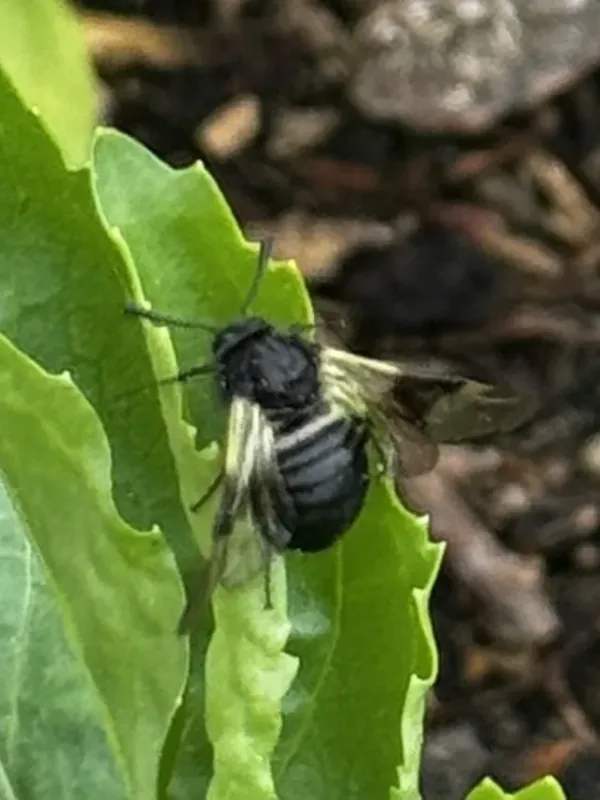
The honeysuckle sawfly, scientifically known as Zaraea fasciata, belongs to the family Cimbicidae. The adult sawfly is a relatively large insect with a robust body and distinctive striped markings, often resembling a wasp.
The larvae, frequently called false caterpillars, have a pale green body with dark spots. Unlike butterfly larvae, these insects possess a greater number of abdominal prolegs, allowing them to cling tightly to the host plant.
These pests overwinter as pupae enclosed in tough, silken cocoons. They are typically found in the soil surface layer directly beneath the host plant or hidden within thick leaf litter.
Emergence of the adults usually occurs in the spring, synchronized with the budding phase of honeysuckle. Females use their saw-like ovipositor to insert eggs into the leaf tissues of young shoots.
The life cycle is univoltine in most northern regions, meaning one generation per year. However, in warmer climates, the sawfly may exhibit a partial second generation if environmental conditions allow.
What it damages
The honeysuckle sawfly primarily targets Lonicera species. Both cultivated honeysuckle shrubs and ornamental varieties are susceptible to infestations by this specific pest.
Larval feeding activity is characterized by high intensity. The larvae consume the leaf tissue voraciously, often leaving only the main veins behind, which is known as skeletonizing the leaves.
Defoliation reduces the plant's capacity for photosynthesis, leading to stunted growth of new shoots and a decrease in the production of flower buds for the following year.
In cases of severe infestation, the plant becomes significantly weakened, which lowers its overall resistance to environmental stresses, including winter frost and summer drought.
Repeated annual damage can eventually lead to the decline of the shrub. This pest pressure is particularly damaging to young plants that have not yet established a strong root system.
Signs of infestation
Visible leaf damage is the most common diagnostic sign. Look for irregular holes or scalloped edges on the margins of the leaves, which gradually expand as larvae grow.
The presence of larvae themselves is a key indicator. They often feed in groups along the edges of the leaves and may coil into a characteristic spiral shape when disturbed by the gardener.
Black or dark brown frass (larval excrement) accumulation on the ground beneath the shrubs is a strong indicator of an active feeding colony above, often visible before the larvae themselves are spotted.
A significant reduction in leaf mass in late spring or early summer is a clear symptom. In extreme cases, a shrub may appear almost completely bare during the peak growth season.
Premature yellowing and leaf drop occur as a result of the damage. If the infestation is concentrated in one area, the affected branches may show signs of wilting or dieback.
Control measures
Cultural control involves careful soil cultivation beneath the shrubs during late autumn. This practice disturbs the overwintering cocoons and exposes them to predators or harsh winter conditions.
Manual removal is highly effective for small gardens. Simply shaking the branches over a sheet or cloth and gathering the larvae for disposal can significantly reduce the population.
Biological control agents, such as insect-pathogenic fungi or bacteria like Bacillus thuringiensis, are excellent tools for managing sawfly larvae without harming the environment.
Chemical control should be considered a last resort. If insecticides are necessary, choose products labelled for berry-bearing shrubs and strictly observe the safety waiting period before harvesting berries.
Encouraging natural predators, such as birds and parasitic wasps, can help keep sawfly populations at manageable levels. Maintain plant health with appropriate fertilization and watering to improve natural resilience.
Taxonomy
- Latin name
- Zaraea fasciata
- Order
- Hymenoptera
- Family
- Cimbicidae
- EPPO code
- ZARAFA
Discussion
No discussions yet — be the first.