
Zaraea
Zaraea
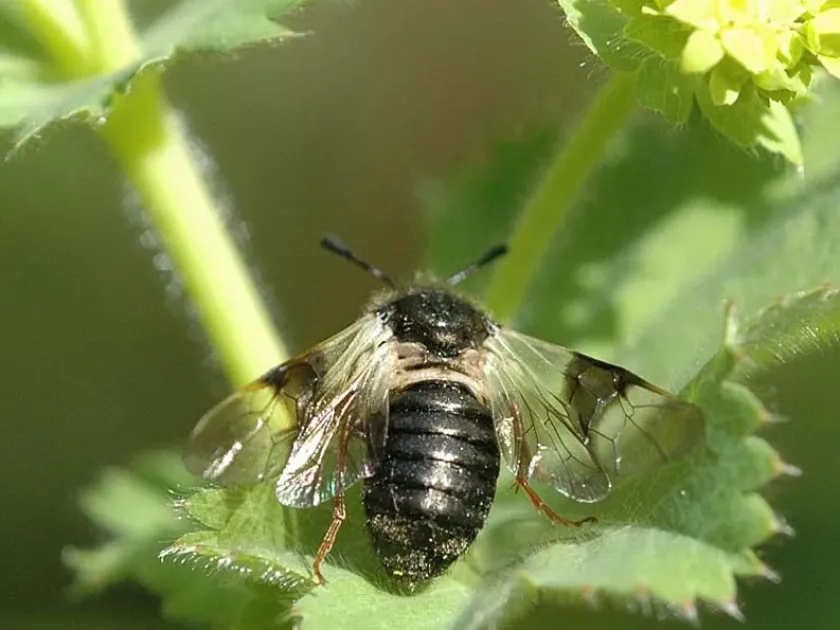
Description
How to identify
The genus Zaraea belongs to the order Hymenoptera, within the family Cimbicidae (known as club-horned sawflies). These insects are distinct due to their robust bodies and clubbed antennae, often mimicking bees or wasps in appearance.
Adult sawflies typically have dark coloration and complex wing venation. The larvae, often called 'false caterpillars', are distinguished from butterfly caterpillars by the number of abdominal prolegs they possess.
Their biological cycle follows a complete metamorphosis. The overwintering stage usually takes place as a prepupa within a tough cocoon, embedded in the topsoil or organic debris near the host plants.
Emergence occurs in early spring, coinciding with the foliage growth of their host plants. This synchronization ensures that the larvae hatch exactly when the food source is most nutritious for development.
Reproduction can occur through both sexual and parthenogenetic pathways, allowing the population to expand rapidly under favorable weather conditions, making them a recurring challenge for horticulturists.
What it damages
The primary hosts for Zaraea larvae are plants within the Caprifoliaceae family, with Lonicera (honeysuckle) being the most commonly affected genus, whether edible or ornamental varieties.
The damage is caused exclusively by the larvae, which possess chewing mouthparts. They are voracious eaters, capable of consuming significant portions of leaf surface area in a very short time.
Beyond the loss of leaf tissue, feeding damage introduces stressors that make the shrub susceptible to secondary infections, such as fungal pathogens or bacterial rots that exploit the wounds.
Under heavy infestation, complete defoliation of branches can occur, which severely disrupts the plant's ability to produce energy, ultimately leading to reduced fruit yields and stunted growth.
Persistent infestations over consecutive years deplete the shrub's stored energy reserves, making it less winter-hardy and increasing the likelihood of mortality in young or weakened plants.
Signs of infestation
The earliest signs of infestation are ragged leaf edges or irregular holes in the middle of leaves. Larvae are often found resting on the underside of leaves, coiled in a characteristic shape.
Frass (larval excrement) accumulation on the foliage or on the ground beneath the canopy is a clear indicator that the larvae are currently feeding and growing rapidly.
While adult sawflies are elusive, the presence of these insects during the spring flying season, usually around early leaf development, suggests that egg-laying is underway.
Significant defoliation, where only the main veins of the leaves remain, indicates a severe and long-standing population of larvae within the bush, requiring immediate management action.
Yellowing or premature browning of leaves in the mid-season, despite adequate irrigation, is often a secondary symptom of the stress caused by the larvae's feeding activity.
Control measures
Hand-picking of larvae remains a highly effective method for small-scale garden settings. Early morning collection is best, as the insects are less active and easier to locate.
Cultivation of the soil under the bushes in late autumn or early spring is crucial for destroying the cocoons, which are vulnerable when exposed on the surface of the ground.
Biological control using Bacillus thuringiensis (Bt) is recommended, as it specifically targets lepidopteran and hymenopteran larvae while remaining safe for pollinators and the environment.
If chemical intervention is necessary, systemic insecticides should be applied only during the pre-flowering stage to prevent potential harm to beneficial insects and minimize residue in fruits.
- Regular monitoring of foliage during the spring.
- Promoting a healthy ecosystem to encourage natural predators.
- Applying physical barriers if the population density is exceptionally high.
Taxonomy
- Latin name
- Zaraea
- Order
- Hymenoptera
- Family
- Cimbicidae
- EPPO code
- ZARASP
Discussion
No discussions yet — be the first.