
Yanga
Yanga guttulata
Description
How to identify
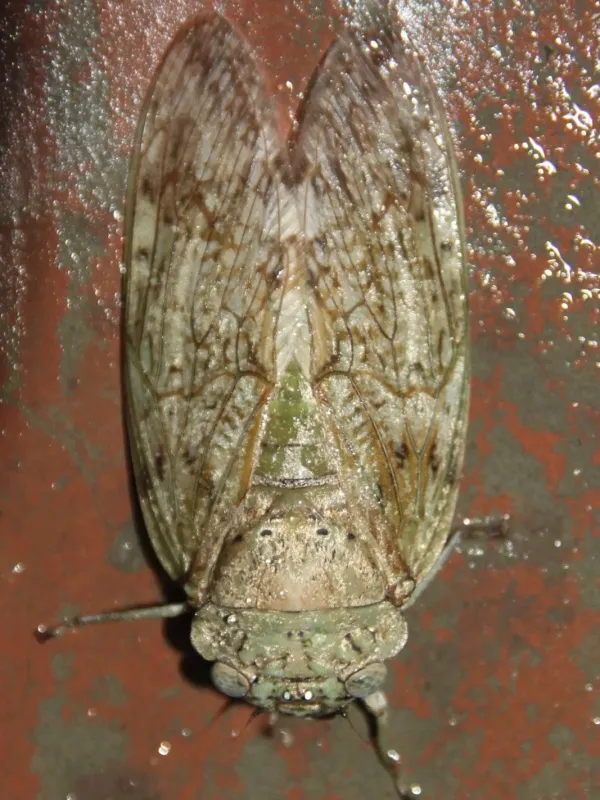
Yanga (Yanga guttulata) is a large insect of the order Hemiptera, belonging to the Cicadidae family. This species is characterized by a robust body and transparent wings with a distinct spotted pattern, which gives it its specific name.
Adults possess a highly developed acoustic apparatus, which males use to attract females. Visually, they can be distinguished by the specific shape of the head and the venation of the wings, both of which are important diagnostic features for this family.
Yanga nymphs lead an underground life, spending a significant part of their development cycle in the soil. They have powerful forelegs adapted for digging and feeding on plant roots within the dense substrate.
The biology of this species is closely tied to the climatic conditions of their habitats. They prefer warm zones where the insect's development can span several years, depending on soil temperature and the availability of food sources.
The distribution of this species is limited to specific geographical belts where they can reach high population densities. During the mass emergence of adults, their presence becomes noticeable due to the characteristic chirping in tree canopies.
What it damages
Yanga cause damage to a wide range of woody and shrub species, including agricultural fruit crops. Nymphs feed on root sap, which leads to significant weakening of the plant and stunted growth.
Adults damage the aerial parts of plants by piercing the bark of shoots to feed on sap. This can result in the wilting of individual branches, disruption of fluid transport, and a general decline in the plant's immune system.
Young orchards, where the root system has not yet developed enough resilience, suffer the most. Mass damage to roots by nymphs often causes the death of saplings or renders them susceptible to secondary infections.
Damage caused by adults during oviposition (egg-laying) into plant tissue induces localized bark necrosis. These areas often become entry points for fungal and bacterial pathogens, complicating disease management.
The economic impact of Yanga activity can be significant when population density is high. The loss of fruit yields often compels farmers to implement integrated pest management strategies.
When it appears
The life cycle of Yanga is characterized by a prolonged nymphal stage in the soil. The appearance of adults on the surface usually coincides with the warm season when conditions are favorable for reproduction.
The emergence period of adults can last for several weeks. During this time, peak activity occurs as insects colonize tree canopies for feeding and mating.
Oviposition occurs at the end of the adult activity period. Females lay eggs in specially prepared incisions in the wood of shoots, after which the cycle continues into the soil phase.
Monitoring the emergence of adults is critical for timing protective measures. Counting adult populations allows for the prediction of potential nymphal impact on root systems in future seasons.
Soil temperature directly influences the rate of nymph development. In years with anomalously hot or cold summers, the timing of adult emergence can shift, requiring adjustments to agricultural management strategies.
Signs of infestation
The primary sign of infestation is the presence of numerous holes in the soil, left by nymphs as they emerge to transform into adults. This is often accompanied by finding empty exuviae (cast-off skins) on tree trunks.
Specific bark damage in the form of longitudinal incisions indicates egg-laying sites. In these zones, tissue darkening and gumming are often observed, particularly in stone fruit crops.
Wilting and yellowing of foliage, unrelated to moisture deficiency, can indicate severe root damage by nymphs. Plants appear stunted, with reduced growth and overall productivity.
The acoustic activity of males during the mating season is a reliable indicator of the population's presence in the orchard. The intensity of the cicada "song" correlates with the total population on the site.
The appearance of secondary pests or the development of necrosis on weakened plants is an indirect but important sign that the crop has been attacked by Yanga.
Control measures
Effective protection against Yanga requires an integrated approach involving both agrotechnical and chemical methods. An important step is deep soil cultivation, which destroys nymph tunnels and disrupts their development.
The use of systemic insecticides is advisable during periods of peak adult activity. Products are applied to the canopy to reduce the adult population and prevent egg-laying.
Biological control methods include the use of natural entomophagous predators that can regulate population density. Creating favorable conditions for birds and predatory insects helps suppress the pest.
- Regular monitoring of adult population using traps.
- Timely removal and burning of heavily damaged shoots.
- Maintaining high agricultural standards to increase tree resilience.
- Using netting to protect high-value saplings during peak flight periods.
Chemical soil treatment with insecticides in zones of mass nymph concentration requires strict adherence to application regulations. This measure should be considered a last resort, given the potential toxic impact on the site's ecosystem.
Taxonomy
- Latin name
- Yanga guttulata
- Order
- Hemiptera (bugs, aphids, leafhoppers)
- Family
- Cicadidae
- EPPO code
- YANGGU
Discussion
No discussions yet — be the first.