
Cicada barbara
Cicada barbara
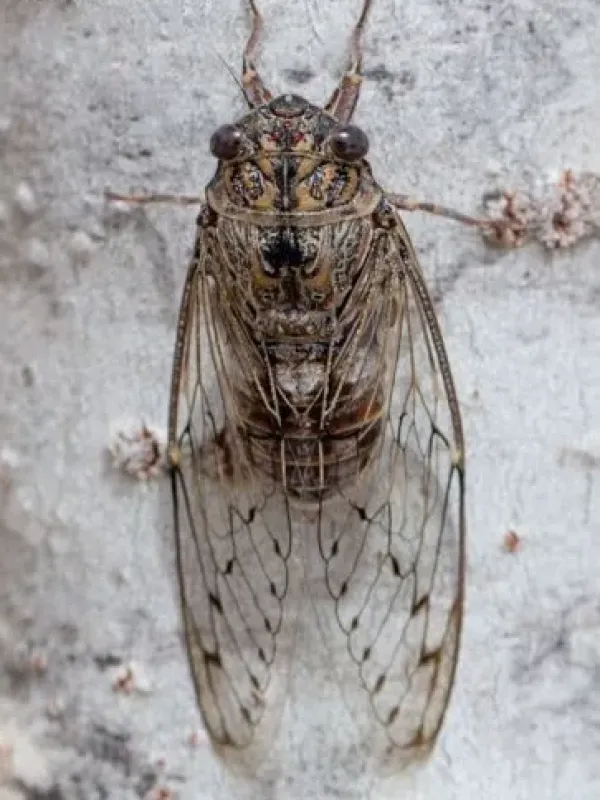
Description
How to identify
Cicada barbara is a species within the Cicadidae family, characterized by its robust build and distinct sound-producing organs found in males.
The adult insect typically reaches a length of 35 to 45 mm, with a coloration that blends well with tree bark, ranging from dark brown to blackish.
Their wings are transparent with prominent venation, allowing them to remain agile in the air, which is essential for their mating behavior.
The nymphal stage is entirely subterranean, where these insects possess specialized forelegs designed for digging through dense soil layers.
Recognition is often easier through auditory cues during the peak of the season rather than visual spotting due to their effective camouflage.
What it damages
This species poses a threat to various woody plants, including grapevines, fruit trees, and ornamental bushes, causing structural and physiological damage.
Adults feed by inserting their proboscis into young stems and twigs to extract xylem sap, which can cause local necrosis and limb dieback.
Nymphs live in the soil and feed on the sap from roots, which weakens the plant's structural integrity and overall vigor over long periods.
High populations can lead to significant stress for the host plant, leaving it highly susceptible to secondary attacks by wood-boring insects or fungi.
Young orchards are particularly vulnerable, as even moderate feeding damage can disrupt the development of the main scaffold branches.
When it appears
The life cycle of Cicada barbara is multi-annual, with the majority of its life spent in the larval stage hidden deep within the soil.
Adult emergence typically occurs during the warm summer months, as rising soil temperatures trigger the final molt into the winged stage.
The period of loud, continuous song from males marks the active reproductive phase, usually spanning several weeks in mid-summer.
Oviposition takes place shortly after mating, with females inserting their eggs into the soft tissue of recent growth on woody plants.
Populations tend to exhibit cyclical trends, with notable increases in adult numbers occurring after specific weather patterns favorable for egg development.
Signs of infestation
The most immediate indicator of an infestation is the persistent, loud droning sound produced by males in the canopy of trees and vines.
Physical evidence of egg-laying is visible as small, longitudinal slits or scarring on the surface of tender twigs and branches.
Weakened, yellowing foliage or premature leaf drop on otherwise healthy-looking branches often points to sustained sap-feeding by adults.
Empty nymphal skins, or exuviae, can often be found clinging to trunks or low-lying vegetation shortly after the emergence period.
Root zone inspection may reveal tunnels or signs of disrupted root health, indicating an established presence of nymphs in the soil.
Control measures
Control strategies should focus on both cultural practices and chemical interventions when populations exceed economic injury levels.
Deep cultivation or soil turning around the base of trees can disrupt the soil tunnels and reduce the population of developing nymphs.
Pruning out and disposing of infested branches helps to limit the next generation by destroying egg masses before hatching occurs.
Application of contact or systemic insecticides during the emergence phase can be effective in reducing the number of reproductive adults.
- Regular monitoring of tree health and bark condition.
- Promoting a healthy ecosystem to encourage natural predators like birds.
- Avoiding water stress, which makes trees more attractive to sap-feeding insects.
Taxonomy
- Latin name
- Cicada barbara
- Order
- Hemiptera (bugs, aphids, leafhoppers)
- Family
- Cicadidae
- EPPO code
- CCDABA
Discussion
No discussions yet — be the first.