
Cicada
Cicada
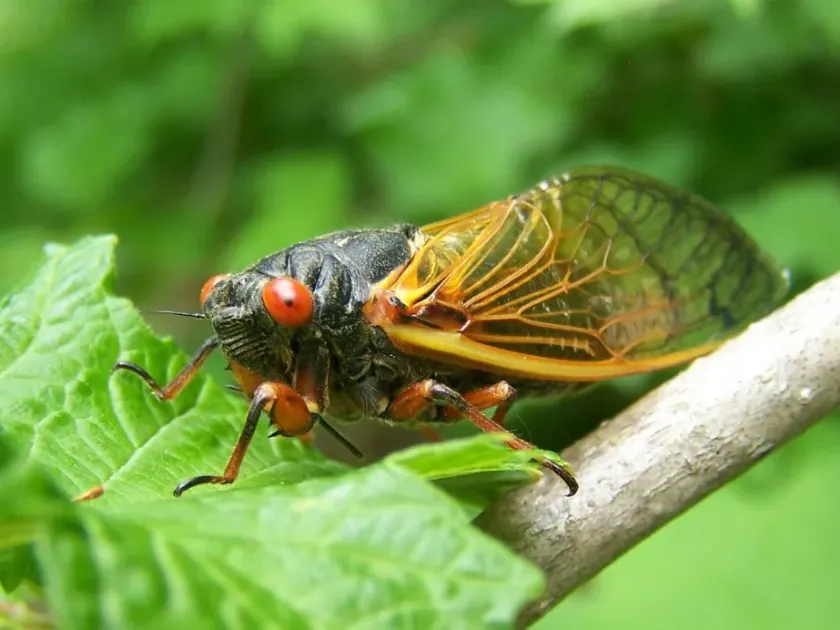
Description
How to identify
Cicadas are large insects belonging to the order Hemiptera. They are known for their distinct appearance, featuring large, membranous wings that are held roof-like over their bodies at rest. They possess strong, piercing-sucking mouthparts.
Adult cicadas vary in size, generally ranging from 2 to 10 centimeters depending on the species. Their life cycle is complex, involving long periods of subterranean development as nymphs, followed by a short adult stage.
Nymphs live underground, feeding on root sap, while adults emerge to feed on the sap of branches and stems. This dual habitat makes them particularly challenging to monitor and control effectively.
Their life cycle is highly seasonal, often synchronized with specific environmental conditions. In many regions, mass emergence is a distinct biological event, which can lead to localized population surges.
Female cicadas deposit eggs in slits made in woody plant tissues using their sharp ovipositor. These eggs can remain inside the plant material for several weeks before hatching.
What it damages
Damage to crops is primarily caused by female egg-laying activities. By making incisions in stems and twigs, they cause structural weakness, which can lead to shoot dieback and branch breakage.
While adults feed on plant sap, the resulting sap loss is usually less critical than the damage caused by the physical insertion of the ovipositor. However, in young orchards, this can significantly impact the plant's structural development.
Feeding by nymphs on roots can stress plants, particularly during dry seasons, as the removal of sap reduces the plant's ability to maintain hydration and nutrient flow.
Secondary infections often occur at the site of oviposition. Fungal and bacterial pathogens can enter the wounds made by the cicadas, leading to cankers or necrosis in the affected branches.
In high-density populations, the sheer volume of egg-laying activity can cause significant aesthetic and commercial damage, particularly in nurseries and young fruit plantations.
Signs of infestation
The most prominent sign is the presence of slit-like scars on twigs and small branches. These scars often look like rows of small punctures along the length of the stems.
Flagging is a classic symptom, where the ends of branches turn brown and wither due to the internal tissue damage caused by egg-laying. These dead tips are very visible against the green canopy.
Increased ant activity around branches can sometimes indicate the presence of sap-sucking activity, as ants are attracted to the plant sap or any honeydew produced by other associated pests.
During the adult emergence season, the loud acoustic signals (songs) of males are an undeniable sign of their presence. These sounds indicate the start of the breeding and egg-laying period.
- Linear scars on tree stems and branches.
- Withered or brown terminal shoots (flagging).
- Breakage of weak, damaged twigs in the wind.
- Visible emergence holes in the soil near the base of trees.
- Empty nymphal exuviae (skins) found on trunks and foliage.
Control measures
Physical exclusion is one of the most effective methods for protecting young, valuable plants. Covering small trees or shrubs with fine netting during peak emergence periods prevents egg-laying.
Pruning out and destroying heavily damaged branches can help stop the development of nymphs that might emerge in future years, although this is more of a sanitation measure than a total control.
Chemical control is generally difficult because adults are highly mobile and fly between host plants. Targeted insecticide applications may be used in nurseries but are rarely practical for large-scale crops.
Monitoring the timing of emergence is crucial. By keeping records of population cycles, farmers can delay new plantings or schedule necessary protective measures to avoid periods of intense cicada activity.
Promoting a healthy environment for natural predators, such as birds and parasitic wasps, can help suppress cicada populations. Maintaining biodiversity in and around the orchard is a vital long-term strategy.
Taxonomy
- Latin name
- Cicada
- Order
- Hemiptera (bugs, aphids, leafhoppers)
- Family
- Cicadidae
- EPPO code
- CCDASP
Discussion
No discussions yet — be the first.