
Cicada
Cicadetta cantilatrix
Description
How to identify
The cicada species Cicadetta cantilatrix belongs to the Cicadidae family, order Hemiptera. These insects are best known for the males' distinct, loud acoustic signals used for mate attraction during the summer season.
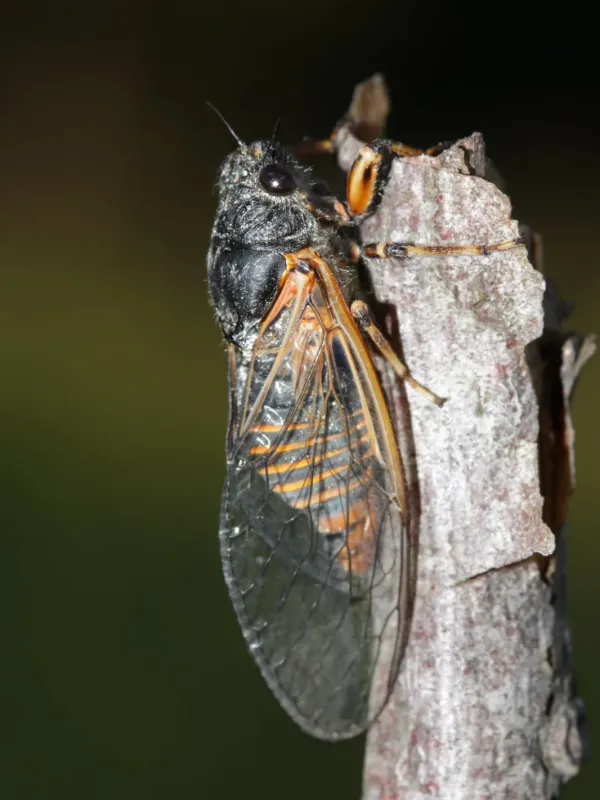
Adult cicadas feature transparent, membranous wings with prominent venation, a robust body, and large, widely spaced eyes. Their coloration is typically cryptic, blending in with the bark of host trees to avoid predation.
The nymphal stage is spent underground, where they live for several years. They possess specialized, strong front legs designed for digging through soil to access and feed on root xylem sap.
Because their life cycle spans multiple years, their population dynamics can be difficult to track. The transition from nymph to adult involves emerging from the soil and molting, leaving behind empty exoskeletons.
Identification is often based on the specific frequency and rhythm of their song, which differs significantly from other species in the region, making them recognizable to both researchers and farmers.
What it damages
The primary agricultural damage is caused by females during oviposition. They use their saw-like ovipositors to cut deep slits into young branches of fruit trees and shrubs to deposit their eggs.
Key agricultural crops susceptible to this damage include apples, pears, peaches, and grapevines. These physical wounds disrupt the vascular flow, often causing the terminal shoots to wilt, break, or die off entirely.
The incisions made in the bark create entry points for secondary infections, including fungal spores and bacteria, which can lead to localized necrosis or more systemic branch decay.
Below ground, the nymphs feed on the roots of host trees. While individual feeding damage might be minimal, high densities of nymphs can significantly weaken the vigor of young orchard trees over several years.
Newly planted orchards are at the greatest risk, as their thin bark is easily penetrated, and the structural damage to young branches can severely retard growth or even kill young saplings.
When it appears
Adult Cicadetta cantilatrix typically emerge during the mid-summer months, primarily June and July. This period coincides with their peak acoustic activity and mating season.
Oviposition occurs throughout this mid-summer window, during which time the risk to soft, growing tree shoots is highest. The duration of their surface activity is usually limited to a few weeks.
Nymphs remain active beneath the soil surface throughout the year, feeding continuously on root sap. Their development is largely influenced by soil temperature and moisture levels.
Mass emergences can occur, characterized by large numbers of adults appearing in a short span of time. This synchronized behavior can cause sudden and concentrated damage to orchards within a specific area.
Hot and dry summers often correlate with increased insect activity, as the cicadas may become more active and seek moisture from plant tissues, indirectly increasing the pressure on horticultural crops.
Signs of infestation
The most evident sign of infestation is the presence of longitudinal slits or a series of small, punctures arranged in rows on young stems. These are the clear indicators of egg-laying sites.
Affected shoots often show signs of flagging, where the tips of the branches begin to yellow, wilt, and eventually turn brown. These damaged sections are brittle and break easily in the wind.
Intense, persistent chirping or buzzing sounds emanating from the orchard canopy are primary indicators of a substantial cicada population present in the trees.
Exuviae (the discarded shells of nymphs) can be found attached to tree trunks or low-hanging branches, marking the locations where adults emerged from the soil to complete their metamorphosis.
Poor overall vigor, stunted shoot growth, and a general decline in the tree's health that cannot be attributed to typical diseases may be a result of chronic root-feeding pressure from nymphs.
Control measures
Sanitation is a vital control measure. Pruning and destroying branches containing fresh oviposition scars can significantly reduce the potential population size for the following season.
Maintaining healthy orchard floor management, including regular tilling or soil cultivation, can disturb the nymphs' environment and help reduce their numbers near the root zones of trees.
In cases of severe infestation, chemical control may be considered, but it should be applied strategically, avoiding periods of bloom to protect beneficial pollinators and natural predators.
- Utilizing physical barriers like netting to protect young saplings.
- Encouraging natural predators such as birds and beneficial insects in the orchard.
- Monitoring population trends using acoustic surveys or seasonal traps.
An integrated approach that combines mechanical removal of egg-laden branches with good horticultural practices is the most sustainable and effective way to manage cicada damage.
Taxonomy
- Latin name
- Cicadetta cantilatrix
- Order
- Hemiptera (bugs, aphids, leafhoppers)
- Family
- Cicadidae
- EPPO code
- CCDTCA
Discussion
No discussions yet — be the first.