
Xylodrepa
Xylodrepa
Description
How to identify
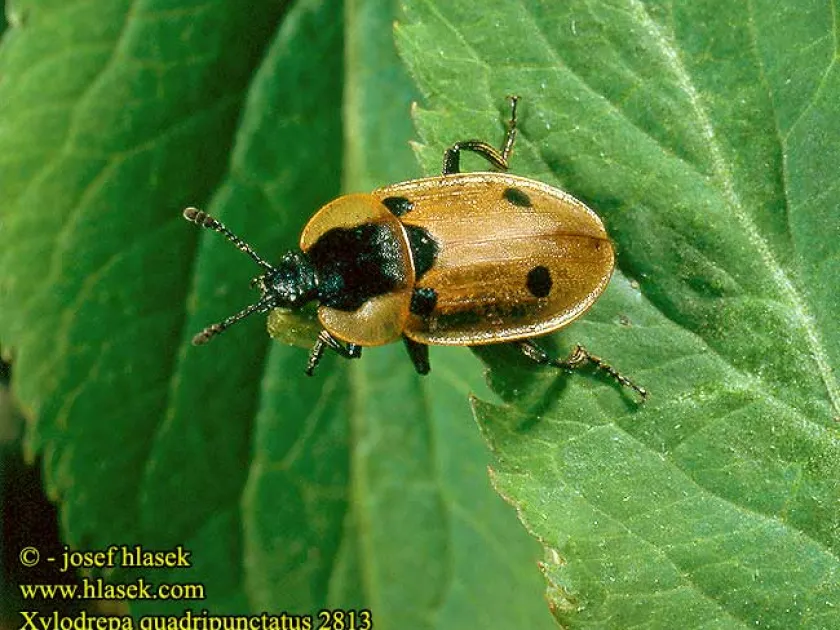
Xylodrepa (Xylodrepa quadripunctata) is a predatory beetle belonging to the Silphidae (carrion beetle) family. Unlike most of its relatives that scavenge on decaying matter, this species is an active hunter.
The adult beetle reaches a length of 12–15 mm. Its most distinctive feature is the yellowish-ochre color of the elytra, adorned with four prominent black spots—two on each wing case, which gives it its specific name.
The head and pronotum are a solid, deep black, sometimes showing a slight metallic sheen. Its body is significantly flattened, allowing it to move nimbly across tree bark and into narrow crevices.
The larvae are also predatory, possessing a dark, flattened body that resembles a woodlouse. They are highly efficient at capturing prey on branches and leaves.
It is crucial to distinguish this beneficial predator from wood-boring pests, as the presence of Xylodrepa is a sign of a healthy, balanced ecosystem.
What it damages
In terms of agriculture, Xylodrepa is not a pest. It is a valuable biological control agent that consumes harmful insects rather than damaging the plants themselves.
Its primary diet consists of lepidopteran larvae (caterpillars), including the gypsy moth and other defoliators that threaten orchard and forest health.
The beetle spends most of its time in the canopy of broad-leaved trees, where it hunts for eggs and young caterpillars, effectively regulating their populations.
Because it does not feed on plant tissues, it does not cause wilting, leaf perforation, or wood decay, making it an entirely neutral or beneficial presence in any garden.
By keeping populations of leaf-eating insects in check, this beetle indirectly protects the health and vigor of the vegetation it inhabits.
When it appears
Adult Xylodrepa emerge in the spring, typically from April to May, as temperatures begin to rise and the ecosystem becomes active.
Their activity period is synchronized with the hatching of many harmful caterpillars, which serves as a vital food source for both the adults and the larvae.
Following mating, females lay eggs in the soil or leaf litter, where the larval development occurs before they ascend the trees to forage.
By mid-summer, the population activity decreases as the beetles enter the pupation stage, preparing for the next year.
The species completes one generation per year, a biological pattern typical for this region and climate.
Signs of infestation
Detection is best achieved through visual inspection of tree trunks and foliage during late spring. You may see the distinctively spotted beetles moving along the bark.
Since the beetle is not a phytophage, it produces no mechanical damage signs like boreholes, tunnels, or necrotic spots on the plant tissues.
The main indicator of its presence is the observable decrease in caterpillar infestation levels within the affected area, showing the success of natural suppression.
There are no negative symptoms associated with this beetle; its presence is a sign of ecological harmony rather than a problem to be addressed.
Gardeners should note that the presence of these beetles is a positive sign, indicating that nature is already working to control potential pest outbreaks.
Control measures
No control measures should be taken against Xylodrepa. As a beneficial predator, it should be protected and encouraged in gardens and forests.
The widespread use of broad-spectrum insecticides is the greatest threat to these beetles. Avoiding chemicals during the spring flight period is essential for their conservation.
Maintaining a layer of leaf litter and healthy soil conditions is important, as these are the primary sites for the beetle's development and pupation.
Integrated Pest Management (IPM) strategies favor the preservation of such predators as a key component of sustainable agricultural practices.
Supporting the habitat of this species reduces the necessity for chemical interventions and promotes a self-regulating, healthy environment for orchards.
Taxonomy
- Latin name
- Xylodrepa
- Order
- Coleoptera (beetles)
- Family
- Silphidae
- EPPO code
- XYODSP
Discussion
No discussions yet — be the first.