
Burying beetle
Necrophorus
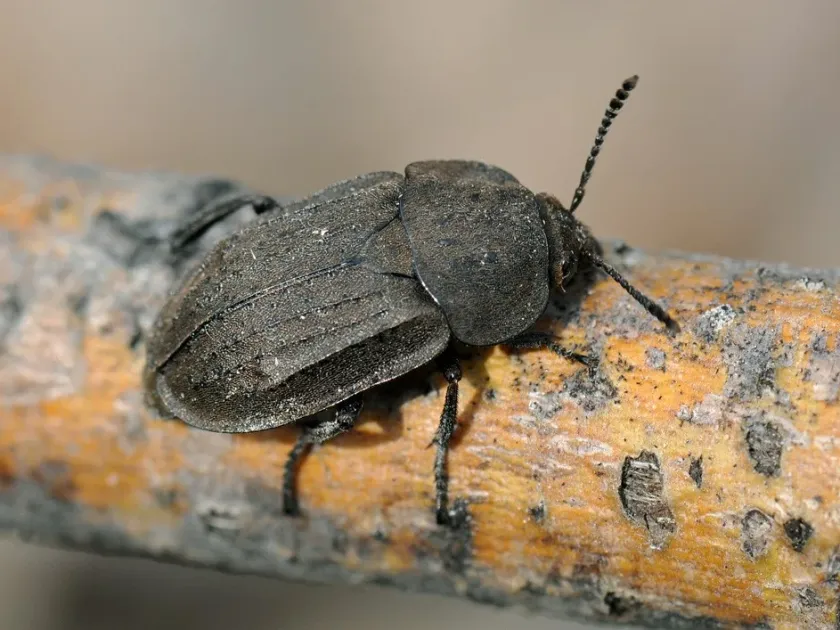
Description
How to identify
The burying beetle (genus Necrophorus) belongs to the family Silphidae within the order Coleoptera. They are well-known for their unique parental care and use of carrion.
These beetles are characterized by a robust body, often featuring distinctive orange or red markings on their elytra, which serve as a warning to predators.
Systematically, they are necrophagous insects that play a crucial role in ecosystems by decomposing carcasses of small animals.
The larvae are specialized to feed on carrion that their parents have buried underground, creating a controlled environment for their development.
Unlike phytophagous insects, their anatomy and physiology are strictly adapted to the consumption of animal protein and fatty tissues.
What it damages
Burying beetles of the genus Necrophorus do not cause damage to crops, vegetables, or field plants as they are not pests.
They lack the mouthparts necessary for feeding on plant tissues such as leaves, roots, or stems, making them harmless to agriculture.
Confusion often arises when farmers mistake these beetles for Tenebrionidae or other soil-dwelling pests that do cause significant crop damage.
In a field environment, their presence is entirely independent of the health or stage of the cultivated plants.
Their interaction with the field ecosystem is limited to the soil surface where they search for food sources required for their offspring.
When it appears
The activity of burying beetles is observed from late spring through summer, depending on the availability of carcasses.
They are particularly active during warmer months when soil conditions permit efficient burying of food sources for larvae.
As temperatures drop in the autumn, adults move deeper into the soil to overwinter or seek hibernation sites.
Their seasonal presence does not correlate with plant phenology, as they are not reliant on agricultural output for survival.
These insects can be found in various environments, including agricultural fields, provided there is organic matter to be processed.
Control measures
Control measures against Necrophorus are not required, as they are beneficial organisms that act as natural decomposers.
The application of insecticides specifically for burying beetles is discouraged to preserve biodiversity and soil health.
Effective agricultural management should focus on identifying true pests through proper monitoring and professional scouting.
If insect damage is occurring in a field, the cause should be investigated among known plant-feeding species rather than beneficial necrophages.
By protecting burying beetles, farmers maintain a balanced soil ecosystem that contributes to the breakdown of organic debris.
Taxonomy
- Latin name
- Necrophorus
- Order
- Coleoptera (beetles)
- Family
- Silphidae
- EPPO code
- NECOSP
Discussion
No discussions yet — be the first.