
Beet leaf beetle
Blitophaga
Description
How to identify
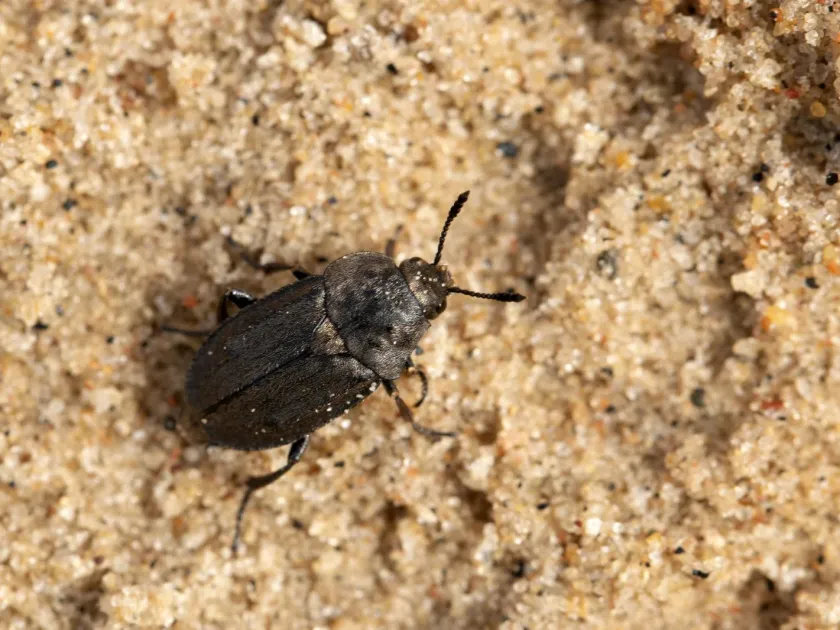
The beet leaf beetle (lat. Blitophaga) belongs to the Silphidae family, commonly known as carrion beetles, although this specific genus specializes in feeding on plants. The adult beetle typically measures 10–12 mm in length with an oval, matte black, or slightly metallic body.
The beetle's surface is covered with fine punctures and short dark hairs. The larvae are campodeiform, measuring 15–16 mm when mature, and display a dark grey or black color, which provides excellent camouflage against soil and dark plant foliage.
The life cycle involves complete metamorphosis, consisting of eggs, larvae, pupae, and adults. Hibernation occurs primarily at the adult stage, sheltered within the soil or under organic debris during the winter months, leading to emergence in early spring.
Females lay eggs in small clusters within the surface layer of the soil near host plants. The development duration is temperature-dependent, typically lasting from one to one and a half months, which allows for multiple outbreaks throughout the growing season.
The insect's high reproductive capacity, combined with its ability to adapt to varying weather conditions, makes it a persistent threat to beet cultivation globally, especially in regions with temperate climates.
What it damages
Beet leaf beetles primarily target sugar beets, garden beets, and fodder beets. If the primary crop is unavailable, they are known to feed on various weeds within the Amaranthaceae family, including Chenopodium and Amaranthus species.
Both adults and larvae cause severe damage by consuming the leaf tissue. They primarily attack the foliage, ranging from the cotyledons of emerging seedlings to the fully developed leaves of mature plants, leading to a massive reduction in the photosynthetic area.
Seedlings are the most vulnerable stage; severe infestations can result in total destruction of the crop within a few days. This often necessitates immediate reseeding, which incurs high costs and delays the harvesting cycle.
In addition to direct tissue loss, the feeding process creates entry points for secondary bacterial and fungal infections. These pathogens can cause root rot or leaf spot diseases, further diminishing the plant's health and final yield quality.
Monitoring is crucial, as the economic threshold is relatively low. Farmers should initiate control measures when they observe 1–2 adults or 3–5 larvae per linear meter of the row to prevent further population expansion.
Signs of infestation
Initial signs of a beet leaf beetle infestation include irregular, ragged holes in the cotyledons or young leaves. As the infestation progresses, the feeding patterns become more severe, leaving only the veins of the leaves intact.
Adult beetles are often cryptic during the day; they tend to drop to the soil and remain motionless when disturbed, making them difficult to spot during routine field checks. Observations are most effective during early morning or evening hours.
Larvae are frequently found on the undersides of leaves, which can cause the leaves to curl, yellow, and eventually wither. A heavily infested field appears thinned out, with plants showing stunted growth and signs of severe stress.
The "skeletonized" appearance of the leaves, where only the vascular framework remains, is a hallmark indicator of significant beetle pressure. This visual cue serves as an urgent alert for crop managers to assess the density of the pest population.
Consistent field scouting is essential for early detection. Tracking the presence of these dark, active larvae across different sections of the field allows for localized treatments rather than wide-scale, inefficient insecticide applications.
Control measures
Cultural control is the first line of defense, focusing on rigorous crop rotation to break the beetle's life cycle. Avoiding beet planting in the same field for 3–4 years and controlling weeds that host the pest are vital steps for long-term management.
Deep autumn plowing is highly effective in disrupting the overwintering sites of the adults. By burying organic debris and turning the soil, farmers significantly reduce the number of beetles that will emerge during the following spring.
Chemical control involves the application of systemic or contact insecticides from the pyrethroid or organophosphate groups. These should be applied only when economic thresholds are met and following local regulations regarding dosage and safety.
Seed treatment is a highly effective preventative method. Coating seeds with insecticidal compounds provides a protective shield during the most vulnerable germination phase, significantly reducing the need for post-emergence spray applications.
To prevent the development of insecticide resistance, it is recommended to rotate products with different modes of action. All pesticide applications must be integrated into an overall IPM (Integrated Pest Management) strategy to maximize efficacy and environmental safety.
Taxonomy
- Latin name
- Blitophaga
- Order
- Coleoptera (beetles)
- Family
- Silphidae
- EPPO code
- BLITSP
Discussion
No discussions yet — be the first.