
Xylocoris sordidus
Xylocoris sordidus
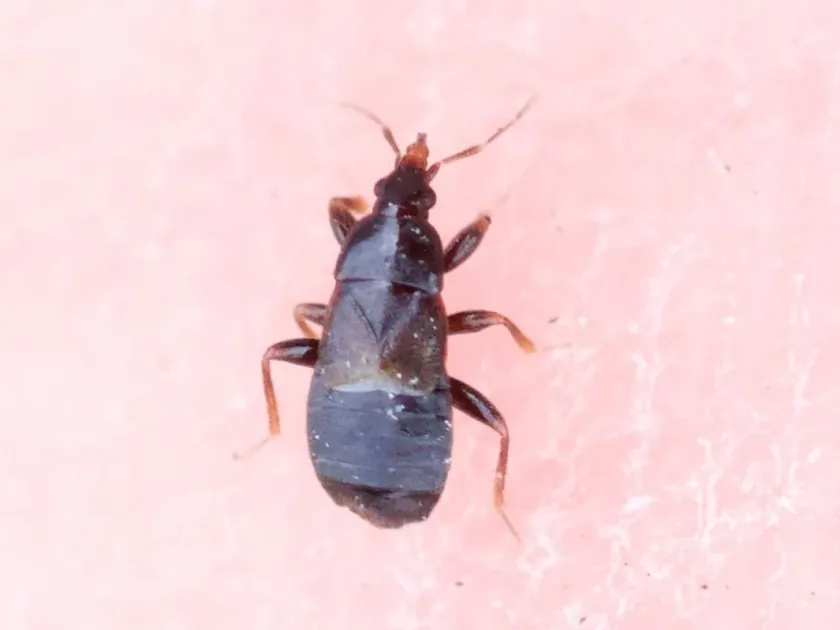
Description
How to identify
Xylocoris sordidus belongs to the Anthocoridae family (minute pirate bugs) within the order Hemiptera. While many members of this genus are predatory, this specific species is recognized as a potential pest of certain horticultural crops.
The adult insect is small, measuring approximately 2–3 mm in length, characterized by a dark brown or black elongated body. Their morphology is adapted for moving through dense vegetation.
Larvae resemble adults but are smaller, wingless, and go through five developmental stages (instars) before reaching maturity. They are often found in clusters on the undersides of leaves.
They possess a piercing-sucking mouthpart, which is typical for the Hemiptera order. This structure allows them to penetrate plant tissues to feed on cell sap or insect prey depending on environmental factors.
Taxonomically, they are identified by the structure of their pronotum and hemelytra, which are essential features for entomologists to distinguish them from other look-alike minute pirate bugs.
What it damages
The primary damage caused by Xylocoris sordidus occurs when their traditional prey sources are scarce, causing them to shift their diet to plant fluids. They pierce young shoots, buds, and delicate tissues.
Feeding leads to the loss of cell turgor in the plant, causing necrosis, wilting, and deformation of growing organs, particularly in seedlings and ornamental flowering plants.
In greenhouses, their activity can cause significant cosmetic and structural damage, as they frequently target the most vulnerable points of plant development, such as the apical meristems.
Apart from direct sap removal, the punctures created by the insect act as entry points for phytopathogenic fungi and bacteria, leading to secondary infections and tissue decay.
Severe infestations in nurseries can result in stunted growth, distorted leaf development, and failure of flower buds to open, directly impacting the marketability of the plants.
When it appears
The life cycle begins in early spring when temperatures rise, allowing the insects to emerge from their overwintering sites in bark crevices or plant debris.
The population peaks during warm, stable summer weather, which facilitates faster development through the nymphal stages. Multiple generations can occur in a single season.
Development speed is highly sensitive to humidity and temperature; hot and dry conditions often trigger rapid population growth if water supplies are not managed effectively.
As daylight decreases and temperatures drop in autumn, adults seek shelter for diapause. Their ability to overwinter in various substrates makes them resilient and hard to eradicate.
Successful overwintering is a critical phase, and the timing of their emergence in spring is a key factor for agricultural managers to initiate monitoring and early intervention.
Signs of infestation
The most visible sign of infestation is the presence of small necrotic spots or holes on young leaves, resulting from the insect's feeding punctures.
Leaf curling, asymmetrical development, and general stunted appearance are common indicators that the plant is under stress from sap-sucking insects.
Evidence of larval presence can be found in the form of discarded skins (exuviae) left behind after each molt, typically concentrated in leaf axils or under protective bracts.
In flowering crops, one may observe bud abortion or browning of petal margins, which is a classic response to the damage inflicted on floral vascular tissues.
An overall lack of vigor in plants compared to non-infested specimens in the same plot is a strong indication that a pest population is present and active.
Control measures
Managing Xylocoris sordidus requires an integrated approach that focuses on habitat modification and strategic pest population reduction.
Cultural practices are the first line of defense, including the thorough removal of weeds and crop residues where the insects hide and overwinter.
Regular monitoring using visual inspections of apical growth and the use of sticky traps can help detect the presence of the bug before it reaches damaging levels.
- Maintaining crop health to increase plant resistance to damage.
- Using botanical or biological insecticides that minimize impact on beneficial organisms.
- Applying systemic insecticides only when the economic threshold is crossed.
- Encouraging natural predators that help regulate the bug population in the ecosystem.
Chemical control should be applied with precision to ensure that the ecological balance is maintained while reducing the pest population effectively.
Taxonomy
- Latin name
- Xylocoris sordidus
- Order
- Hemiptera (bugs, aphids, leafhoppers)
- Family
- Anthocoridae
- EPPO code
- XYOCSO
Discussion
No discussions yet — be the first.