
Elm gall bug
Anthocoris gallarumulmi
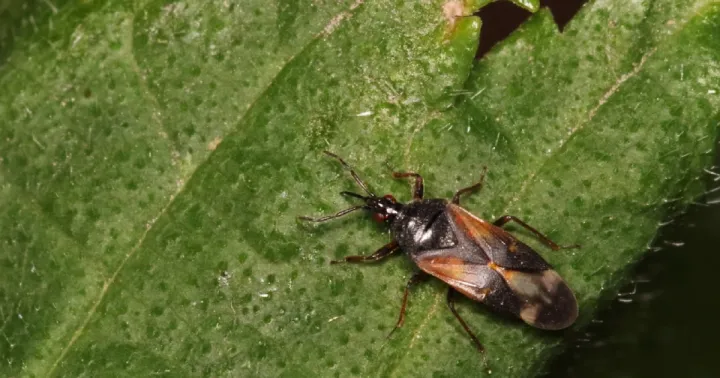
Description
How to identify
The Elm gall bug (Anthocoris gallarumulmi) belongs to the Anthocoridae family. These are small insects often characterized by a dark brown color, allowing them to blend perfectly with the bark of host trees.
Adult bugs have a flattened body shape, which is an adaptation for hiding in narrow crevices of tree bark during adverse weather conditions or periods of inactivity.
The life cycle involves incomplete metamorphosis. Nymphs resemble miniature versions of the adults but lack wings. As they grow, they undergo several stages, gradually increasing in size and intensity of feeding.
Identification is best achieved by inspecting the underside of leaves and bark fissures. In many cases, their presence is only discovered once damage to the plant tissue becomes visible to the observer.
These insects are highly host-specific, primarily targeting trees of the Ulmus genus. Their survival is closely tied to the physiological health of the elm trees they inhabit.
What it damages
The primary hosts for this bug are elm trees (Ulmus spp.). They feed on sap and can cause significant distress to the tree’s leaf system through their feeding habits.
The most notable form of damage is the formation of galls — abnormal growths on the leaf surface. These galls provide shelter for the insects while hindering the leaf's photosynthetic capacity.
Heavy infestations can lead to severe leaf curling, yellowing, and premature senescence. This compromises the overall aesthetics of the tree, which is a major concern in urban landscape management.
In addition to direct feeding, the puncture wounds created by the bugs allow secondary pathogens, such as fungi or bacteria, to enter the leaf tissue, leading to localized necrosis.
Young trees are particularly vulnerable, as repeated damage to the foliage during the growing season can stunt growth and weaken the tree’s defense mechanisms against other pests and environmental stressors.
When it appears
Activity starts in early spring, coinciding with the bud burst phase. As temperatures rise, the overwintering adults emerge and migrate to the expanding leaves to feed and lay eggs.
The peak activity occurs during late spring and throughout the summer months when foliage is abundant and nutrition is optimal for the development of several consecutive generations.
Hot and dry summer spells can accelerate the reproduction cycle, leading to a rapid increase in the number of individuals within a single canopy.
As autumn approaches and temperatures drop, the bugs begin to search for suitable overwintering sites. They move into deeper cracks in the bark or descend into the leaf litter at the base of the tree.
Effective monitoring should begin as soon as the first leaves appear. Regular checks during the growing season are essential to identify the start of an infestation before it reaches a critical level.
Signs of infestation
The most reliable sign of an Elm gall bug infestation is the presence of galls on the leaves. These small, rounded, or irregular swellings distort the leaf shape and appear as discolored patches.
Another indicator is the presence of small, dark fecal spots on the underside of the leaves or on the branches. This is a common sign associated with the feeding activity of these hemipterans.
Premature leaf drop is a strong warning sign. If a tree loses its leaves significantly earlier than expected, it suggests a heavy parasitic burden that has exhausted the tree’s resources.
Physical evidence of the insects themselves can be found by carefully checking branch crotches, where they may aggregate during the heat of the day.
- Leaf deformation and gall formation.
- Small black spots (frass) on the leaf surface.
- Yellowing and premature foliage senescence.
- Reduced growth rate of terminal shoots.
Control measures
Controlling the Elm gall bug requires an integrated approach that focuses on both physical and chemical management of the tree and its environment.
Sanitation is a critical step; all fallen leaves should be raked up and disposed of in late autumn. This practice eliminates the primary overwintering grounds and prevents the next generation from thriving.
If the infestation is severe, applying an appropriate insecticide during the early stages of the growing season can be highly effective. It is recommended to use systemic or contact insecticides during the early morning hours.
Biological control, by encouraging local populations of predatory insects like lacewings or lady beetles, can keep the population in check without the need for intensive chemical applications.
Ensuring the tree is well-hydrated and properly fertilized improves its overall resistance to stress. A tree in good condition is much less likely to suffer from severe pest damage compared to a stressed or neglected one.
Taxonomy
- Latin name
- Anthocoris gallarumulmi
- Order
- Hemiptera (bugs, aphids, leafhoppers)
- Family
- Anthocoridae
- EPPO code
- ANTOGA
Discussion
No discussions yet — be the first.