
Anthocoris confusus
Anthocoris confusus
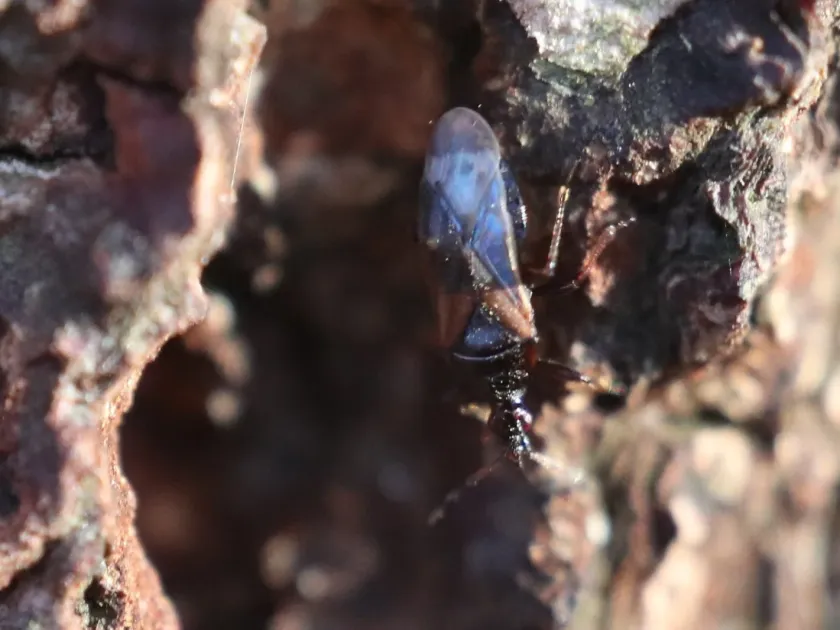
Description
How to identify
The bug Anthocoris confusus is a member of the Anthocoridae family, commonly known as minute pirate bugs. While often recognized as a beneficial insect, it is essential to understand its biology to distinguish it from more damaging pests.
Adults typically measure between 3 and 4 mm in length. Their bodies are elongated and vary from dark brown to black. A key diagnostic feature is the distinct membranous part of the forewings, which is visible upon close inspection.
The nymphs undergo five stages of development. Throughout these stages, they remain highly active and mobile, searching for prey such as aphids and spider mites among the foliage.
Identifying this specific species can be challenging, as it closely resembles other Anthocoris species, often requiring expert entomological analysis for definitive classification.
These bugs possess a sharp rostrum or beak, which serves as a dual-purpose tool for feeding on the body fluids of prey or, occasionally, plant sap when prey populations are insufficient.
What it damages
Primarily, Anthocoris confusus functions as an efficient predator of garden pests, including aphids, psyllids, and spider mites. This predatory behavior provides significant natural pest control.
In scenarios where natural prey density is low, the bugs may puncture leaf and shoot tissues to extract plant sap, though this behavior is generally secondary to their predatory nature.
The host range includes a wide variety of fruit trees, berry bushes, and certain ornamental plants, where the bugs seek out both prey and refuge from environmental stressors.
Minor lesions caused by feeding punctures may serve as infection sites for secondary fungal pathogens, though the actual physical tissue loss is rarely economically significant.
In most agroecosystems, the benefit of having these predators present far outweighs the minor damage they might inflict upon the plants during periods of low prey availability.
When it appears
Adults overwinter in protected locations such as bark crevices, leaf litter, or dry plant stalks. They emerge early in the spring as temperatures rise, signaling the start of their annual cycle.
Females deposit eggs directly into the tender tissues of young leaves and shoots, ensuring that nymphs have immediate access to food upon hatching.
The developmental period from egg to adult usually takes about 3 to 5 weeks, depending heavily on the climate and the abundance of available prey in the local environment.
Population levels typically peak during the mid-summer months, corresponding with the maximum proliferation of aphid colonies which serve as their primary food source.
As autumn approaches and temperatures drop, the bugs enter a state of dormancy, seeking out suitable shelters to survive the coming winter months.
Signs of infestation
The presence of these bugs is often confirmed by observing them actively patrolling aphid-infested leaves. They do not typically congregate in large numbers on a single spot.
Visual signs of feeding include minute chlorotic spots on leaves, although these can easily be confused with damage caused by spider mites or nutritional deficiencies in the plant.
The presence of exuviae (cast-off skins) on the undersides of leaves provides a clear indication that a colony of nymphs is developing and active within the garden.
If the plant shows no signs of wilting or systemic damage despite the presence of the bugs, it is highly likely that they are effectively controlling other harmful insect species.
Monitoring using yellow sticky cards or beating trays can help assess their density and verify that the population is effectively suppressing pests rather than causing damage.
Control measures
Because Anthocoris confusus is a vital beneficial insect, direct control is generally discouraged. Protecting these predators is a cornerstone of sustainable pest management.
When chemical applications are necessary, use selective pesticides that do not pose a high risk to predatory bugs. Avoid broad-spectrum insecticides whenever possible.
Promoting biodiversity by planting hedgerows and maintaining undisturbed areas in the orchard provides the necessary habitat for these insects to thrive throughout the year.
Integrated Pest Management (IPM) strategies emphasize the importance of monitoring populations before intervening, as natural enemies like this bug often manage pest outbreaks successfully.
- Avoid broad-spectrum pesticide use.
- Preserve natural habitats and refugia.
- Prioritize biological control over chemical treatments.
Taxonomy
- Latin name
- Anthocoris confusus
- Order
- Hemiptera (bugs, aphids, leafhoppers)
- Family
- Anthocoridae
- EPPO code
- ANTOCO
Discussion
No discussions yet — be the first.