
Anthocoris antevolens
Anthocoris antevolens
Description
How to identify
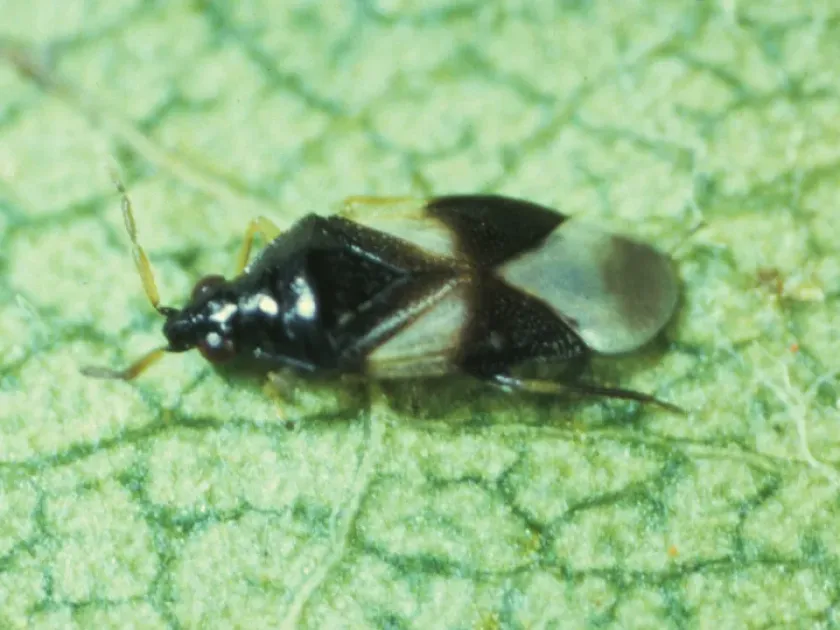
Anthocoris antevolens belongs to the Anthocoridae family, commonly known as minute pirate bugs. They are small insects, typically measuring 3–4 mm in length, with a flat and oval body shape.
The adults are characterized by a dark brown or black coloration, sometimes with a metallic sheen, and have well-developed wings that allow them to fly efficiently between plants.
The head is triangular and features a sharp, curved proboscis, a mouthpart specifically adapted for piercing prey and sucking out body fluids, confirming their predatory nature.
Nymphs go through several developmental stages, during which they look like smaller, wingless versions of adults, usually exhibiting a yellowish-red or brown color palette.
Because of their size and rapid movement, they are often overlooked in the field, yet they are among the most efficient predators in diverse agricultural landscapes.
What it damages
Anthocoris antevolens is not considered an agricultural pest. In fact, they are highly regarded as beneficial predators that help manage populations of many harmful organisms.
Their diet consists primarily of aphids, spider mites, thrips, whiteflies, and insect eggs, which are major threats to many fruit and vegetable crops in commercial settings.
While they may occasionally probe plant tissues for moisture during extreme drought, this behavior causes no meaningful damage to the plant's health or commercial yield.
Categorizing them as pests would lead to unnecessary chemical interventions that would only serve to remove natural defenses from the fields and orchards.
They are essential components of a healthy ecosystem, providing free and constant biological suppression of common pests throughout the growing season.
When it appears
The lifecycle of this species starts in early spring when overwintering adults emerge from sheltered areas such as tree bark, leaf litter, or dry grassy debris.
Females deposit eggs within the plant tissue, choosing spots near prey colonies to ensure that newly hatched nymphs have immediate access to food sources.
Multiple generations occur within a single year, allowing the population to adapt rapidly to changes in prey availability and seasonal weather patterns.
Their population peak typically aligns with the mid-summer surge of their primary prey, providing an efficient check on pest outbreaks during critical plant growth stages.
As temperatures decrease in autumn, they prepare for winter diapause, finding secure locations that protect them from harsh weather conditions until the cycle repeats.
Control measures
No control measures should be taken against Anthocoris antevolens, as their presence is a positive indicator of natural pest management within the agroecosystem.
The primary management strategy for farmers is to protect these beneficial insects by reducing the use of broad-spectrum insecticides that kill natural predators.
Implementing integrated pest management (IPM) practices, such as using selective pesticides, ensures that harmful pests are targeted without harming these valuable allies.
Maintaining floral borders and hedgerows around farms provides the necessary habitat for these bugs to survive and thrive during the winter and off-season months.
By fostering a diverse environment, growers can naturally suppress pest pressure and maintain high yields while reducing the overall dependency on chemical inputs.
Taxonomy
- Latin name
- Anthocoris antevolens
- Order
- Hemiptera (bugs, aphids, leafhoppers)
- Family
- Anthocoridae
- EPPO code
- ANTOAN
Discussion
No discussions yet — be the first.