
Amphiareus
Amphiareus
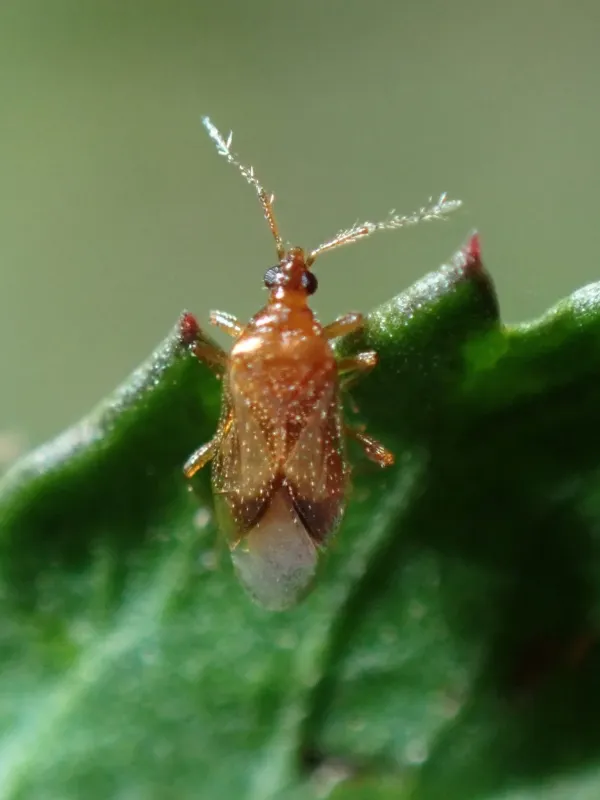
Description
How to identify
Amphiareus is a genus of insects belonging to the Anthocoridae family, commonly known as minute pirate bugs, within the order Hemiptera. These insects are very small, typically measuring between 3 and 4 millimeters in length.
The adult form is characterized by an elongated body shape, usually dark brown or blackish in color, with well-developed wings capable of active flight. They possess a piercing-sucking mouthpart, specialized for extracting fluids from their prey or plant tissues.
The nymphs resemble the adults but are smaller, wingless, and often have a lighter, yellowish-brown appearance. They usually reside in hidden locations, such as flowers, leaf axils, or under bark debris.
Identifying this species in the field often requires a hand lens or microscope to observe specific morphological structures, such as the shape of the pronotum and wing venation.
These bugs are quite agile and tend to move rapidly when disturbed, making them difficult to spot without careful observation of the plant's structural crevices.
What it damages
While many Anthocoridae are considered beneficial predators, Amphiareus can exhibit a mixed feeding habit, occasionally causing damage to agricultural crops when prey populations are insufficient.
The damage is primarily caused by the bugs piercing the tender plant tissues, including young shoots, buds, and leaves, to feed on plant sap and tissue fluids.
This feeding activity introduces salivary enzymes into the plant, which often results in localized necrosis, leaf chlorosis, curling, or overall stunting of the growing plant parts.
Vegetable and ornamental plants in greenhouses are particularly susceptible, as high population densities can quickly lead to significant loss of plant vigor and aesthetic damage.
Furthermore, the puncture wounds created during feeding can serve as entry points for secondary fungal and bacterial pathogens, leading to fruit rot or blossom blight.
When it appears
The seasonal activity of Amphiareus typically begins in early spring as temperatures rise above 12–15°C, triggering the emergence of overwintered adults.
Population levels generally peak during the summer months, which coincide with the flowering period of many host plants that provide essential sustenance and oviposition sites.
In greenhouses and other controlled-environment facilities, the life cycle can continue year-round, provided the temperature and humidity remain within favorable ranges.
As autumn arrives and temperatures decline, the adults seek protected overwintering sites, such as cracks in greenhouse frames, deep inside leaf litter, or within soil crevices.
The generation time is highly dependent on ambient temperatures; warmer conditions during the summer significantly accelerate the developmental rate from egg to adult.
Signs of infestation
The earliest signs of infestation appear as minute, pinpoint necrotic spots on young foliage, which may gradually enlarge or cause irregular yellowing of the leaf tissue.
Deformation of growing points, such as curled leaves or stunted shoots, is a common symptom that may be misidentified as a virus infection or nutrient deficiency.
Upon closer inspection of the flowers, growers may notice small, dark fecal spots left by the insects on petals, which significantly detracts from the marketability of cut flowers.
A high level of infestation often results in the premature abscission of buds and young fruit, which directly correlates to reduced yield and economic losses for the farmer.
Observant monitoring usually reveals the presence of the bugs themselves, which are often found aggregating in the most tender and juicy parts of the plant canopy.
Control measures
The primary management strategy is the implementation of rigorous sanitation practices, including the removal and disposal of crop residues after harvest to eliminate overwintering sites.
Biological control using natural enemies or specialized parasitoids is a highly effective way to keep Amphiareus populations below the economic injury level in greenhouse systems.
Chemical intervention should be considered only as a last resort when monitoring confirms that population levels exceed established thresholds, utilizing selective insecticides.
- Utilizing yellow sticky traps to monitor adult activity and population dynamics.
- Maintaining strict weed control around the perimeter to prevent pest reservoirs.
- Ensuring optimal environmental conditions that do not favor excessive pest reproduction.
Integrated Pest Management (IPM) programs should prioritize preventative measures and biological monitoring to reduce reliance on broad-spectrum chemical pesticides.
Taxonomy
- Latin name
- Amphiareus
- Order
- Hemiptera (bugs, aphids, leafhoppers)
- Family
- Anthocoridae
- EPPO code
- AMFISP
Discussion
No discussions yet — be the first.