
Amphiareus constrictus
Amphiareus constrictus
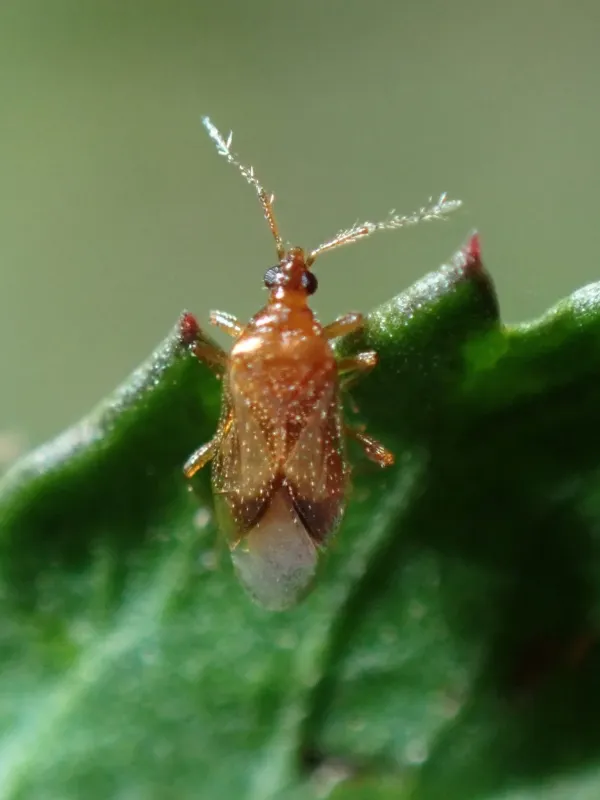
Description
How to identify
Amphiareus constrictus is a member of the Anthocoridae family, commonly known as minute pirate bugs. While these insects are often recognized as beneficial predators of small pests like mites and thrips, they can occasionally shift to feeding on plant tissues.
Adults typically measure between 2 to 3 millimeters in length and possess an elongated, somewhat flattened body shape. Their coloration is usually dark brown to black, providing camouflage within crop foliage and inflorescences.
The head features a distinctive proboscis, which is used for piercing. While primarily adapted for predatory feeding, the morphology of the mouthparts also allows the insect to penetrate plant cuticles to extract sap when prey density is low.
Nymphs resemble smaller, wingless versions of the adults. They progress through several developmental stages (instars) before reaching maturity, often congregating in protected areas of the plant where they can feed and grow.
Identifying this species in a field setting requires close inspection, as their small size and cryptic behavior make them difficult to detect during the early stages of infestation.
What it damages
The damage caused by Amphiareus constrictus involves the extraction of plant cell fluids. This process leads to localized tissue necrosis, stunted growth, and a general loss of plant vigor throughout the vegetation period.
Impact on reproductive parts is particularly detrimental. Feeding on developing flower buds or grain ears can cause tissue deformation, poor seed set, and significant reductions in yield quantity and quality.
Feeding punctures serve as entry points for secondary pathogens. This secondary infection risk often creates more visible symptoms than the primary insect damage, such as localized wilting or necrotic spotting.
Damage often starts as small, isolated patches within a field. However, if conditions remain favorable for the insect, these patches can expand rapidly, leading to broader infestations that require intervention.
The economic impact is most severe when infestations coincide with the critical growth stages of crops, such as flowering or grain filling, where the plant's ability to compensate for tissue loss is limited.
When it appears
The activity cycle of this bug begins in spring as temperatures rise, signaling the end of winter diapause. Early generations typically emerge in non-crop areas, including hedgerows and weedy patches near agricultural land.
As the season progresses, adult bugs migrate into agricultural fields. The peak population density usually occurs mid-to-late summer, driven by optimal temperatures and an abundance of suitable host plants.
Multiple generations can occur within a single growing season. The speed of the life cycle is highly temperature-dependent, allowing for quick population build-up under favorable weather conditions.
As autumn approaches, the bugs prepare for overwintering. They seek refuge in sheltered areas such as plant debris, leaf litter, and fissures in bark, which helps them survive the winter cold.
Understanding these seasonal dynamics is essential for timing scouting operations, as it allows farmers to predict when the bugs are most likely to move from wild reservoirs onto cash crops.
Signs of infestation
The first signs of infestation often include tiny necrotic spots on leaves, which may slowly expand as the bugs continue to feed. Leaf discoloration and loss of turgor are common indicators of localized sap loss.
Deformation of the ears or inflorescences is a hallmark of severe infestation. Plants may appear generally unthrifty, with parts of the foliage showing premature yellowing or even death.
- Chlorotic spots appearing on the upper leaf surface.
- Presence of discarded nymphal exuviae on stems or leaf undersides.
- Visible stunting of crop development in affected areas.
- Reduced grain density or deformed fruit in infested clusters.
Diagnostic scouting should prioritize the examination of the undersides of leaves and floral structures, especially during the cool, quiet hours of the early morning when the insects are less active.
Control measures
Effective control starts with good agricultural practices, such as clearing crop residues after harvest to eliminate overwintering sites for the population.
Weed management on the field margins is a critical preventative measure. By removing alternative host plants, farmers can significantly reduce the number of bugs migrating onto the crop.
Biological control methods involve supporting natural enemies that predate on the bugs. In some cases, applying microbial-based biopesticides can suppress nymphal populations without disrupting the broader ecosystem.
Chemical control should be implemented based on established economic thresholds. Systemic insecticides are generally the most effective way to protect the crop during critical growth phases.
Regular field scouting using pheromone traps or sweep netting is vital for decision-making. These tools help in detecting early arrivals, allowing for targeted treatments rather than broad-spectrum applications.
Taxonomy
- Latin name
- Amphiareus constrictus
- Order
- Hemiptera (bugs, aphids, leafhoppers)
- Family
- Anthocoridae
- EPPO code
- AMFICO
Discussion
No discussions yet — be the first.