
Xylocoris cursitans
Xylocoris cursitans
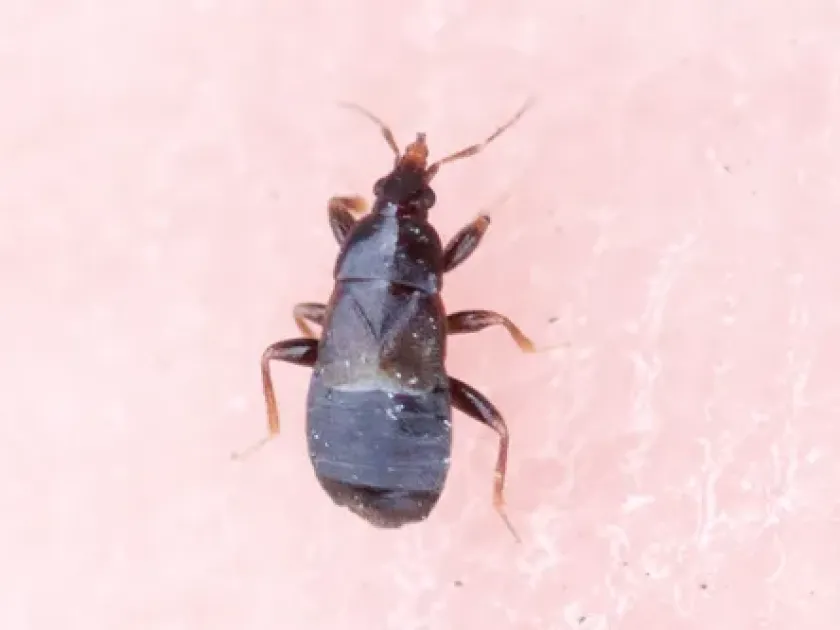
Description
How to identify
Xylocoris cursitans is a representative of the order Hemiptera and the family Anthocoridae, commonly known as minute pirate bugs. These insects are characterized by their very small size, usually ranging from 2 to 3 mm in length.
The adult body is flattened and oval, typically dark brown or black in color, which helps them hide effectively in crevices, bark, or decaying plant matter.
The nymphs go through several developmental stages; they resemble the adults in body shape but lack fully developed wings and may have a lighter, yellowish-brown coloration.
These bugs are primarily known for their secretive nature, often inhabiting stored agricultural products, leaf litter, and areas with high concentrations of vegetable debris.
While many Anthocoridae species are beneficial predators, Xylocoris cursitans is frequently associated with stored grain environments where it can become a nuisance pest.
What it damages
The primary concern regarding Xylocoris cursitans is its presence in stored grain facilities, where it can contaminate products and compromise the quality of stored seeds.
Although they are often scavenger-like, their feeding activity or simply their presence in large numbers can lead to the damage of seed coatings, which reduces germination potential.
By moving through stored grain, these insects transport fungal spores and bacteria, which can accelerate the spoilage of grain batches, especially under humid conditions.
The presence of their excrement and cast-off skins (exuviae) significantly degrades the commercial value and hygiene standards of stored agricultural produce.
In severe cases, a high population density within a grain silo can lead to localized heating, creating a favorable environment for secondary pest outbreaks and mold growth.
When it appears
The activity of Xylocoris cursitans is highly dependent on temperature and humidity levels within their habitat, whether in the field or in storage.
In temperature-controlled storage facilities, they can maintain a continuous reproductive cycle throughout the year, provided there is enough food and adequate moisture.
In field conditions, populations usually peak during the warm summer months when environmental conditions favor the rapid development of successive generations.
As temperatures drop in late autumn, the bugs seek shelter in deep crevices, under tree bark, or within dense plant debris to survive the winter months in a state of diapause.
The migration from field to storage facilities is most pronounced in late summer and early autumn as outdoor food sources dwindle and the weather becomes less favorable.
Signs of infestation
The earliest signs of an infestation include the detection of small, dark fecal spots on the surface of stored grain or inside transport containers.
Visual inspection often reveals the presence of cast-off nymphal skins and small, active adults moving quickly when the grain layer is disturbed.
A characteristic, slightly pungent odor may be noticeable in heavily infested storage areas, which is common for many species within the Anthocoridae family.
Grain quality issues, such as visible dark spots on seeds or the presence of secondary mold growth, are indicators that these pests may have established a colony.
- Localized heating spots within the grain mass.
- Increased dustiness and debris within the storage area.
- Presence of adults in monitoring traps placed near grain piles.
Control measures
The most effective management strategy involves rigorous sanitation of grain storage facilities, including the cleaning of silos and removal of leftover grain debris.
Maintaining low moisture content in stored grain (below 14%) is crucial, as it creates an inhospitable environment for the development of most stored-product pests.
Fumigation of grain stocks using approved chemicals (such as phosphine-based products) is a standard procedure to eliminate infestations hidden deep within the grain mass.
Mechanical cleaning of grain using sieves or aspiration systems helps remove impurities, dust, and broken kernels, which are the primary food sources for these bugs.
Regular monitoring using pheromone or sticky traps is essential to detect the early arrival of pests, allowing for targeted interventions before a major outbreak occurs.
Taxonomy
- Latin name
- Xylocoris cursitans
- Order
- Hemiptera (bugs, aphids, leafhoppers)
- Family
- Anthocoridae
- EPPO code
- XYOCCU
Discussion
No discussions yet — be the first.