
Xylocoris
Xylocoris
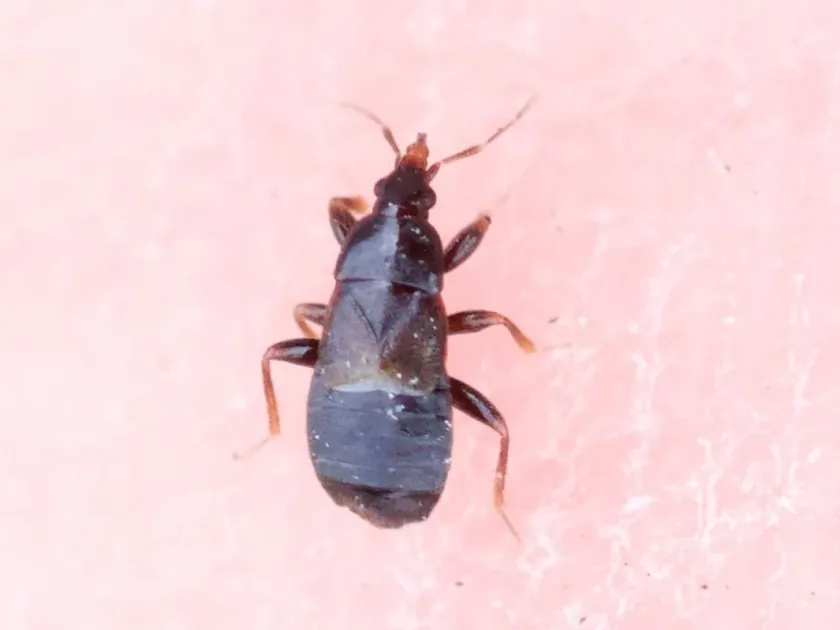
Description
How to identify
The genus Xylocoris belongs to the family Anthocoridae (minute pirate bugs) within the order Hemiptera. These are tiny insects, typically ranging from 2 to 4 millimeters in length, characterized by an elongated, dark or brownish body.
Morphologically, they possess well-developed wings that enable them to move actively in search of food. The head features a prominent rostrum, which in predatory species is adapted for piercing the tissues of their prey.
Identification in the field is challenging due to their microscopic size. Specialists identify species based on the genital structures of males and specific wing venation patterns visible only under high magnification.
The biology of the genus is diverse; while many species are predators, some have adapted to specific environments, including storage facilities where they interact with agricultural commodities.
Development occurs via incomplete metamorphosis. The life cycle includes the egg stage, five nymphal instars, and the adult stage, which is typical for the suborder Heteroptera.
What it damages
Xylocoris poses a threat primarily by compromising plant tissue integrity or residing in grain storage facilities, where they may coexist with other primary pests.
In agricultural practice, damage to stocks is recorded when the presence of insects in storage facilities degrades the quality of the product and necessitates phytosanitary intervention.
Plants may be damaged when bugs seek sites for oviposition or shelter. Injury to young shoots sometimes leads to tissue necrosis at the puncture sites caused by the bug's rostrum.
The pest is often found in grain crops and warehouses. It favors microclimates with high humidity, which makes it a risk for freshly harvested, poorly dried grain.
Indirect damage includes contamination of the harvest and spoilage of seed material, which is critical for agribusinesses involved in long-term storage of agricultural products.
When it appears
The peak activity period of Xylocoris occurs in the second half of summer when stable high temperatures promote accelerated metabolism and reproduction.
Adults overwinter in sheltered locations: under tree bark, in plant debris, within crevices of storage structures, or inside warehouse equipment.
In spring, when average daily temperatures reach above 12–15 degrees Celsius, insects emerge from diapause and begin searching for suitable substrates for feeding.
In greenhouse conditions or climate-controlled storage, generations can develop continuously throughout the year if a food supply is present.
Population peaks often coincide with the ripening period of grain crops, when insects migrate from wild plants to cultivated fields.
Signs of infestation
A visual sign of Xylocoris presence is the detection of individual specimens when inspecting grain piles or surfaces of equipment in storage facilities.
On plants, primary indicators include tiny pinpoint punctures, which may be surrounded by a zone of darkening or wilting of the adjacent leaf or stem tissue.
An indirect indicator is the increased activity of other insects, which certain species of Xylocoris may prey upon, often complicating diagnosis.
In storage, the presence of the pest is determined by analyzing grain samples using sieves, allowing for the separation of small insects from the bulk of the product.
During long-term storage, a specific unpleasant odor characteristic of many true bugs may be observed, secreted by glands when large numbers of individuals congregate.
Control measures
The primary control measure is maintaining warehouse hygiene: regular cleaning of facilities, dry removal of dust and plant residues where bugs can hide.
Effective prevention involves high-quality drying of grain before storage; reducing humidity below critical levels makes the environment unsuitable for pest development.
In case of massive infestation, warehouse fumigation and aerosol treatment with contact insecticides approved for storage use are employed.
The application of biological control methods is limited, although the use of entomopathogenic fungi shows promise for population reduction in closed ecosystems.
- Regular monitoring of stored stocks using pheromone traps.
- Maintaining storage temperatures below 10 degrees Celsius.
- Sealing storage facilities to prevent migration of insects from the outside.
Taxonomy
- Latin name
- Xylocoris
- Order
- Hemiptera (bugs, aphids, leafhoppers)
- Family
- Anthocoridae
- EPPO code
- XYOCSP
Discussion
No discussions yet — be the first.