
Palm lace bug
Xylastodoris
Description
How to identify
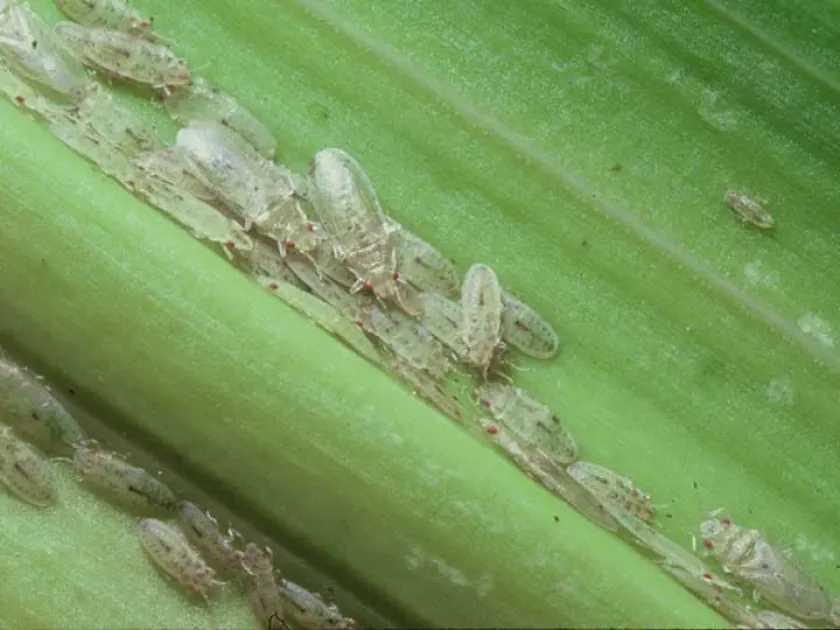
Xylastodoris luteolus, commonly known as the palm lace bug, is a member of the Thaumastocoridae family within the order Hemiptera. These insects are extremely small, typically measuring about 2 mm in length, making them difficult to spot without close inspection.
The adult insect has a flattened, pale yellow or semi-transparent body. This morphology is perfectly adapted for living in the tight spaces between the folded leaflets of developing palm fronds, where they often remain hidden from casual observation.
The life cycle involves multiple nymphal stages, during which the insects are similar to adults but wingless and less mobile. They develop by sucking sap from the host plant, causing physiological stress to the palm tree.
Eggs are laid individually on the surface of leaflets, often near the midrib, which makes them very difficult to detect during plant quarantine checks. Their cryptic behavior is a primary factor in their ability to spread rapidly in nursery settings.
Accurate identification usually requires the use of a magnifying glass or a stereomicroscope to examine the wing venation and head structure, which are characteristic of this specific family of lace bugs.
What it damages
The palm lace bug primarily infests various species of palms, with the Royal Palm (Roystonea regia) being a notable host. They are particularly attracted to young, expanding leaves, which are softer and richer in nutrients.
By using their piercing-sucking mouthparts, these insects drain sap from the leaf cells. This feeding process involves the injection of enzymes that lead to cellular death, resulting in chlorotic spots and stunted leaf growth.
As the feeding damage accumulates, the leaf surface begins to lose its vibrant green color, turning yellowish and eventually brown. This reduces the total photosynthetic capacity of the tree, hindering its overall growth and vitality.
In severe cases of infestation, the damage can lead to premature leaf drop and the death of the terminal bud, potentially causing the entire tree to perish. This is particularly devastating in large-scale ornamental plantations and urban landscaping.
Continuous feeding also compromises the tree's natural defense mechanisms, leaving it susceptible to secondary environmental stresses and pathogenic organisms that take advantage of the weakened plant tissue.
Signs of infestation
The first visual sign of a Xylastodoris infestation is the appearance of mottled yellowing or spotting on the younger fronds. These spots are the result of thousands of microscopic feeding sites on the leaf epidermis.
The presence of cast-off exuviae (molted skins) on the underside of the leaves is a classic diagnostic sign. These white, papery remnants remain attached to the leaves and are often easier to spot than the live insects themselves.
Black or dark brown fecal spots on the leaf surface often indicate an active colony. These spots can provide a substrate for sooty mold, which further interferes with the leaf's gas exchange and health.
Affected leaves may exhibit curling, distortion, or significant browning at the tips. If left unmanaged, the crown of the palm will look sparse and sickly, significantly reducing the aesthetic value of the specimen.
Upon shaking a heavily infested palm, adult bugs may fall from the crown. A closer look at the base of the leaf leaflets often reveals clusters of nymphs and adults huddled together to feed.
Control measures
Management of the palm lace bug relies heavily on systemic insecticides, which are absorbed by the plant and ingested by the bug during feeding. This provides a more effective and targeted solution than contact sprays alone.
For mature palms in public areas, trunk injections are frequently utilized. This method is highly efficient as it distributes the active ingredient throughout the palm's vascular system, minimizing drift and impact on beneficial insects.
Integrated Pest Management (IPM) strategies include the encouragement of natural predators. Small spiders, predatory mites, and other beneficial insects often inhabit the canopy and can provide a level of biological control.
- Regular inspection of new nursery stock for signs of infestation.
- Sanitary pruning of the most severely damaged fronds to lower population density.
- Application of systemic pesticides according to regional regulatory guidelines.
- Use of horticultural oils on young fronds to disrupt feeding and egg-laying.
Consistent monitoring is the key to preventing major outbreaks. By identifying the signs of activity early, homeowners and landscapers can treat the palms effectively without needing excessive quantities of chemical products.
Taxonomy
- Latin name
- Xylastodoris
- Order
- Hemiptera (bugs, aphids, leafhoppers)
- Family
- Lygaeidae
- EPPO code
- XYLDSP
Discussion
No discussions yet — be the first.