
Sycamore bug
Arocatus melanocephalus
Description
How to identify
The Sycamore bug, scientifically known as Arocatus melanocephalus, belongs to the family Lygaeidae within the order Hemiptera. These insects typically measure between 6 and 8 millimeters in length.
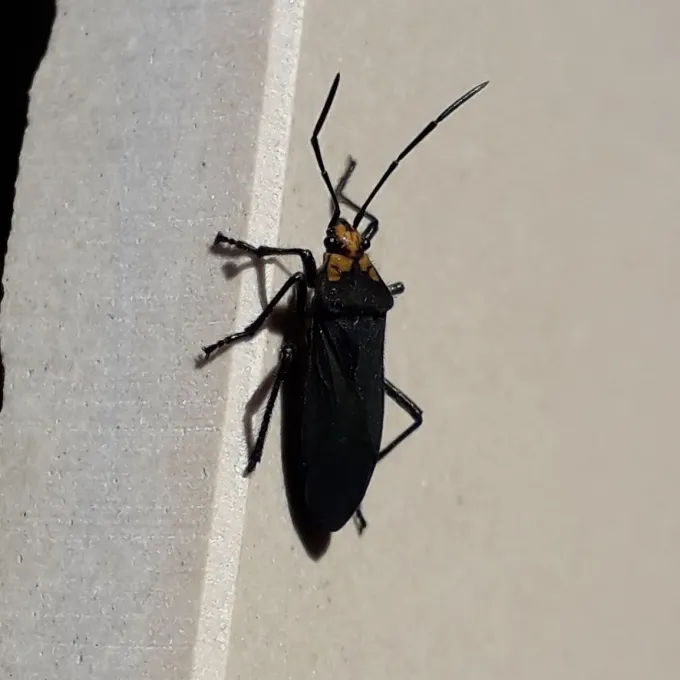
The adult insect displays a distinctive coloration featuring reddish-brown and black patches. A key identifying feature is the presence of pale spots on the pronotum and the scutellum, which contrast sharply with the dark head.
The life cycle involves several nymphal stages. Unlike adults, nymphs lack fully developed wings and often exhibit a more vibrant orange or reddish abdomen, making them distinct from the mature bugs.
Adults possess functional wings, which they use to migrate extensively during the warmer months, allowing them to spread across sycamore populations in urban parks and residential areas.
As the name suggests, this species is host-specific to plane trees (genus Platanus), meaning their presence is almost always associated with these particular ornamental trees.
What it damages
The Sycamore bug primarily targets trees of the Platanus genus, particularly the London plane tree. They are specialized sap-feeders that rely on the nutrient-rich fluids of their host.
By piercing the bark of young shoots and the tissues of leaves and fruits, they remove essential nutrients. This process stunts the growth of the shoots and weakens the overall structure of the leaves.
Severe infestations lead to premature leaf yellowing and shedding. If an attack occurs early in the season, it can severely stress the tree, reducing its ability to store energy for the following spring.
The physical damage caused by feeding creates entry points for various phytopathogens, including fungi, which can lead to localized necrosis or branch dieback in weakened specimens.
Besides the arboricultural impact, the bug becomes a nuisance during the autumn migration, as they seek overwintering sites in buildings, causing significant annoyance to people living near infested trees.
When it appears
Emergence from overwintering sites occurs in early spring, typically during April or May, when temperatures rise sufficiently to trigger the insects' metabolic activity.
Reproduction takes place throughout the late spring and early summer. Eggs are laid in sheltered areas, often within the cracks of the bark, ensuring the protection of the next generation.
The summer months, specifically July and August, mark the period of maximum population density. During this time, both nymphs and adults feed actively, causing the most visible damage to the canopy.
Autumn migration occurs as temperatures begin to drop. This is a critical period when insects move from the trees to human-made structures to find warm spots for hibernation.
Winter is spent in a state of diapause. The bugs aggregate in protected cracks of bark, piles of dry leaves, or within the wall crevices of houses to survive the winter cold.
Signs of infestation
A primary indicator of infestation is the mass aggregation of bugs on the trunks of plane trees. They are often found in large clusters around branch forks and within deep bark furrows.
Leaves often show fine, pale stippling or necrotic spots where the bugs have pierced the tissue. In cases of high pest pressure, the leaves may turn yellow and drop prematurely.
Finding empty nymphal skins (exuviae) left behind on the bark and leaves is a clear sign that the colony has successfully completed its developmental stages on that specific tree.
A distinctive, somewhat pungent odor is often emitted by the bugs when they are disturbed in large groups. This smell is a common sensory marker for the presence of a colony.
During the autumn, the presence of these bugs on exterior walls, window sills, and doors of nearby buildings is the most obvious sign that a significant population is established in the vicinity.
Control measures
Mechanical control involves the careful cleaning of tree trunks during the dormant season to remove loose bark. This destroys the primary overwintering sites and physically reduces the population.
Sanitation practices such as collecting and disposing of leaf litter in autumn are vital. Removing this debris prevents the bugs from using the fallen leaves as winter shelters near the tree base.
Chemical intervention may be necessary in high-density infestations. Systemic insecticides are preferred as they effectively target the sap-feeding insects within the tree's tissues.
It is essential to apply treatments during the early nymphal stages. At this point, the bugs are more susceptible to insecticides, and control efforts can effectively prevent severe canopy damage.
Integrated pest management suggests rotating different types of insecticides to minimize the risk of developing resistance within the bug population, ensuring long-term efficacy of the control program.
Taxonomy
- Latin name
- Arocatus melanocephalus
- Order
- Hemiptera (bugs, aphids, leafhoppers)
- Family
- Lygaeidae
- EPPO code
- AROKME
Discussion
No discussions yet — be the first.