
Pine bug
Aphanus pini
Description
How to identify
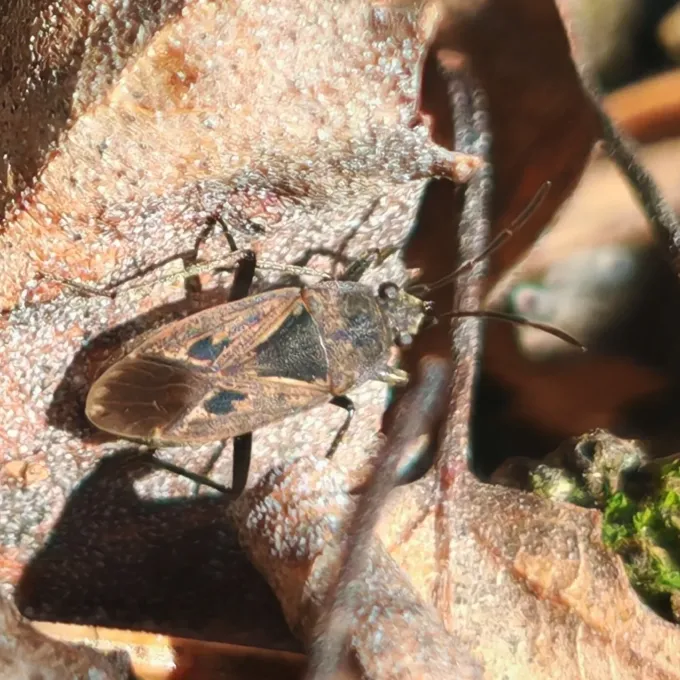
The pine bug (Aphanus pini) is a true bug belonging to the family Rhyparochromidae. Adult insects are characterized by a brownish, elongated body measuring approximately 6 to 8 mm in length.
The head is relatively small with well-developed eyes, while the pronotum is broadened, a structural feature common to many ground bugs. These physical traits help the bug blend into its forest environment.
They possess functional wings, enabling them to move across forest stands in search of food or suitable overwintering sites. Their legs are well-adapted for quick movement across soil and leaf litter.
Nymphs of this species resemble smaller, wingless versions of adults. Their coloration is usually darker, which provides effective camouflage among forest debris and soil particles.
In forest entomology, Aphanus pini is recognized as a specific insect that maintains a close association with coniferous habitats, specifically pine forests, throughout its lifecycle.
What it damages
The pine bug primarily feeds on the seeds of coniferous trees, especially the Scots pine. By puncturing the seed coat, it extracts nutrients directly from the endosperm.
This feeding behavior poses a serious threat to seed orchards and forest nurseries, as damaged seeds lose their viability and fail to germinate during the reforestation process.
In addition to reducing seed germination rates, the pest activity leads to significant economic losses in the forestry sector, particularly regarding the harvest of quality seeds.
While their diet is specialized towards seeds, in scenarios where seeds are scarce, they may occasionally target other succulent plant tissues, though this remains a secondary behavior.
High infestation levels can result in a dramatic decrease in the yield of viable seeds, necessitating rigorous monitoring and management during years of high cone production.
When it appears
Adults overwinter in protected areas such as forest litter, dry pine needles, bark crevices, and soil voids. They remain dormant throughout the cold season to survive the winter.
As spring temperatures rise, the bugs emerge from their overwintering sites. This activity typically coincides with the beginning of the growing season of pine trees.
The peak of activity occurs during the summer months when pine cones reach maturity. The bugs congregate in the crowns of trees to engage in active feeding on the developing seeds.
As autumn approaches, the bugs prepare for the next hibernation phase by moving downwards from the tree crowns towards the ground to find suitable wintering spots.
The overall life cycle of the pine bug is highly synchronized with the phenology of their host trees, ensuring that the emergence period matches the availability of the seed resource.
Signs of infestation
A primary indicator of pine bug infestation is the presence of hollow or malformed seeds within collected cones. When opened, these seeds lack the necessary nutritional substance for growth.
Close inspection of the seed coat often reveals microscopic puncture marks, which are physical traces of the bug's piercing-sucking mouthparts used during the feeding process.
A high density of insects found in the forest floor litter during dry, warm weather can serve as an early warning sign of a potentially high population level in the area.
Poor growth or sudden die-off in nursery seedlings can be linked to the use of seeds that were previously damaged by this specific pest during the maturation stage.
Entomological surveys that include the collection and laboratory analysis of cones are the most reliable method for assessing the severity of the infestation in a specific stand.
Control measures
Effective management begins with sanitary forestry practices, such as removing excess litter, fallen needles, and debris where the bugs typically spend their winter dormancy.
Maintaining spatial isolation between seed production areas and mature forest stands is crucial to preventing the migration of the pine bug into valuable nursery sites.
Biological control using entomopathogenic fungi is a viable option for large areas, as it minimizes environmental impact while suppressing the population of the pest.
Chemical intervention is generally reserved for severe outbreaks where there is a significant risk to the seed crop, and it must be applied in accordance with regional forestry guidelines.
- Use pheromone traps for early detection of population surges.
- Promote biodiversity to encourage natural predators like birds and ground beetles.
- Conduct periodic visual checks of cone quality during harvest seasons.
Taxonomy
- Latin name
- Aphanus pini
- Order
- Hemiptera (bugs, aphids, leafhoppers)
- Family
- Lygaeidae
- EPPO code
- APASPI
Discussion
No discussions yet — be the first.