
Aphanus apicalis
Aphanus apicalis
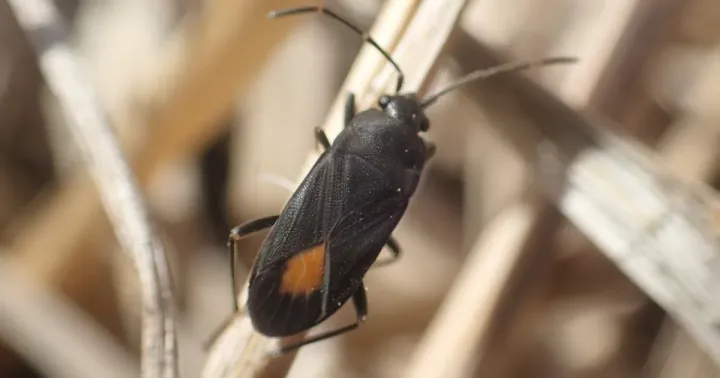
Description
How to identify
Aphanus apicalis is a species of true bug belonging to the family Rhyparochromidae, order Hemiptera. These insects are well-adapted to life in agricultural and grassy environments, often remaining inconspicuous.
The adult insect typically measures between 5 and 8 millimeters in length. Their body coloration is generally dark brown or blackish, which provides excellent camouflage against soil and decaying organic matter.
Morphologically, they possess a distinct structure of the pronotum and head, which serves as a diagnostic feature for identification by specialists. They have fully developed wings and are capable of flight.
The life cycle encompasses eggs, five nymphal instars, and adults. As true bugs, they undergo incomplete metamorphosis, with nymphs appearing as smaller, wingless versions of the adults.
Overwintering occurs primarily in the adult stage. During the colder months, they seek refuge under leaf litter, in the topsoil, or within dense vegetation to survive.
What it damages
Both adults and nymphs cause damage by feeding on plant sap. They use their specialized piercing-sucking mouthparts to extract nutrients, which weakens the host plant significantly.
Strawberries are particularly vulnerable to their feeding activities. When they feed on developing fruits or flower buds, it leads to berry deformity, reduced size, and loss of commercial quality.
The puncture wounds inflicted by the bugs create entry points for secondary pathogens. This often results in the development of soft rots and molds on the ripening fruit.
High population densities during the fruit-set stage can lead to substantial yield losses. The impact is exacerbated during dry periods when the bugs become more active in their search for moisture.
Additionally, they may act as vectors for various phytopathogens, contributing to the spread of diseases within the strawberry plantation.
When it appears
Adults emerge from their overwintering sites in early spring as soon as temperatures become favorable. They immediately begin searching for succulent plants to feed on and start their breeding cycle.
The peak activity period usually occurs from late spring through mid-summer. This timing coincides with the most critical growth stages of berry crops, leading to severe potential impacts.
Depending on the climatic conditions, multiple generations can occur during the growing season. Warm weather typically accelerates the developmental stages of the nymphs.
As summer draws to a close, the insects gradually decrease their feeding and activity levels. They begin looking for sheltered environments to enter diapause for the winter.
Local weather patterns, particularly rainfall and temperature fluctuations, significantly influence the population dynamics and survival rates throughout the year.
Signs of infestation
Small, whitish, or dark dots on the surface of ripening berries are often the first sign of Aphanus apicalis presence. These marks indicate where the bugs have pierced the fruit tissue.
Deformed or asymmetrical berries are a clear indicator of early-stage feeding. When nymphs feed on developing ovaries, the fruit fails to grow evenly.
Visual observation of colonies of nymphs huddled in plant crevices, such as leaf axils or under flower stalks, provides confirmation of an active infestation.
The presence of dark excrement spots on the foliage or fruit surface is another common sign of a significant bug population inhabiting the area.
Quick movement of small, dark insects within the plant canopy when disturbed is a characteristic behavioral sign of these bugs when they are being inspected.
Control measures
Cultural practices are the first line of defense. Keeping fields free of weeds and removing debris post-harvest denies the bugs their primary wintering and breeding habitats.
The use of mulch, such as plastic films or agrotextiles, acts as a physical barrier, preventing the bugs from reaching the ripening fruit easily.
Biological control options, including the use of entomopathogenic fungi or encouraging natural predators like ladybirds and ground beetles, can effectively suppress populations.
Chemical control should be used as a last resort, strictly adhering to pre-harvest intervals to ensure consumer safety. Selective, low-impact insecticides are preferred.
- Implement systematic crop rotation.
- Monitor pest density using sticky traps.
- Promptly remove damaged and infected fruit.
- Maintain adequate irrigation to reduce plant stress.
- Promote biodiversity around the plantation to attract natural enemies.
Taxonomy
- Latin name
- Aphanus apicalis
- Order
- Hemiptera (bugs, aphids, leafhoppers)
- Family
- Lygaeidae
- EPPO code
- APASAP
Discussion
No discussions yet — be the first.