
Plane lace bug (sycamore bug)
Arocatus roeselii
Description
How to identify
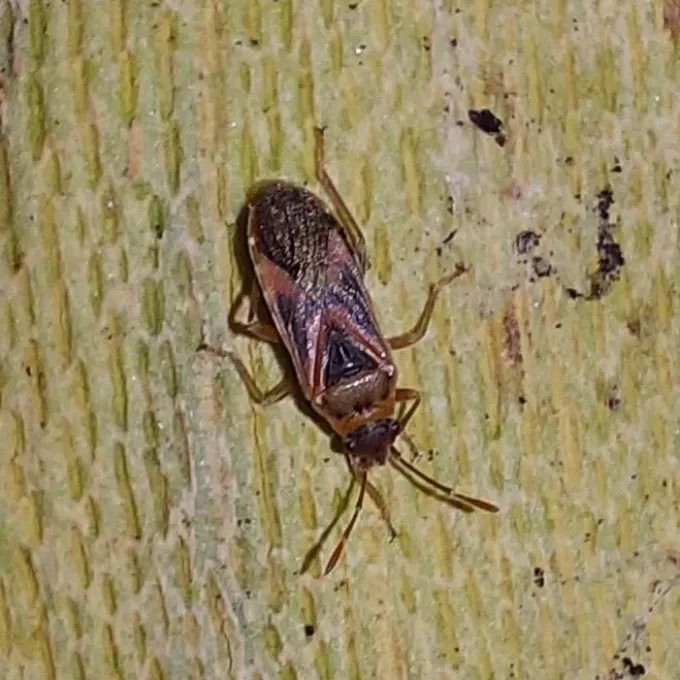
The plane tree bug, known scientifically as Arocatus roeselii, belongs to the Lygaeidae family. It is a distinctive insect typically measuring between 6 and 8 mm in length.
The insect is easily recognized by its dark brown or black body featuring striking orange-red markings on the pronotum and the hemelytra.
Adults possess fully developed wings, allowing for significant mobility and dispersal across urban landscapes and forest plantations during the warmer months.
Nymphs are similar in appearance to adults but are smaller, wingless, and undergo several molting stages before reaching sexual maturity.
These bugs are known for producing a pungent odor when disturbed, which serves as a defense mechanism against potential predators in their environment.
What it damages
Arocatus roeselii feeds primarily on Platanus species, using its piercing-sucking mouthparts to extract sap from the bark, twigs, and developing fruit.
Heavy infestations can cause visible stress to the tree, resulting in premature leaf yellowing, branch dieback, and a significant reduction in annual growth rates.
Feeding sites on the bark often weaken the tree's natural defenses, creating entry points for secondary pathogens like fungi, which can lead to localized necrotic lesions.
While the primary host is the plane tree, the pest can temporarily colonize other broad-leaved trees when the plane tree population reaches unsustainable levels.
Large colonies covering the trunk and branches not only damage the tree's health but also reduce its aesthetic value in parks and residential areas.
When it appears
The activity of the plane tree bug is heavily dependent on temperature, with adults emerging from their winter diapause in early spring.
During the summer, the insect completes multiple generations, leading to exponential growth in population density by late August and early September.
As temperatures begin to drop in autumn, adults seek sheltered locations such as deep bark crevices or structural gaps in buildings to hibernate.
Winter survival is limited to the adult stage, as nymphs and eggs are generally unable to withstand prolonged exposure to freezing temperatures.
Periodic warm spells in winter can occasionally cause individual bugs to emerge from hiding, although mass activity remains dormant until spring.
Signs of infestation
The most prominent sign of infestation is the presence of dense clusters of bugs tightly packed against the trunk and main branches of the plane trees.
Observers may find shed nymphal skins (exuviae) on the bark, indicating successful development and repeated molting cycles within the colony.
Darkened or discolored patches on the bark surface often signify areas where intensive sap extraction by the bug colony has occurred.
Distorted, shriveled, or prematurely fallen fruits (achenes) are common indicators, as the bugs frequently congregate on them to feed during the summer.
A distinct smell, combined with the physical sight of thousands of insects on the tree, provides clear evidence of a significant infestation.
Control measures
Effective management requires the application of systemic or contact insecticides during the early stages of nymphal development in late spring.
Cleaning the bark of old, loose scales through mechanical means can significantly reduce the number of suitable hibernation sites for the pest.
In residential settings, using non-toxic or low-toxicity barrier treatments around entry points of buildings helps prevent bugs from seeking indoor shelter.
Regular monitoring of tree health and early detection of bug colonies allow for localized treatment, minimizing the need for broad-spectrum chemical sprays.
Integrating biological controls and habitat management is recommended as a long-term strategy for maintaining the health of urban plane tree populations.
Taxonomy
- Latin name
- Arocatus roeselii
- Order
- Hemiptera (bugs, aphids, leafhoppers)
- Family
- Lygaeidae
- EPPO code
- AROKRO
Discussion
No discussions yet — be the first.