
Green swordtail
Xiphophorus helleri
Description
How to identify
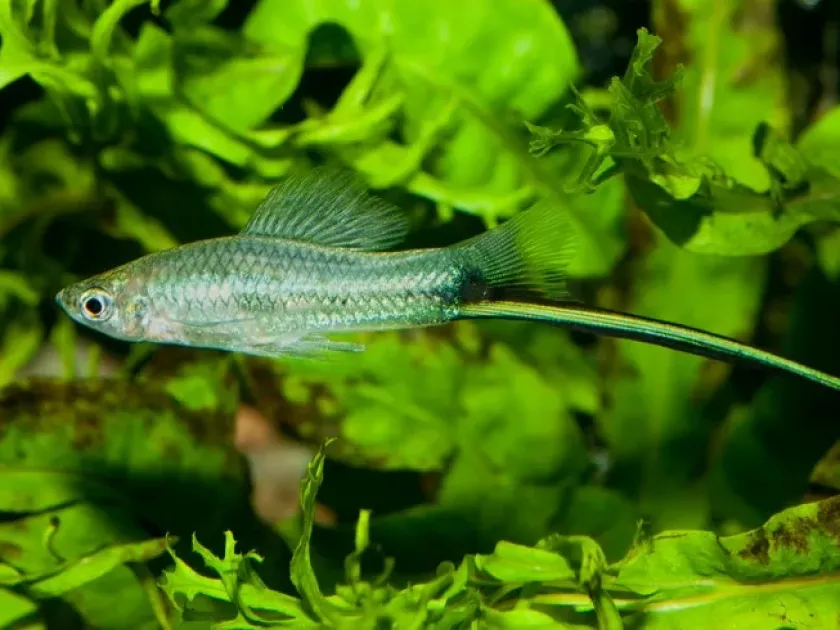
The Green swordtail (Xiphophorus helleri) is a freshwater fish belonging to the Poeciliidae family, order Cyprinodontiformes. It is widely recognized by its streamlined body and the elongated lower lobe of the caudal fin in males, known as the sword.
Native to Central America, this species has become naturalized in many parts of the world due to its high adaptability to varying water conditions, including low oxygen levels and fluctuating temperatures.
As a live-bearing fish, it has a high reproductive rate, which allows it to establish large populations quickly in new habitats. Females can produce dozens of fry at intervals of a few weeks, facilitating rapid colonization.
Adult swordtails typically grow between 8 and 12 centimeters in length. They exhibit significant morphological variation due to intensive breeding, which sometimes makes identifying feral populations easier when they revert to wild-type coloration.
Their preference for stagnant or slow-moving water bodies brings them into frequent contact with human-made irrigation systems, canals, and flooded agricultural zones, such as rice paddies.
What it damages
The Green swordtail is not a direct agricultural pest in the sense of consuming crop tissues, but it acts as a significant biological disturbance factor in agricultural landscapes. Its primary impact is on the integrity of aquatic ecosystems used for farming.
In rice cultivation, the feeding behavior of large swordtail populations can disrupt the sediment layers in paddies. This mechanical agitation can dislodge or damage young rice seedlings, leading to poor establishment and yield loss.
By outcompeting native fish species that provide natural pest control—such as those that prey on mosquito larvae or other agricultural pests—the swordtail indirectly contributes to an increase in harmful insect populations near fields.
In irrigation canals, high densities of swordtails contribute to organic load accumulation through waste products, which can lead to clogged filtration systems and maintenance issues for agricultural water infrastructure.
Furthermore, their presence in aquaculture ponds can negatively affect the production of commercial species by competing for limited food resources and occupying the ecological niche, thereby reducing overall farm efficiency.
Control measures
Managing populations of Xiphophorus helleri requires physical intervention and habitat modification. The most effective control measure in agricultural settings is the installation of fine-mesh screens at the inlets of irrigation networks.
Regular harvesting of fish using nets and baited traps during the growing season can keep populations below damaging thresholds. This is particularly effective in small canals and reservoirs associated with intensive farming.
Biological control, achieved by encouraging native predatory fish species, is a sustainable way to manage swordtail numbers. Predatory fish reduce the recruitment of juvenile swordtails, naturally keeping the population in check.
Preventative education is essential, as many infestations originate from the release of unwanted aquarium pets into local waterways. Awareness campaigns for farmers and the public can significantly reduce the risk of further spread.
In extreme cases, temporary drainage and cleaning of irrigation channels can be used to eradicate local populations, ensuring that water quality and infrastructure efficiency are restored before the next planting cycle.
Taxonomy
- Latin name
- Xiphophorus helleri
- Family
- Cyprinodontidae
- EPPO code
- XIPOHE
Discussion
No discussions yet — be the first.