
Sheepshead minnow
Cyprinodon variegatus
Description
How to identify
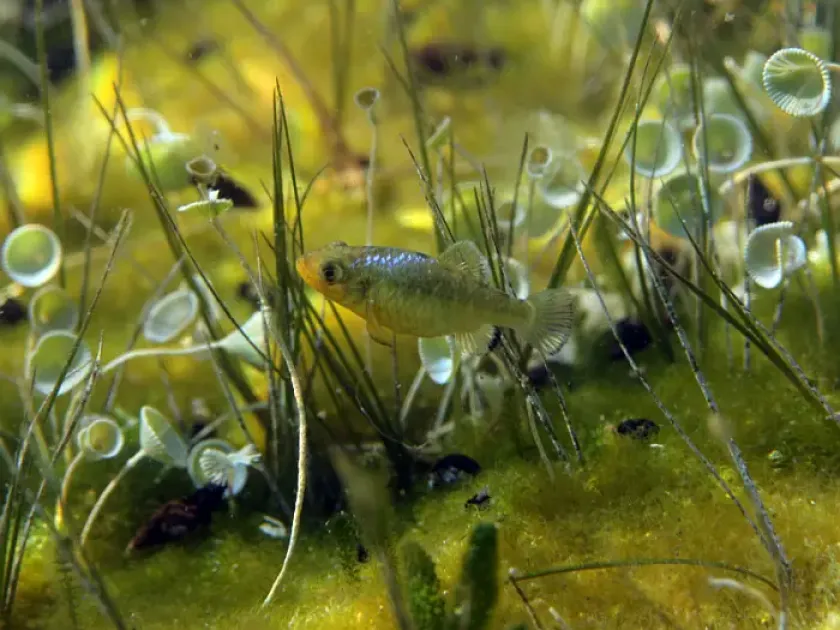
The sheepshead minnow (Cyprinodon variegatus) is a small, hardy fish of the Cyprinodontidae family, known for its extreme tolerance to varying salinity levels.
These fish have a deep, compressed body with a distinct, mottled pattern, and males often display vibrant colors during the spawning season.
Typically reaching only 7–8 centimeters in length, they are highly mobile and capable of infiltrating shallow irrigation canals and flooded agricultural fields.
For agronomists, distinguishing this species from beneficial fish is essential, as its aggressive and opportunistic feeding habits can become problematic.
Identification is aided by observing the characteristic vertical bars on the sides and the dorsal fin's position, which is set well back on the body.
What it damages
The primary concern regarding the sheepshead minnow is its impact on integrated aquaculture-agriculture systems where crops grow in submerged conditions.
As opportunistic feeders, they consume young plant shoots, buds, and tender foliage, leading to direct destruction of submerged agricultural vegetation.
Feeding behavior often involves digging into the substrate, which disturbs the soil and exposes the delicate root systems of young crops to potential decay.
Significant yield loss can occur when fish populations congregate in flooded fields during the early developmental stages of sensitive aquatic plants.
Indirect damage occurs as the fish modify the local benthic environment, negatively influencing the water quality and microbial balance necessary for crop growth.
When it appears
The activity of the sheepshead minnow is heavily dictated by water temperature, with peak feeding and movement occurring throughout the summer months.
Spawning typically takes place in late spring, driving the fish into shallow, flooded agricultural zones to lay eggs and forage among dense vegetation.
During the height of summer, their metabolic rates increase, leading to intensified browsing on available aquatic plant matter across the field.
As temperatures begin to decline in autumn, the population tends to retreat into deeper water bodies or permanent drainage channels for overwintering.
New generations of juveniles emerge in mid-summer, increasing the cumulative grazing pressure on crops throughout the middle of the growing season.
Signs of infestation
The most immediate indicator of presence is the appearance of jagged, mechanically damaged edges on the underwater parts of crop stems and leaves.
Increased turbidity within irrigation channels and flooded field areas is a hallmark of their persistent bottom-feeding behavior.
Active fish sightings near the edges of crops or within dense vegetation patches indicate a localized population that requires monitoring.
Sparse patches or "bare spots" in the crop field are often associated with areas where these fish have concentrated their browsing and soil-disturbing activities.
- Mechanically browsed leaf edges.
- Increased localized water murkiness.
- Visible fish schooling near vegetation.
Control measures
The most effective strategy involves installing fine-mesh screens at all water intake points to block the entry of fish into sensitive agricultural zones.
Strategic water level management, such as temporary draining of specific sections, can successfully force populations back into deeper drainage channels.
Biological control methods, such as introducing predatory fish species, can naturally keep sheepshead minnow populations below damage thresholds.
Maintaining clear irrigation canals and removing excessive non-crop vegetation reduces the available habitat for spawning and shelter.
Chemical control is generally avoided due to the risk of aquatic toxicity and negative impacts on overall water quality, making physical barriers the priority.
Taxonomy
- Latin name
- Cyprinodon variegatus
- Family
- Cyprinodontidae
- EPPO code
- CYPIVA
Discussion
No discussions yet — be the first.