
Spanish toothcarp
Aphanius iberus
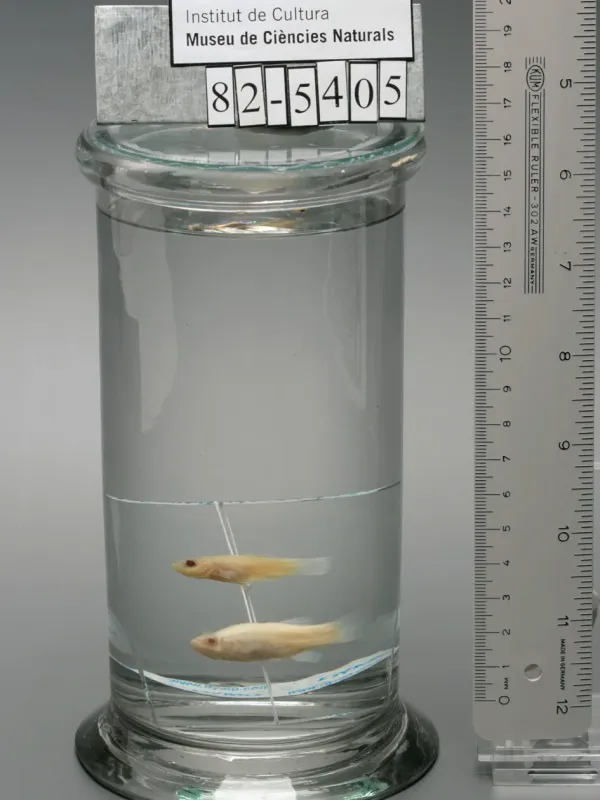
Description
How to identify
The Spanish toothcarp (Aphanius iberus) is a small fish species belonging to the family Cyprinodontidae within the order Cyprinodontiformes.
This species is characterized by its small size, rarely exceeding 5 cm, and its ability to thrive in highly saline environments, including coastal lagoons and estuaries.
Sexual dimorphism is evident in this species, with males displaying distinct vertical bands, while females possess a more muted, spotted pattern.
Aphanius iberus is an endemic species native to the Iberian Peninsula, playing a crucial role in maintaining the ecological balance of local water bodies.
Biologically, it is highly adapted to extreme temperature fluctuations and variations in water salinity, making it a unique subject for ichthyological studies.
What it damages
The Spanish toothcarp is not an agricultural pest. It does not cause any damage to crops, fruit trees, or ornamental plants in any agricultural system.
The species feeds primarily on small invertebrates and plankton, meaning it has zero impact on the growth or health of terrestrial agricultural vegetation.
There is no record in agronomic science of Aphanius iberus acting as a nuisance to irrigation systems or soil quality; it is strictly an aquatic dweller.
In contrast to pests, this fish provides a natural ecosystem service by consuming mosquito larvae, which can be beneficial for managing insect populations near fields.
Misclassifying this fish as a pest is scientifically incorrect, as it poses absolutely no threat to agricultural productivity or economic output.
Control measures
As an endangered species under protection, control measures for Aphanius iberus focus exclusively on conservation and habitat restoration.
Agriculture near the habitats of the Spanish toothcarp must involve strict adherence to water safety protocols to prevent pesticide runoff and contamination.
Conservationists recommend preventing the introduction of invasive species like Gambusia holbrooki, which competes with the Spanish toothcarp for resources.
Maintaining the integrity of wetlands and irrigation ditches is essential to ensure the survival of the remaining populations of this rare fish.
Sustainable land use and integrated pest management practices are the best ways to indirectly protect this species while maintaining agricultural efficiency.
Taxonomy
- Latin name
- Aphanius iberus
- Family
- Cyprinodontidae
- EPPO code
- APHZIB
Discussion
No discussions yet — be the first.