
Banded killifish
Fundulus diaphanus
Description
How to identify
The banded killifish Fundulus diaphanus is a small fish belonging to the Fundulidae family, known for its adaptability to various aquatic environments.
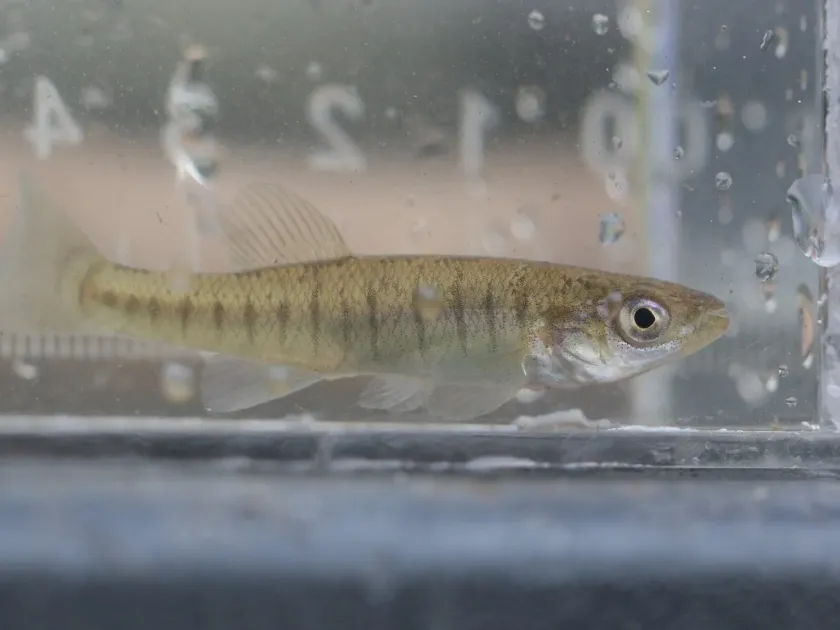
Adult fish typically reach lengths of 8 to 10 centimeters and feature a series of distinct vertical dark bars on their sides, providing excellent camouflage.
The species belongs to the order Cyprinodontiformes, possessing a terminal mouth positioned for efficient surface and mid-water feeding.
In agricultural settings, they are recognized as invasive pests when they infiltrate closed irrigation systems or commercial hydroponic setups.
Their bodies are slender with olive-green backs and silver bellies, and they are capable of surviving in a wide range of water salinity and temperature levels.
What it damages
The primary agricultural impact of Fundulus diaphanus is the physical damage caused to the root systems of crops grown in water-based media.
The fish graze on delicate root hairs and young roots, which directly inhibits the plant's nutrient uptake and can lead to severe growth stunting or mortality.
Furthermore, these fish are known to consume the seeds of aquatic plants, causing significant losses in germination rates and necessitating expensive reseeding efforts.
Their burrowing and digging behavior disrupts the substrate used to anchor plants, leading to floating crops and exposing roots to premature drying or rot.
Additionally, their presence can exacerbate the spread of waterborne diseases, as the fish act as vectors, moving pathogens between different cultivation zones.
When it appears
Banded killifish activity is highly correlated with water temperature, with peak foraging occurring during the warmer spring and summer months.
Spawning typically takes place when water temperatures reach 18 to 22 degrees Celsius, significantly increasing the energetic demands and feeding activity of the population.
In greenhouse settings with controlled climates, the fish can remain active throughout the year, causing persistent damage to protected crops.
The fish are most aggressive during early spring when they establish nesting sites, which often overlaps with the critical seeding phase of many commercial plants.
Seasonal migration between water bodies allows them to re-enter irrigation systems frequently, making constant vigilance necessary for the agricultural operator.
Signs of infestation
Early warning signs of an infestation include visual sightings of small, vertically-barred fish within the irrigation tanks or hydroponic growth channels.
Plants showing signs of stripped, bitten, or missing fine root hairs are a primary indicator of killifish presence in the system.
Turbid water conditions caused by the fish disturbing sediment or substrate particles are another common symptom of an active infestation.
Farmers often notice floating debris, including seeds and remnants of plant tissue, indicating that the fish have disturbed the growth media.
- Chewed root systems and missing root hairs.
- Floating seeds and plant debris in the system.
- Unexplained turbidity in hydroponic reservoirs.
Control measures
The most effective strategy is the installation of fine-mesh filtration screens at all water intake points to prevent fish or eggs from entering the system.
If an infestation is already established, mechanical removal using specialized funnel traps or netting is the recommended course of action.
Regular maintenance of the system, including the cleaning of sediment and organic matter, removes potential hiding spots and breeding grounds for the fish.
In specific cases, adjusting the water chemistry (pH or salinity levels) within the tolerance limits of the crops can discourage the fish from thriving.
Sanitization of the entire irrigation infrastructure using targeted biological or mild chemical agents may be necessary for large-scale infestations.
Taxonomy
- Latin name
- Fundulus diaphanus
- Family
- Cyprinodontidae
- EPPO code
- FUNUDI
Discussion
No discussions yet — be the first.