
Xiphandrium
Xiphandrium
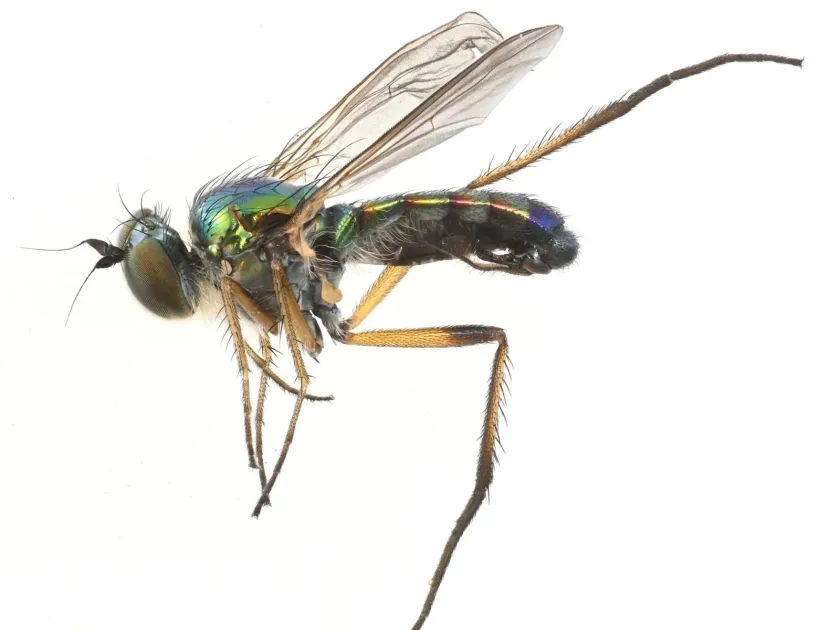
Description
How to identify
Xiphandrium is a genus of flies belonging to the family Dolichopodidae (long-legged flies) within the order Diptera. These insects are characterized by a metallic body sheen and long, slender legs, which are distinct features of the family.
Adult flies are relatively small, typically ranging from 3 to 5 millimeters in length. Their identification often requires a microscopic examination of wing venation and antennal structure to distinguish them from other closely related species in the field.
The larval stage is the primary point of interest for agronomists, as the larvae live in soil or decaying organic matter. They are apodous (legless), whitish, and worm-like, making them difficult to spot during standard field inspections.
The insect undergoes a complete metamorphosis, including egg, larval, pupal, and adult stages. This life cycle allows the population to persist in various environmental conditions if the soil remains sufficiently moist.
Distribution is widespread across various ecosystems, and they frequently migrate to agricultural fields where organic matter and humidity levels favor their survival and reproduction.
What it damages
Xiphandrium larvae can cause damage to a variety of agricultural crops, including cereals and vegetables. The damage is primarily root-based, as larvae feed on the tender root tissues of young plants.
Feeding by the larvae inhibits the plant's ability to absorb water and nutrients, resulting in stunted growth and a general decline in crop vigor. In severe cases, the seedlings may wither and die shortly after germination.
Reduced root health makes the plants highly susceptible to secondary pathogens, such as soil-borne fungi that cause damping-off and various types of root rot, further complicating the field situation.
Field patches with high soil moisture are most prone to heavy infestation. In these areas, larval density can increase rapidly, leading to significant thinning of the crop stand and potential economic loss for farmers.
The damage is most critical in the early vegetative stage. Once the root system is established and the plant is more mature, it can usually tolerate minor larval feeding, but early-stage losses are difficult to recover.
When it appears
The activity cycle of Xiphandrium typically begins in the spring as soon as soil temperatures reach favorable levels for larval metabolism. Overwintered larvae emerge and immediately start feeding on available roots.
Adult flight usually peaks in late spring, which is the key period for mating and egg-laying. Eggs are deposited in moist soil, marking the initiation of the next generation's life cycle.
During the summer months, activity remains steady, especially in irrigated fields where moisture is constantly provided. High humidity helps maintain the population through subsequent generations during the growing season.
As temperatures drop in the autumn, the larvae retreat deeper into the soil profile to enter a state of diapause, ensuring their survival throughout the winter months until the next season begins.
Monitoring for this pest should focus on the early spring months, as this is when the larvae are most active in the upper soil layers and when the plants are most vulnerable to root damage.
Signs of infestation
The first signs of infestation often appear as irregular patches of wilting plants that do not respond to supplemental irrigation, signaling root failure rather than water stress.
Careful extraction of affected plants from the soil will often reveal damaged root systems with visible lesions or partially consumed roots, indicating feeding activity by larvae.
A noticeable decrease in seedling emergence and uneven crop stands often point to larval feeding on seeds or developing roots, preventing the plant from breaking through the soil surface.
Chlorosis (yellowing) of the lower leaves without signs of foliar diseases is another common symptom, resulting from the plant's impaired ability to transport nutrients from the root system to the canopy.
Confirmed presence of the pest requires systematic soil sampling and extraction of larvae from the root zone to distinguish them from other soil-dwelling organisms.
Control measures
Cultural control is the first line of defense; implementing a diverse crop rotation helps disrupt the life cycle of the pest, preventing larvae from establishing stable populations in the same fields.
Deep fall tillage is effective in exposing the larvae to unfavorable environmental conditions and natural predators, significantly reducing the survival rate for the next spring season.
Seed treatments using systemic insecticides provide a crucial layer of protection during the most vulnerable early growth stages, ensuring that seedlings can develop their roots without interference.
Chemical intervention via soil-applied insecticides should be based on accurate threshold monitoring. Targeting the larval stage before they cause significant root damage is essential for successful management.
- Improve soil drainage to make the environment less hospitable for larvae.
- Use entomopathogenic nematodes as a biological control agent.
- Enhance plant growth with balanced fertilization to promote rapid root regeneration.
Taxonomy
- Latin name
- Xiphandrium
- Order
- Diptera (flies)
- Family
- Dolichopodidae
- EPPO code
- XIPMSP
Discussion
No discussions yet — be the first.