
Aphrosylus
Aphrosylus
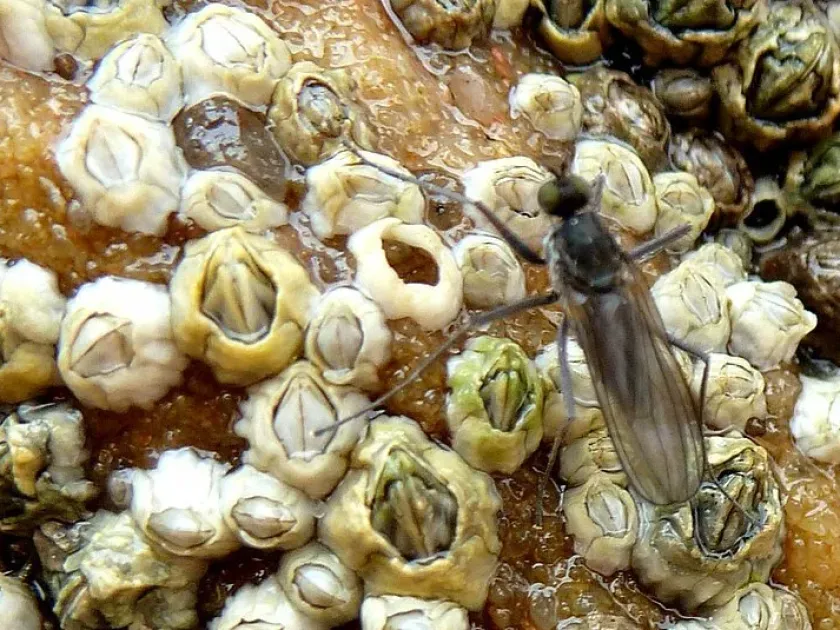
Description
How to identify
Aphrosylus is a genus of flies belonging to the family Dolichopodidae, commonly known as long-legged flies. These insects are typically found in moist environments, particularly along coastal areas and wet habitats.
Adult flies are generally small, possessing a metallic coloration and elongated legs. Their morphology is highly specialized, allowing them to navigate efficiently through complex moist substrates.
The larvae are cylindrical and pale, adapted for a semi-aquatic or damp soil lifestyle. They are often overlooked due to their small size and subterranean or cryptic habits near the soil surface.
Systematically, the genus contains several species that are crucial components of their native ecosystems, acting primarily as predators of small invertebrates in nature.
Accurate field identification often requires microscopic examination of the male genitalia and other specific morphological traits, as they closely resemble other species within the family.
What it damages
While Aphrosylus species are not primary agricultural pests, their impact in greenhouses or intensive cultivation systems can be problematic due to their presence in moist growing media.
Larvae can inadvertently damage the root systems of young plants when they feed on decaying organic matter near the roots. These minor abrasions serve as entry points for secondary pathogens.
Root rot and fungal infections often follow larval activity, which can lead to significant stunting and reduced plant vigor in sensitive nursery crops.
The economic harm is usually secondary, caused by the physiological stress induced by root damage and the subsequent development of soil-borne diseases in the compromised root zones.
In most outdoor agricultural scenarios, the population density of Aphrosylus is not high enough to warrant large-scale interventions, as they prefer natural wetland habitats.
When it appears
The activity of Aphrosylus is heavily dependent on environmental moisture and soil temperature. Adult flies emerge in spring as temperatures rise, signaling the start of the breeding season.
The life cycle involves egg, larval, pupal, and adult stages. Females lay eggs in moist, nutrient-rich substrates, ensuring the larvae have immediate access to food upon hatching.
Larval development is most intensive during the warmer months, especially in greenhouses where stable moisture and temperature levels facilitate continuous breeding cycles.
As autumn approaches and temperatures drop, the metabolic activity of the larvae decreases, and the insects enter a state of dormancy to survive the winter months.
Understanding the seasonal patterns is essential for timing monitoring efforts, particularly in protected agriculture where these pests may persist year-round.
Signs of infestation
The visible signs of Aphrosylus infestation are often subtle. Plants may show unexplained chlorosis or slow growth, which are symptomatic of underlying root health issues.
An inspection of the root zone might reveal minor lesions or damage caused by larval feeding. Stunting is a common indicator that the root system is not functioning at full capacity.
The presence of adults above the soil surface, particularly after irrigation, is a reliable indicator that the population has established itself within the growing medium.
Excessive fungal growth on the substrate surface can also indicate high moisture levels, which in turn favors the development of the fly population.
- Gradual yellowing of foliage.
- Significant reduction in seedling growth rates.
- Presence of tiny flies near the soil level.
- Increased incidence of root rot symptoms.
Control measures
Effective management begins with strict moisture control. Ensuring proper drainage and avoiding waterlogged conditions significantly reduces the suitability of the environment for larvae.
Cultural practices include the thorough sterilization of potting media before planting and the removal of decaying organic material that serves as a food source for larvae.
Biological control agents, such as specific entomopathogenic nematodes, are highly effective against fly larvae in the soil and provide an environmentally friendly alternative to chemical pesticides.
Chemical intervention should be considered a last resort, limited to instances where damage thresholds are exceeded, and must be performed with caution to protect beneficial soil biota.
Implementing a comprehensive monitoring program with yellow sticky traps can help detect early adult activity, allowing for timely and localized management actions.
Taxonomy
- Latin name
- Aphrosylus
- Order
- Diptera (flies)
- Family
- Dolichopodidae
- EPPO code
- APRYSP
Discussion
No discussions yet — be the first.