
Argyra diaphana
Argyra diaphana
Description
How to identify
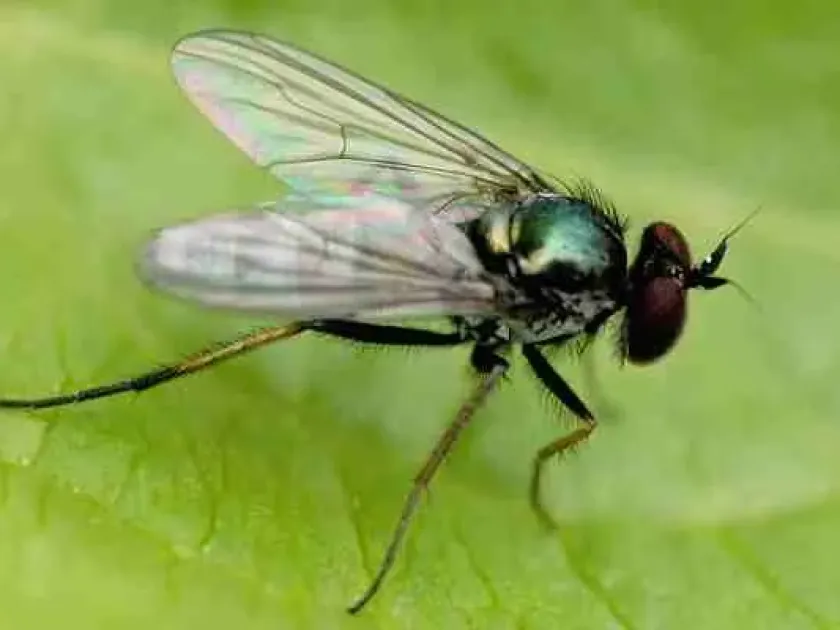
Argyra diaphana belongs to the family Dolichopodidae (long-legged flies), which is part of the order Diptera. This small insect has a characteristic metallic body sheen ranging from green to bronze.
Adults have transparent or slightly smoky wings, a trait that reflects the species' name. The eyes of this genus are large and compound, providing excellent vision during flight.
The larvae are elongated and cylindrical, typically inhabiting substrates with high moisture content, such as soil, leaf litter, or decomposing organic matter.
Species identification requires entomological keys, as the morphological characteristics of many Dolichopodidae are quite similar. Focus is placed on the structure of male genitalia and wing venation.
Unlike many other pests, adult long-legged flies are primarily predatory. However, under certain conditions, their larvae may become active in the rhizosphere of various plants.
What it damages
Damage is primarily caused by larvae, which, in high densities, can damage the underground parts of young plants, disrupting root nutrient uptake.
Damage is most commonly observed in moist soils where larvae thrive, actively feeding on organic matter and the soft tissues of roots.
Crops growing in low-lying areas with poor drainage are at the highest risk of infestation by this species.
While adult flies are beneficial entomophages that consume smaller pests, an overabundance of the larval form in the soil can lead to stunted growth of seedlings.
The economic impact of this species is generally moderate, but population control is necessary in greenhouse environments or intensive vegetable farming.
When it appears
The activity of adult Argyra diaphana occurs during the spring and summer, starting from late May and ending in August.
The peak emergence of adults coincides with the flowering period of many crops, when the ecosystem offers the maximum amount of food resources.
The insect's life cycle is closely linked to soil moisture; the most favorable conditions for pupation occur following rainy periods.
The species overwinters in the larval or pupal stage within the upper soil layers, where they survive harsh winter temperatures.
Spring awakening begins when soil temperatures reach 10-12 degrees Celsius, at which point the larvae begin active feeding and preparation for pupation.
Signs of infestation
The first sign of infestation is stunted growth of young plants, which is often misidentified as a nutrient deficiency.
Visual inspection of the root system reveals micro-injuries to tissues, which can become entry points for fungal and bacterial infections.
The appearance of a large number of adult long-legged flies over the area may indicate the presence of a favorable environment for their soil-based reproduction.
In cases of mass infestation, secondary symptoms of moisture stress may appear on the leaves due to partial damage to the root system.
To confirm the pest's presence, it is recommended to perform soil excavations in the root zone to search for white or yellowish larvae.
Control measures
The primary control method is crop rotation, which prevents the accumulation of larvae in the soil from one season to the next.
Improving soil drainage is a highly effective way to reduce population density, as larvae are extremely sensitive to low soil moisture levels.
The use of biological products based on entomopathogenic fungi can effectively manage larval populations within the soil profile.
Preventive soil treatment before planting seedlings helps create a defensive barrier against initial infestation by the pest.
- Deep autumn soil cultivation
- Monitoring substrate moisture levels
- Application of certified insecticides when damage thresholds are exceeded
Taxonomy
- Latin name
- Argyra diaphana
- Order
- Diptera (flies)
- Family
- Dolichopodidae
- EPPO code
- AGYRDI
Discussion
No discussions yet — be the first.