
Dolichopus
Dolichopus
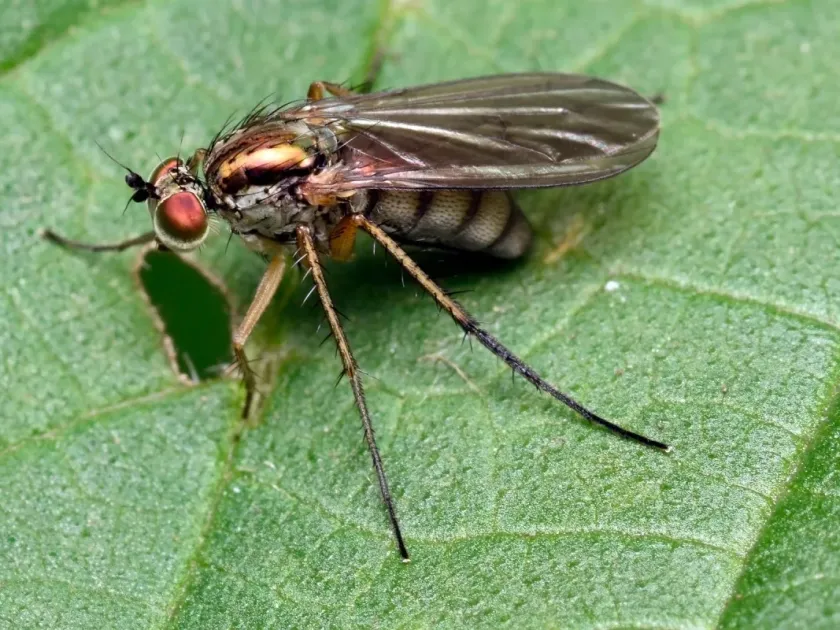
Description
How to identify
Dolichopus belongs to the family Dolichopodidae, commonly known as long-legged flies, which are recognized by their metallic, often greenish or coppery coloration.
These small dipteran insects are characterized by their slender bodies and long legs, which are adapted for activity in humid and wet environments.
The larvae of these insects develop in moist soil rich in organic matter, where they can occasionally interact with the root systems of agricultural crops.
As a diverse genus, identifying specific species requires expert entomological analysis, but the family-level identification is sufficient for field scouting.
Their life cycle consists of complete metamorphosis: egg, larva, pupa, and adult, with each stage requiring specific environmental conditions to thrive.
What it damages
While adult Dolichopus flies are primarily predatory, their larvae may exhibit damage to young plant roots in moist, organic-rich soil conditions.
The damage usually occurs during the early seedling stage, affecting the root hairs and the base of the stem, often leading to stunted growth or seedling collapse.
Crops grown in greenhouse environments or fields with poor drainage are at the highest risk of colonization by these larvae.
The feeding activity creates entry points for secondary pathogens like fungi and bacteria, which often cause the primary visible symptoms of plant decay.
Economic damage is most significant when larval populations are high during the critical early growth phases of the crop.
When it appears
Adult flies typically emerge in late spring, with activity levels peaking throughout the summer months depending on the moisture availability in the soil.
Egg-laying takes place in wet, organic-rich soils, ensuring that larvae have immediate access to food sources upon hatching.
The most active period of larval development and feeding occurs concurrently with the germination and early establishment of host crops.
As temperatures rise, the speed of the life cycle increases, allowing for multiple generations in a single season under irrigation.
Larvae overwinter deep within the soil profile, surviving harsh conditions until the environmental cues trigger development in the following spring.
Signs of infestation
The most common indicator is the sudden wilting of young seedlings, which may be incorrectly diagnosed as a drought stress or a soil-borne fungal disease.
Careful inspection of the roots may reveal localized feeding marks or larval presence within the immediate rhizosphere of the affected plant.
A noticeable increase in the number of metallic, long-legged flies fluttering near the soil surface acts as a warning sign for potential future infestations.
- Patchy thinning of seedling stands.
- Chlorosis and reduced vigor of young plants without clear foliar symptoms.
- Presence of small burrows or wounds on the root system of wilted plants.
Persistent dampness and high organic content in the soil are strong environmental indicators that the site is highly conducive to Dolichopus activity.
Control measures
Managing soil moisture levels is the primary strategy for preventing Dolichopus outbreaks, as the larvae depend on high soil moisture for survival.
Improving field drainage and reducing excessive irrigation can effectively interrupt the lifecycle of the pest in the soil.
Cultural practices such as soil cultivation and regular aeration help to disrupt the larval environment and reduce the overall population density.
Chemical control involving soil-applied insecticides should be considered only when scouting indicates that economic thresholds have been exceeded.
Biological control alternatives, including the application of beneficial nematodes, can provide a targeted and sustainable approach to managing soil-dwelling pests.
Taxonomy
- Latin name
- Dolichopus
- Order
- Diptera (flies)
- Family
- Dolichopodidae
- EPPO code
- DLPSSP
Discussion
No discussions yet — be the first.