
Xerotricha conspurcata
Xerotricha conspurcata
Description
How to identify
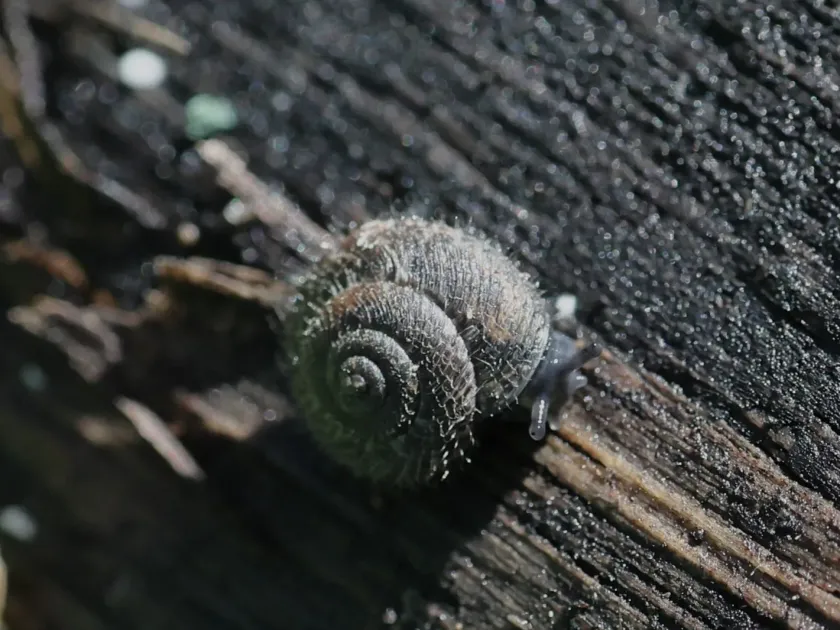
Xerotricha conspurcata is a small land snail species belonging to the family Hygromiidae. The shell is typically small, ranging from 4 to 6 mm in diameter, with a conical-globose shape.
The shell coloration is distinctive, featuring a grayish-brown or yellowish background patterned with darker spots or interrupted bands, which is a key identification feature.
The shell surface is characterized by fine radial ribs and small hairs, giving it a somewhat rough appearance, although these hairs may wear off in older specimens.
The snail's body is pale with grayish pigmentation. This species is highly adapted to arid environments, making it a persistent pest in regions with dry summers where other snail species struggle to survive.
Like other terrestrial mollusks, it is a hermaphrodite, which allows for rapid population growth and successful colonization of new agricultural areas once introduced.
What it damages
This species is a generalist herbivore (polyphagous), feeding on a wide array of agricultural crops, including vegetables, fruits, and ornamental plants.
Young seedlings and succulent plant parts are particularly susceptible to damage, as the snails can consume leaves, stems, and flower buds entirely, leading to significant crop loss.
Beyond physical consumption, the snails contaminate the produce with their mucus secretions and fecal pellets, significantly reducing the market value and aesthetic quality of the yield.
In high-density populations, these snails can penetrate into fruits and vegetables, causing internal damage and promoting the development of secondary bacterial or fungal rots.
The damage is often observed as irregular holes in the foliage, which can quickly lead to the decline of plant vigor and growth in heavily infested areas.
When it appears
The life cycle and activity of Xerotricha conspurcata are heavily influenced by humidity and temperature levels throughout the growing season.
Activity peaks during spring and autumn when cooler temperatures and adequate rainfall provide optimal conditions for movement and feeding.
During the dry summer months, the snails enter a state of estivation (summer dormancy), attaching themselves to stems or hiding in soil crevices to conserve water and survive extreme heat.
They are primarily nocturnal, emerging from their daytime shelters at night to feed when the moisture level is higher and the risk of desiccation is reduced.
Winter survival is achieved by retreating into the soil or under dense plant debris, where the snails wait for warmer spring conditions to resume their life cycle.
Signs of infestation
Visible signs of an infestation include irregular, jagged-edged holes in the leaves, which are typical of snail feeding behavior.
Shiny, silvery mucus trails left on the leaves, stems, and even soil surface are clear indicators that these mollusks have been active in the area.
In the early morning, snails can often be found resting on the undersides of leaves or near the base of the plant, hiding from the direct sunlight.
The presence of small, dark, granular fecal droppings near the base of the plants or on the foliage confirms the presence of an active population.
In severely affected gardens or fields, a localized reduction in plant biomass and stunted development are common symptoms observed in infested rows.
Control measures
Effective management of Xerotricha conspurcata requires an integrated approach that focuses on both habitat modification and direct control methods.
- Eliminating weeds and tall grasses to reduce daytime hiding spots and breeding grounds for the snails.
- Managing irrigation systems, particularly avoiding overhead watering that keeps the soil surface continuously moist.
- Removing plant debris and wood piles where snails tend to aggregate and hibernate during unfavorable weather.
- Using physical barriers like copper tape or sharp mulch materials (crushed shells, ash) around high-value plants to deter movement.
The application of molluscicides containing iron phosphate is considered an effective and environmentally safer method for reducing population numbers in infested fields.
Consistent monitoring using evening trap inspections or bait stations allows for timely interventions, preventing the infestation from spreading across the entire cultivated area.
Taxonomy
- Latin name
- Xerotricha conspurcata
- Order
- Molluscs
- Family
- Hygromiidae
- EPPO code
- XRTRCO
Discussion
No discussions yet — be the first.