
Candidula intersecta
Candidula intersecta
Description
How to identify
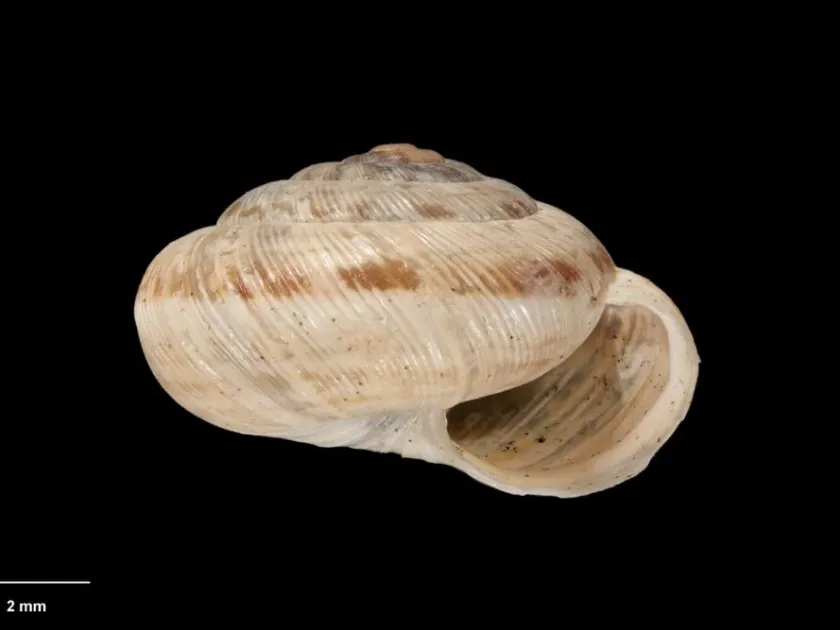
Candidula intersecta is a small land snail belonging to the Hygromiidae family. Adult shells are typically globular or slightly flattened, measuring between 8 to 12 millimeters in diameter.
The shell color varies from whitish to brownish, often featuring characteristic dark spiral bands. This camouflage helps the snail blend in with soil, rocks, and plant debris in the field.
The snail's body is generally light gray or cream-colored. It is a highly adaptable species, often found in open habitats, including pastures and agricultural fields where it thrives in soil crevices.
Systematically, this species is categorized under the order Stylommatophora. Identification is frequently based on shell morphology and, in complex cases, internal reproductive anatomy to distinguish it from related species.
Agronomists should note that Candidula intersecta is often more resilient to dry conditions compared to other slug species, making it a persistent resident in many agricultural landscapes.
What it damages
The primary agricultural damage caused by Candidula intersecta involves grazing on young crop seedlings. Many crops, including cereals, oilseeds, and vegetables, are susceptible during their vulnerable early growth stages.
The snails feed by rasping the leaf surfaces, which causes characteristic holes or irregular edges. Significant damage to the cotyledons or young foliage often leads to the death of the seedling.
Besides direct feeding, these snails leave behind unsightly mucus trails. This contamination reduces the market quality of fresh produce, rendering crops less desirable for sale or storage.
High population densities can lead to substantial thinning of crop stands. This results in direct economic losses and may necessitate costly replanting efforts to maintain proper plant spacing.
The impact is most severe in fields with high levels of plant residue or minimal tillage, as these environments provide ideal moisture and shelter for snail populations to flourish.
When it appears
The activity cycle of Candidula intersecta is heavily dictated by environmental humidity and temperature. They are most active during the cooler, wetter months of spring and autumn.
Reproduction occurs throughout the warmer months. Eggs are typically laid in small clusters in the moist soil, sheltered beneath vegetation or clumps of dirt to prevent them from drying out.
During the hot, dry summer months, these snails often enter a period of inactivity. They seal their shell openings with a mucus film and shelter in deeper cracks in the soil or under large stones.
Activity increases rapidly with the first significant rainfall of the season. During this time, they engage in intensive feeding to build up reserves for the coming winter months.
The species survives winter as both adults and juveniles. They rely on deep soil cavities or dense vegetative cover to protect themselves from severe frost, ensuring their survival until the next season.
Signs of infestation
The most recognizable sign of an infestation is the appearance of rasping marks and ragged holes on the leaves of young seedlings, often appearing overnight in damp conditions.
The presence of dried, silvery mucus trails on soil surfaces or plant stems provides clear evidence that snails have been moving across the field during the night or early morning hours.
In the daytime, snails can often be found by inspecting the base of plants, particularly where mulch or organic matter is present, as they retreat here to stay cool and moist.
A sudden reduction in seedling density, especially in localized patches, often indicates that a snail population has concentrated its feeding activity on a specific area of the field.
Empty shells found on the ground are also indicative of a local population, confirming that the site is an active habitat for the species and monitoring may be necessary.
Control measures
Management of Candidula intersecta focuses on cultural practices that disrupt the snail's life cycle. Reducing moisture-retaining cover near crops is a key strategy for preventing infestations.
Deep cultivation and weeding help to destroy egg-laying sites and reduce the shelter available to the snails, making the agricultural environment less hospitable to their proliferation.
When monitoring indicates a population above the economic threshold, chemical control using molluscicides like metaldehyde or iron phosphate pellets can be effective if applied correctly.
- Rotating crops to break the lifecycle of the snails.
- Using perimeter barriers made of abrasive materials to deter movement.
- Monitoring population numbers using bait traps to determine if treatment is necessary.
Integrated pest management also encourages the protection of natural predators, such as carabid beetles, hedgehogs, and various bird species, which play a role in suppressing population growth.
Taxonomy
- Latin name
- Candidula intersecta
- Order
- Molluscs
- Family
- Hygromiidae
- EPPO code
- CANLCA
Discussion
No discussions yet — be the first.