
Ashfordia
Ashfordia
Description
How to identify
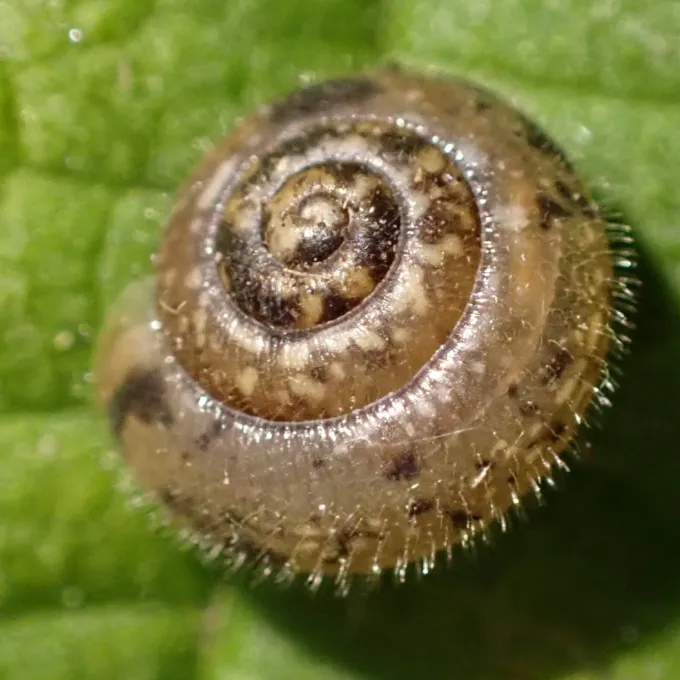
Ashfordia (Ashfordia granulata) is a small terrestrial pulmonate mollusk belonging to the Hygromiidae family. It is characterized by a small, thin, conically-shaped shell that often features a granular or slightly hairy texture.
The adult shell typically measures between 5 and 8 millimeters in diameter. Its color ranges from a light horn-like hue to a deeper brown, which allows the mollusk to blend in with leaf litter and soil surfaces.
Systematically, it is a member of the Gastropoda class. As a hermaphrodite, Ashfordia possesses both male and female reproductive organs, allowing for rapid population growth when environmental conditions, particularly moisture levels, are favorable.
Identification can be confirmed by examining the shell surface for fine, hair-like projections, although these may erode in older individuals. They are most commonly encountered in damp environments, sheltered under logs or dense vegetation.
These mollusks are primarily nocturnal, showing peak activity during humid or rainy nights. During the day, they sequester themselves in damp micro-habitats to avoid desiccation, making them elusive if not searched for specifically.
What it damages
Ashfordia acts as a generalist pest, feeding on a wide array of cultivated and ornamental plants. It poses a significant threat to seedlings, as their succulent tissues are easily consumed by the mollusk.
In greenhouses and nursery environments, where stable humidity is maintained, this pest can be particularly destructive, potentially devastating young crops before they reach a resistant stage of development.
Feeding damage is characterized by irregular holes in leaves, often resulting in skeletonized foliage where only the thickest veins remain. Young stems and growing points are also targeted, leading to stunted plant growth.
Besides direct tissue loss, the mollusk creates wounds that facilitate the entry of pathogenic fungi and bacteria. This secondary infection often leads to rot and plant collapse, causing more total economic damage than the consumption itself.
While often overlooked due to their small size, large infestations can significantly reduce the yield of leafy greens, vegetables, and flowers by stripping plants of the photosynthetic capacity needed for growth.
When it appears
Activity is highly dependent on climate and moisture. The mollusk emerges from its inactive state in early spring as soil temperatures rise and rainfall becomes more frequent.
The peak season for Ashfordia is during mid-spring and early summer, particularly after periods of heavy rain. These conditions are ideal for their movement and reproduction, leading to the highest levels of crop damage during this time.
As summer temperatures increase and humidity drops, the population often seeks deeper soil cover to aestivate. Activity levels decline until cooler, wetter autumnal weather triggers a brief period of increased foraging before hibernation.
The life cycle is closely tied to the seasonality of rainfall. In years with prolonged drought, populations remain low; however, the species is resilient and recovers quickly once the moisture balance is restored.
Winter survival is achieved by hibernating in the soil or protected spaces. Eggs are also resistant to cold and moisture fluctuations, ensuring the persistence of the population across growing seasons.
Signs of infestation
The most reliable sign of Ashfordia presence is the distinct, shiny, silvery slime trail left on soil surfaces, leaves, and container walls during the mollusk's nocturnal movements.
Damage to foliage is distinctive: irregular, ragged holes starting from the leaf edges or centers. In high-density areas, entire seedlings may be stripped down to their stalks overnight.
Small, dark, pellet-like feces are often found near the base of the plant or on the surface of the growing medium, providing visual confirmation of recent feeding activity.
Plant wilting and premature yellowing of lower leaves can also be signs of root-zone damage or bacterial infection introduced by the mollusk’s feeding wounds.
Daytime inspections usually fail to reveal the pest unless objects like boards or damp cardboard are placed in the garden as "traps." Checking under these objects during the day is the best way to detect their presence.
Control measures
Cultural management is the first line of defense. Keeping garden areas free of weeds, debris, and leaf litter removes the daytime refuges necessary for the survival of the mollusks.
Physical barriers, such as copper tape, crushed eggshells, or abrasive diatomaceous earth, can be placed around sensitive crops to deter movement, as these materials irritate the mollusk’s foot.
Chemical control involving molluscicides, such as iron phosphate-based pellets, is effective. These should be applied according to label instructions to protect domestic pets and non-target wildlife while effectively reducing the pest population.
Promoting local biodiversity by encouraging natural predators, such as birds, hedgehogs, and beneficial predatory beetles, can help maintain an ecological balance and limit population surges.
Adjusting irrigation systems to focus on the roots (drip irrigation) rather than overhead watering keeps the foliage and surrounding soil surface drier, making the area less attractive and habitable for Ashfordia.
Taxonomy
- Latin name
- Ashfordia
- Order
- Molluscs
- Family
- Hygromiidae
- EPPO code
- ASHFSP
Discussion
No discussions yet — be the first.