
Candidula
Candidula
Description
How to identify
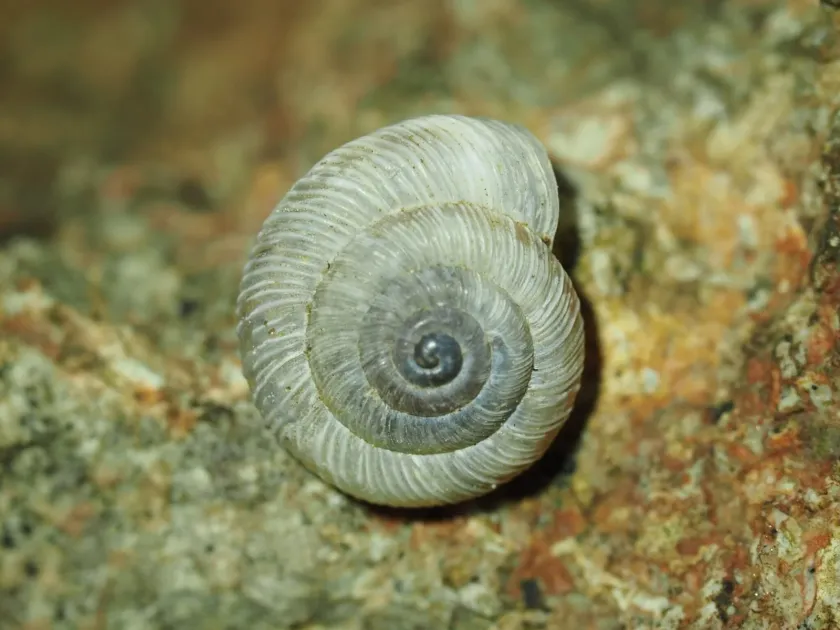
Candidula is a genus of small, air-breathing land snails belonging to the family Geomitridae. These snails typically feature a globular or flattened-globular shell, with a diameter usually ranging from 10 to 15 mm.
The shell often displays a light color, frequently marked with brown spiral bands, providing effective camouflage against dry soil and plant debris. The surface texture of the shell can be finely granulated or radially striated.
The soft body of the snail is generally greyish or yellowish-white. For accurate identification, experts often need to examine the anatomy of the reproductive system, as shells of different species within the genus can look very similar to the naked eye.
These mollusks prefer open, dry habitats such as limestone grasslands, meadows, and agricultural fields. They are highly adapted to survive drought conditions by entering an aestivation state, hiding under stones or deep within soil crevices.
Their activity is highly dependent on environmental humidity and temperature; therefore, they are most active during the evening or immediately following rainfall events.
What it damages
Candidula snails are polyphagous pests, capable of damaging a wide array of crops, including vegetables, cereals, and ornamental plants. They pose a particular threat to young seedlings and tender, succulent leaves.
Damage is inflicted using the radula, a rasping organ that scrapes away the epidermis of leaves, stems, and fruits, resulting in characteristic holes and ragged edges on the foliage.
In cases of high infestation density, these pests can completely destroy young plantings of cabbage, lettuce, legumes, and strawberries. Additionally, their mucus trails contaminate produce, significantly reducing its commercial value and marketability.
Feeding wounds created by these snails provide entry points for secondary infections, such as fungal and bacterial pathogens, which can lead to the total loss of a crop if not managed promptly.
The threat is most severe during wet spring and autumn periods, as these conditions trigger the migration of snails toward cultivated areas, leading to mass infestations.
When it appears
The life cycle of Candidula is closely tied to climatic factors. Peak activity is observed during periods of high humidity—specifically spring and autumn—when air temperatures are optimal for the snail's metabolic processes.
During the summer months, characterized by intense heat and dryness, Candidula individuals enter a dormant state. They attach themselves firmly to a substrate or burrow into the soil, sealing their shell aperture with a protective film to prevent desiccation.
Reproduction occurs through the deposition of eggs directly into the soil. Juveniles hatch after a few weeks and begin feeding immediately, often reaching sexual maturity by the following season.
The autumn period is critical for the establishment of the next generation. Snails feed actively before entering winter diapause, a behavior that often coincides with the harvesting stage of many agricultural crops.
Both adults and juveniles survive the winter by sheltering under plant residues or within deep soil crevices, ensuring high survival rates across diverse climatic zones.
Signs of infestation
The first indicator of a Candidula infestation is the presence of dried, silvery mucus trails on plant leaves and stems. These tracks appear as glistening, reflective streaks that are easily spotted in sunlight.
The second symptom is irregular, figurate damage to leaf blades. The margins become serrated or jagged, and holes of varying sizes appear across the surface of the tissue.
In the early morning, the pests themselves can often be found near the base of the plants or hidden beneath damp soil clods. They gravitate toward shaded, moist areas that provide protection from direct midday sun.
- Glistening, dried mucus trails on leaves and soil.
- Jagged or perforated leaf margins.
- Presence of empty shells near the root zone.
- Superficial scarring on berries and fruit skins.
Systematic field monitoring often reveals clusters of snails on weeds surrounding crops, which serves as a warning sign that defensive measures should be initiated immediately.
Control measures
The primary strategy for protection is agrotechnical management. Regular removal of weeds and vegetation is essential, as these provide crucial shelter and secondary food sources for the snails during dry spells.
Deep plowing and thorough soil cultivation disrupt the snails' habitats and destroy egg clusters, significantly reducing the overall population density within the field.
Using physical barriers and traps is highly effective. Creating boundaries around garden beds using wood ash, lime, or superphosphate creates an unfavorable environment that hinders the movement of the mollusks.
In scenarios of high population density, specialized molluscicides based on metaldehyde or iron phosphate can be applied. It is crucial to follow application protocols strictly to minimize risks to non-target beneficial insects.
Biological control, such as encouraging natural predators like hedgehogs, ground beetles, and birds, helps maintain ecological balance and suppresses pest reproduction without the need for intensive chemical use.
Taxonomy
- Latin name
- Candidula
- Order
- Molluscs
- Family
- Hygromiidae
- EPPO code
- CANLSP
Discussion
No discussions yet — be the first.