
Cernuella
Cernuella
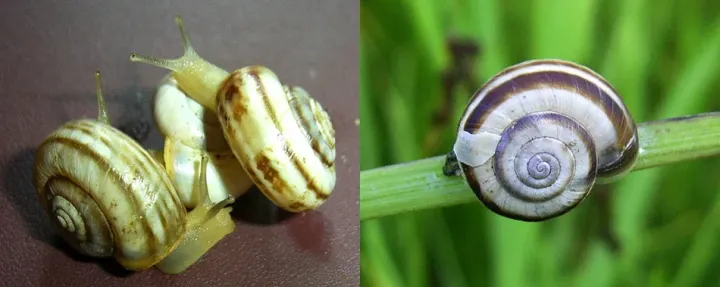
Description
How to identify
Cernuella is a genus of land snails belonging to the family Hygromiidae. These mollusks are recognized by their characteristic rounded, relatively hard shells, which provide protection from environmental stressors like heat and desiccation.
The shells often feature subtle color patterns, including brown or white bands, which serve as camouflage against the soil or vegetation. They are adapted to various environments, including agricultural fields and pastures.
Taxonomically, they are classified as pulmonate gastropods. Unlike slugs, these snails possess a shell, which allows them to enter a state of dormancy by sealing the shell aperture with a protective layer called an epiphragm.
Their life cycle is highly dependent on environmental moisture. During breeding seasons, they lay eggs in the soil, and the rapid maturation of young snails allows for population surges in favorable weather conditions.
Proper identification is crucial for farmers, as these snails often coexist with other similar gastropods. Recognizing their specific morphological features helps in selecting the right management strategy.
What it damages
Cernuella species are generalist feeders, meaning they consume a wide range of plants. They cause significant damage to cereals, legumes, vegetables, and fruit crops, particularly affecting young, tender seedlings.
The damage becomes critical during the harvest season when snails migrate onto stalks and ears of grain. This physical presence compromises the quality of the harvest and causes mechanical interference during combining.
Contamination of harvested grain with snail bodies increases moisture content, which creates ideal conditions for mold and mycotoxin growth, rendering the produce unfit for storage or consumption.
Beyond direct feeding, these snails leave trails of mucus on plant surfaces. This slime layer acts as a vector or growing medium for bacteria and fungi, leading to rot and other plant diseases.
In gardens, they skeletonize leaves and damage fruits by creating large, uneven holes. This significantly weakens the host plant, resulting in reduced yields and overall poor plant development.
When it appears
Snail activity is primarily dictated by temperature and humidity levels. Peaks in activity are typically observed during the spring and autumn, when moderate temperatures and higher rainfall occur.
During hot, dry summer months, Cernuella enter a state of estivation. They anchor themselves to stems or crawl into the soil, sealing their shells to conserve moisture until weather conditions improve.
The emergence of juveniles often coincides with the germination phase of many crops. This early-season impact can result in total loss of plant stands if infestation levels are high.
Autumn reactivation poses a particular threat to winter crops. As the season cools and rains increase, snails emerge to feed on newly emerging shoots, potentially destroying entire fields.
Wintering occurs in protected sites such as deep soil crevices, beneath dense mulch, or under plant debris, where the snails survive by entering a period of diapause until spring.
Signs of infestation
The most obvious sign of a Cernuella infestation is the visual presence of the snails themselves, particularly during the early morning or evening hours when they are most mobile.
A tell-tale sign of their activity is the presence of dried, shimmering mucus trails on the leaves and stems of host plants. These streaks are often visible even when the snails are not.
Feeding damage is characterized by large, jagged holes in leaves. Unlike the precise cuts made by many insects, snail damage often appears as large areas of missing tissue, leaving only the primary veins.
On grain crops, visual clusters of shells on the heads of wheat or barley are a clear indicator of a major infestation, which may lead to significant post-harvest complications.
Secondary signs include the onset of rot or bacterial wilt on plants. The mucus left by the snails creates a micro-environment that facilitates the spread of various plant pathogens.
Control measures
Effective management of Cernuella requires an integrated approach. Deep tillage is an essential cultural practice that helps destroy snail habitats, egg-laying sites, and shelters in the soil.
Managing the area around fields is equally important. Clearing weeds and debris from field margins and fence lines reduces the refuges that snails use for breeding and survival during off-seasons.
When infestation levels exceed economic thresholds, the use of chemical molluscicides (based on metaldehyde or iron phosphate) is the most reliable method for rapid population reduction.
Crop rotation serves as a preventive measure. By alternating host crops with less susceptible ones, farmers can interrupt the life cycle and keep snail populations at manageable levels.
- Monitoring populations using beer or yeast-based traps to time control measures correctly.
- Creating physical barriers, such as crushed stone or lime, around garden plots to deter movement.
- Promoting the presence of natural predators, such as hedgehogs, frogs, and predatory beetles.
Taxonomy
- Latin name
- Cernuella
- Order
- Molluscs
- Family
- Hygromiidae
- EPPO code
- CERNSP
Discussion
No discussions yet — be the first.