
Ashfordia granulata
Ashfordia granulata
Description
How to identify
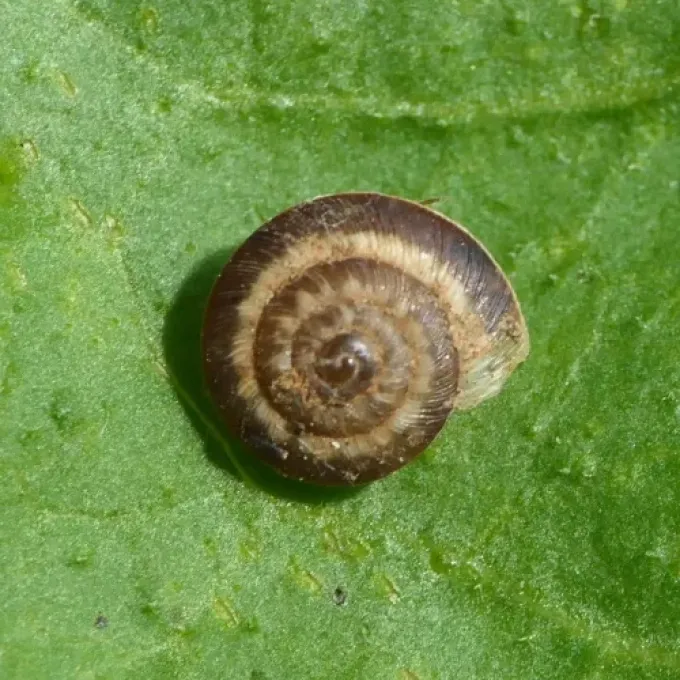
Ashfordia granulata is a species of small, air-breathing land snail belonging to the family Hygromiidae. These snails are characterized by a small, globular shell, typically measuring 4 to 6 mm in diameter.
The shell surface displays a distinct granular texture, from which the species derives its common name. The coloration is usually a brownish-horn or yellowish-tan shade, often with translucent walls.
Due to their small size and cryptic behavior, they are easily overlooked in agricultural fields, often hiding in crevices or under dense vegetation during the day.
Taxonomically, they are part of the order Stylommatophora. Being hermaphroditic, they can proliferate rapidly, especially in environments with high humidity and abundant organic matter.
Agronomists identify this pest by carefully inspecting the soil surface and the underside of foliage in moist, shaded areas of a field or greenhouse.
What it damages
This pest causes damage to a variety of vegetable, berry, and ornamental plants. Seedlings are particularly susceptible, as their soft tissues are easily consumed by the snails.
They feed on the foliage, young shoots, and occasionally roots of plants. Feeding typically manifests as irregular holes or shredded leaf edges in the lower canopy.
Damage results in reduced photosynthetic capacity, which stunts the growth of the plants and, in severe cases, leads to total seedling loss if populations are high.
Beyond physical consumption, the slime trails left by these molluscs can promote the growth of secondary bacterial and fungal pathogens on the damaged plant parts.
Fields with dense plant cover or thick layers of organic mulch provide ideal habitats for these snails, making such areas more prone to infestation.
When it appears
The activity of Ashfordia granulata is highly dependent on environmental moisture. They are most active during cool, damp weather conditions which are favorable for their movement.
In temperate regions, their activity cycle begins in early spring as temperatures rise and persists until the onset of late autumn frosts, which force them into hibernation.
Within greenhouses and controlled environment agriculture, they may maintain activity throughout the entire year if moisture levels remain high and food sources are available.
They reproduce throughout the growing season, laying eggs in damp soil or beneath debris. This ensures continuous population growth throughout the warmer months.
Infestation risk is highest during the early seedling emergence phase, when young plants lack the hardened structures necessary to withstand grazing pressure.
Signs of infestation
The most common sign of infestation is the presence of small, irregular holes on the lower leaves of the crop. Leaves near the soil level are usually the first to be affected.
Visible silvery, dried slime trails left on the soil surface, stems, or leaves are reliable indicators of mollusc presence in the area.
During the day, adults can be found hiding in cool, damp locations such as under rocks, wooden boards, or within thick leaf litter close to the base of the plants.
Reduced vigor and stunted growth in young plants, even in the absence of obvious disease symptoms, can suggest feeding damage by small land snails.
- Irregular holes in the lower foliage.
- Silver-colored dried slime trails on stems or soil.
- Presence of tiny empty or occupied shells under debris.
Control measures
Cultural control practices are the primary method of management. These include eliminating debris, removing weeds, and keeping the field area clear of hiding spots.
Regular cultivation of the soil between rows disrupts the snail’s environment, reduces moisture in the top layer, and kills many individuals through mechanical disturbance.
Barriers such as coarse sand, wood ash, or crushed eggshells can be used around plant bases to hinder the movement of these molluscs toward the crops.
Chemical control involving molluscicides (e.g., metaldehyde or iron phosphate pellets) may be necessary in commercial settings to reduce large population outbreaks.
Biological control can be enhanced by supporting local populations of predators like ground beetles, frogs, and hedgehogs, which prey on small land snails.
Taxonomy
- Latin name
- Ashfordia granulata
- Order
- Molluscs
- Family
- Hygromiidae
- EPPO code
- ASHFGR
Discussion
No discussions yet — be the first.