
Xerosecta explanata
Xerosecta explanata
Description
How to identify
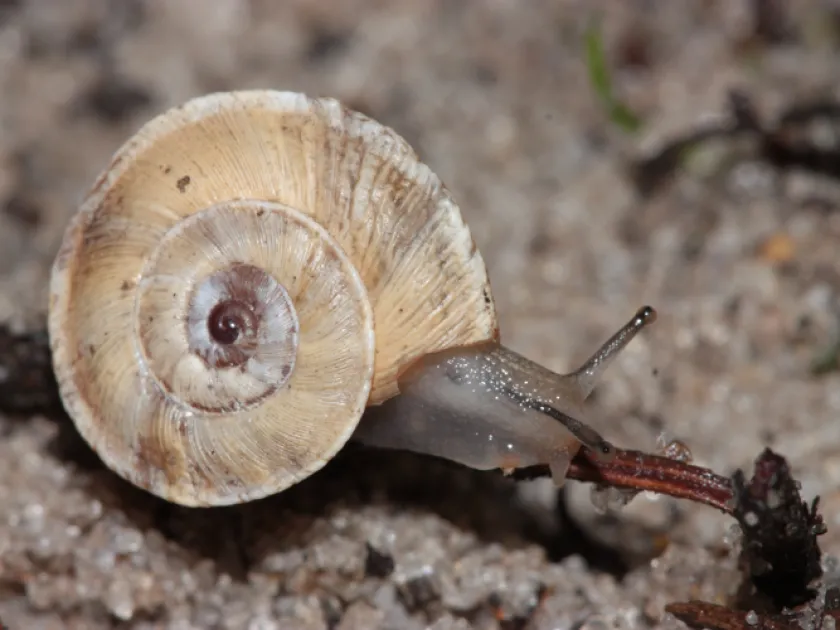
Xerosecta explanata is a land snail species belonging to the Helicidae family. These snails are known for their relatively small, flattened, and often whitish or light-brown shells.
The diameter of the shell typically ranges from 10 to 15 millimeters. The shell surface may exhibit slight ribbing, which is an evolutionary adaptation that helps the snail retain moisture in arid environments.
The soft body of the snail is generally greyish or yellowish, equipped with a muscular foot for locomotion and tentacles with sensory organs. They are primarily nocturnal and highly sensitive to desiccation.
This species is frequently found in open, rocky, or uncultivated areas. Due to its adaptability, it can quickly colonize disturbed agricultural land if environmental conditions are suitable.
Distinguishing this species requires careful examination of its morphological characteristics, as it often resembles other common xerophilic gastropods in the region.
What it damages
Xerosecta explanata acts as a generalist feeder, capable of consuming a wide array of vegetation including leafy vegetables, seedlings, and technical crops. They pose a significant threat to young plants.
Seedlings are particularly vulnerable; a high density of these snails can devastate an entire crop in a very short period by consuming the tender tissues of stems and leaves.
In mature plants, the snails cause mechanical damage to foliage and fruits. The persistent slime trail they leave behind is not only an aesthetic issue but also a precursor to fungal infections.
Market quality is often severely compromised. The wounds inflicted by the snails become entry points for secondary bacterial pathogens, which trigger rot and lead to post-harvest losses.
The overall productivity of a farm can be severely hindered when infestations remain unmanaged, leading to stunted growth and reduced yields across various crops.
When it appears
The activity of these snails is strictly regulated by moisture availability. Periods with high humidity, such as spring and autumn, promote high levels of feeding and reproductive activity.
During hot and dry summer conditions, the snails enter an aestivation state. They seal their shell aperture with a calcified or mucous film, hiding under rocks or soil debris until conditions improve.
The life cycle involves egg-laying in moist soil or beneath thick vegetation. The juvenile population emerges under favorable weather conditions to begin feeding.
Adult snails survive the winter by retreating into the upper layers of the soil or beneath dense cover, where they remain dormant until the onset of the following growing season.
The peak of their damage usually follows rainy spells, when the moist environment allows the snails to move freely and feed extensively on crops.
Signs of infestation
A tell-tale sign of infestation is the presence of irregular, ragged holes in the foliage, often starting from the leaf edges and advancing inward until only veins remain.
The presence of dried, silvery mucus trails on the soil surface, greenhouse walls, or plant surfaces is an unmistakable indicator of gastropod feeding activity in the area.
Observing the plants during twilight or early morning hours may reveal the snails feeding directly on the plant tissue, which is the most reliable way to confirm their presence.
Small, dark, granular feces scattered on the leaves and around the base of the plant are common signs of a high-density population causing damage to the crop.
If plants appear to wither or show slow growth without any obvious pathogen-related symptoms, it is advisable to inspect the base of the plant for hidden snail populations.
Control measures
Effective management begins with good agricultural sanitation, such as removing debris and weeds that provide daytime shelter for snails, thereby reducing their local population.
Deep plowing of the soil during the fall is a recommended strategy, as it exposes the snails to cold and predators, effectively disrupting their survival and breeding cycles.
Chemical control involving molluscicides, such as those based on metaldehyde or iron phosphate, is often necessary when populations reach economic damage thresholds.
Installing physical barriers made of abrasive materials like gravel, crushed eggshells, or wood ash around sensitive garden beds can prevent the snails from reaching the crops.
Hand-picking the snails at night or during wet conditions is a viable control method for small-scale operations or organic farms where chemical applications are restricted.
Taxonomy
- Latin name
- Xerosecta explanata
- Order
- Molluscs
- Family
- Hygromiidae
- EPPO code
- XERSEX
Discussion
No discussions yet — be the first.