
Xerolenta obvia
Xerolenta obvia
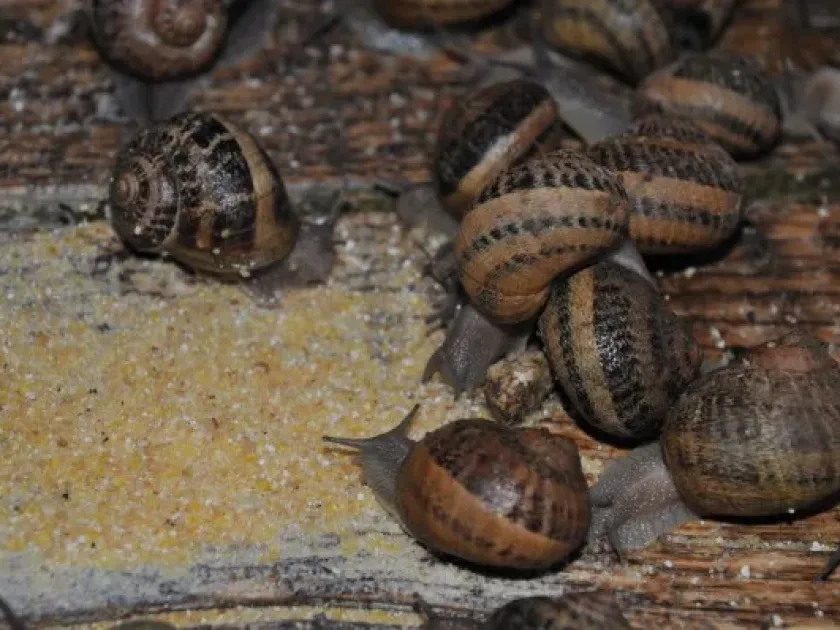
Description
How to identify
Xerolenta obvia is a terrestrial gastropod belonging to the family Hygromiidae. This snail is characterized by a moderately convex, white or yellowish-white shell, usually featuring dark spiral bands, with a diameter of 12–20 mm.
Known as a xerophilic species, this snail is perfectly adapted to dry and open habitats such as steppes, meadows, and agricultural lands. Its shell structure provides excellent protection against water loss.
The snail's body is light-colored, typically brownish-grey. This species has high environmental plasticity, allowing it to survive in various agricultural landscapes by utilizing micro-refuges during periods of extreme heat.
Reproduction occurs via hermaphroditic mating, which enables the population to recover quickly under favorable moisture conditions, particularly after rainfall events in the growing season.
One of the key features of its biology is the ability to enter a state of estivation (dormancy) attached to plant stems or soil clods, significantly increasing its survival rate in drought-prone areas.
What it damages
Xerolenta obvia is a generalist herbivore that causes significant damage to various crops, including cereals, oilseeds like sunflower and rapeseed, and various legumes.
The snails feed by scraping the surface of leaves, stems, and fruits, resulting in irregular holes, shredded leaf edges, and overall plant weakening. Young seedlings are particularly vulnerable.
Beyond direct feeding damage, the presence of these mollusks on crops leads to contamination with slime, which degrades product quality and affects its marketability for food processing.
Damaged plants often show stunted growth and increased susceptibility to secondary pathogenic infections, such as fungi or bacteria, entering through the scraped tissues.
In high-density populations, these snails can cause localized harvest failures, requiring systematic monitoring and timely intervention to protect the economic yield of the affected fields.
When it appears
The activity of Xerolenta obvia begins in early spring as soon as temperatures rise above the threshold for movement and moisture availability increases due to seasonal rains.
Spring and autumn are considered the most active seasons for these snails, as mild temperatures and increased humidity facilitate their foraging, movement, and reproductive cycles.
During the peak of summer, these snails often seek shelter in shaded areas, under debris, or attached to dry stalks, entering a dormant phase to survive high temperatures and low moisture.
Autumn triggers a new round of activity, which is crucial for population expansion and egg-laying in the topsoil, where they prepare for winter survival within sheltered environments.
The total lifespan and activity period are highly dependent on the regional climate; years with high summer rainfall can lead to prolonged activity and significantly larger population peaks.
Signs of infestation
The most evident signs of infestation are ragged leaf edges and holes appearing on the leaves of young crops. These grazing marks are distinctive and easy to identify upon field inspection.
Silver, shiny trails of dried mucus left on soil surfaces, stems, and leaf foliage are classic indicators that Xerolenta obvia has been feeding in the area recently.
Field observers may encounter live snails resting on the stems or at the base of plants during the cool hours of the early morning or late evening when the snails are foraging.
- Irregular holes in leaf tissues.
- Visible silvery mucus tracks on plant foliage.
- Aggregations of snails at the base of crop plants.
Plants affected by intensive grazing show noticeable stress, reduced photosynthetic capacity, and in severe cases, the complete loss of the terminal bud or total seedling destruction.
Control measures
Agricultural management is the first line of defense; deep plowing and regular soil cultivation disrupt the snails' habitat, destroy their egg-laying sites, and significantly reduce population numbers.
Effective weed control in both the field and surrounding areas is crucial, as thick weed cover provides necessary humidity and protection for the snails during dry spells.
Chemical control involving molluscicides, specifically those formulated as granules, is recommended when pest density exceeds the economic threshold for a given crop.
Application of baits should be timed to coincide with high humidity levels and active movement periods to ensure maximum bait uptake by the snails.
An integrated approach combining mechanical destruction of habitats with responsible use of molluscicides ensures minimal crop loss while maintaining sustainable agricultural practices.
Taxonomy
- Latin name
- Xerolenta obvia
- Order
- Molluscs
- Family
- Hygromiidae
- EPPO code
- HELLOB
Discussion
No discussions yet — be the first.