
Cretan snail
Xerocrassa cretica
Description
How to identify
The Cretan snail (Xerocrassa cretica) is a small terrestrial pulmonate gastropod belonging to the Hygromiidae family and the order Stylommatophora.
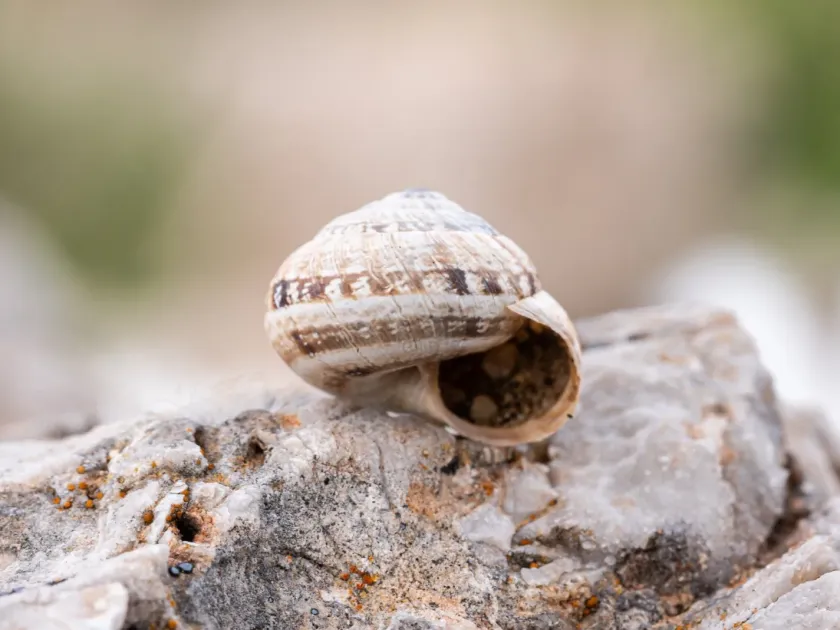
The shell of this mollusk is typically globose and often features a distinctive dark brown peripheral band, which serves as a key identification marker.
Adult individuals usually range from 8 to 12 millimeters in diameter, making them easily overlooked in dense garden foliage.
Their body coloration varies from grayish to brownish tones, providing effective camouflage against dry soil, rocks, or garden mulch.
While preferring dry, open environments, this species readily colonizes agricultural lands and domestic gardens, especially those utilizing irrigation systems.
What it damages
This pest affects a wide range of horticultural crops by feeding on tender shoots, leaves, and flower buds.
It poses a significant threat to vegetables, leafy greens, and seedlings, which can be completely decimated by high populations of the snail.
Feeding activity involves creating irregular holes in the leaf tissue, which drastically reduces the plant's photosynthetic capacity and hinders growth.
The snail also contaminates crops with mucus and fecal matter, which frequently triggers the development of fungal and bacterial rots.
High infestation levels can lead to yield losses of up to 50% in early-stage vegetable crops during periods of high humidity.
When it appears
The activity and lifecycle of Xerocrassa cretica are highly dependent on environmental moisture levels, peaking after rainfall or irrigation.
During hot summer months with low precipitation, the snails enter aestivation, attaching themselves to dry plant stems or rocks to conserve moisture.
Eggs are typically deposited in moist soil, providing a secure environment for the development of juveniles until they hatch.
Most feeding occurs during nocturnal hours or early mornings, when humidity is high enough to facilitate the movement of the mollusks.
Their reproductive cycle can continue throughout the growing season as long as moisture is maintained in the root zone of plants.
Signs of infestation
Irregularly shaped holes along the margins or centers of leaf blades are the primary indicators of snail feeding activity.
Shimmering, dried mucus trails left on soil surfaces, pavement, or plant stems are clear evidence of the presence of this pest.
Inspecting garden beds during early morning hours often reveals the snails hiding beneath leaf litter, rocks, or soil clumps.
Seedlings may suddenly wilt without signs of root rot, often caused by the snails gnawing the stems at the soil surface level.
Yellowing leaves and the presence of rotting patches indicate severe infestation, where secondary infections have settled in the snail-damaged tissues.
Control measures
Manual removal of the snails during the evening or after rainfall is an effective and environmentally friendly control method for small plots.
Installing physical barriers, such as wood ash, lime, or superphosphate, around susceptible garden beds effectively inhibits the movement of the snails.
Good agricultural practices, such as weed management and removing organic debris, eliminate essential hiding spots and resting sites for the snails.
Chemical control using molluscicides based on metaldehyde is available, but must be used carefully to avoid harming beneficial insects or wildlife.
Encouraging natural predators, including hedgehogs, toads, and certain bird species, can help manage snail populations within an integrated pest management approach.
Taxonomy
- Latin name
- Xerocrassa cretica
- Order
- Molluscs
- Family
- Hygromiidae
- EPPO code
- XRCRCR
Discussion
No discussions yet — be the first.