
Dark-barred twin-spot carpet
Xanthorhoe ferrugata
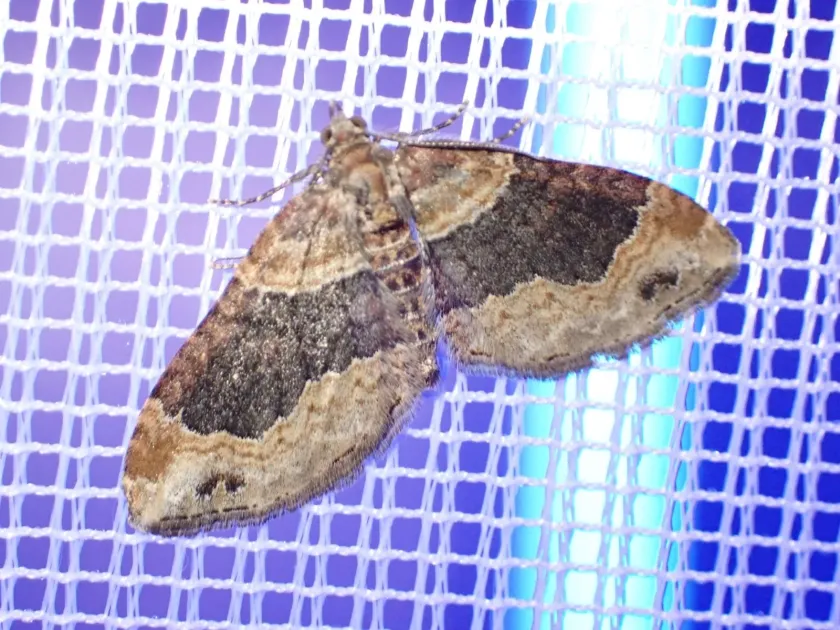
Description
How to identify
The Dark-barred twin-spot carpet (Xanthorhoe ferrugata) is a moth species belonging to the Geometridae family, known for their specific "looper" caterpillar stage.
The adult moth has a wingspan of approximately 20–25 mm, featuring reddish-brown to grayish forewings with a prominent dark central band that often displays a purple flush.
Larvae, or caterpillars, are cylindrical and exhibit the characteristic looping movement of the Geometridae family, drawing their hind legs towards their thoracic legs.
Their coloration is typically cryptic, varying between green, brown, and grey shades, which provides excellent camouflage against their host plant foliage.
Pupation occurs within a loose cocoon, usually located in the soil or among organic debris at the base of the plant, serving as an overwintering site.
What it damages
The larvae primarily feed on various plants in the Lamiaceae family, as well as several other herbaceous species found in meadows and gardens.
In agricultural and horticultural settings, this moth can pose a threat to medicinal herbs and decorative flora if they are grown near its natural habitat.
The damage is caused by the caterpillars consuming leaves, initially creating small notches and later leading to skeletonization of the entire leaf surface.
Heavy infestations can significantly weaken the plant, reducing its vigor and leading to stunted growth or total defoliation of specific branches.
Furthermore, damaged leaves become prone to secondary bacterial or fungal rot, which can cause broader issues for the overall health of the crop.
When it appears
The life cycle of this species usually involves two generations per year, with the adult moths appearing in late spring and again during the mid-summer period.
Overwintering takes place in the pupal stage, buried in the soil or under leaf litter, where the insect remains dormant until favorable temperatures return.
Caterpillars are active throughout the growing season, with peak feeding activity usually corresponding to the periods following the moth flights.
Temperature patterns play a crucial role in the development rate, with warmer summers potentially leading to overlapping generations and increased pest pressure.
Understanding these phenological stages is essential for timing scouting operations and applying control treatments effectively during the larval development phase.
Signs of infestation
The primary sign of infestation is the presence of irregular holes or eaten edges on the foliage, which are classic indications of lepidopteran larval feeding.
Small, dark, granular droppings (frass) left on the surface of the leaves are a clear indicator that caterpillars are feeding nearby on the plant.
Inspecting the underside of leaves and along the plant stems, especially in the early morning or late evening, is the best way to locate the larvae.
Fine silk webbing, sometimes found between leaves, may indicate that the caterpillar is preparing a resting site or is about to undergo pupation.
Wilted or yellowing leaves can also signal significant herbivory, as the plant struggles to maintain its photosynthetic functions due to massive tissue loss.
Control measures
Integrated pest management strategies are recommended, focusing on cultural practices before relying on chemical intervention.
Autumn soil cultivation is a highly effective control measure, as it disturbs the overwintering pupae in the ground, exposing them to predators or cold.
Sanitation practices, including the removal of host weeds and infested plant residues, help to break the life cycle and reduce the local population density.
Biological control using microbial insecticides, such as products containing Bacillus thuringiensis, is effective against young larvae while preserving beneficial insects.
- Hand-picking caterpillars is feasible for small gardens or high-value decorative plantings during dawn or dusk.
- Chemical treatments should be used selectively and only when infestation levels exceed economic thresholds to prevent impact on non-target species.
Taxonomy
- Latin name
- Xanthorhoe ferrugata
- Order
- Lepidoptera (butterflies)
- Family
- Geometridae
- EPPO code
- XANOFE
Discussion
No discussions yet — be the first.