
Alcis geometer
Alcis
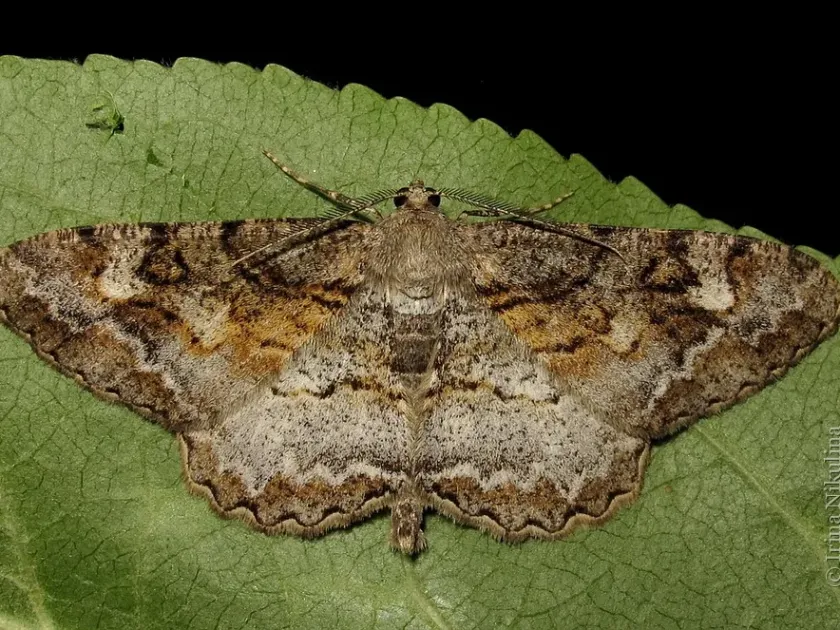
Description
How to identify
The Alcis genus belongs to the Geometridae family, order Lepidoptera. These moths are widely distributed and are known for their excellent camouflage, mimicking tree bark or twigs to remain hidden during daylight hours.
The larvae, commonly known as inchworms or loopers, possess a distinctive gait due to the specific arrangement of their prolegs, which forces the middle of their bodies into an arching loop when they move.
The life cycle consists of four stages: egg, larva, pupa, and adult. Each stage is adapted to specific environmental conditions, with the pupal stage typically occurring in the soil or leaf litter.
Adult moths are primarily nocturnal, often attracted to artificial light sources. Their coloration is generally drab, ranging from grey to brown, which provides essential protection against avian and other insectivorous predators.
Pupae are the overwintering stage, often burrowing into the soil beneath host plants. This developmental strategy allows the species to survive the harsh winter conditions by remaining dormant until spring.
What it damages
Alcis caterpillars are folivorous, feeding on the leaves, buds, and occasionally young shoots of various deciduous tree and shrub species. Their feeding behavior can significantly impact the health of woody plants.
In forest nurseries and plantations, their feeding can lead to severe defoliation. A reduction in leaf area decreases the photosynthetic capacity of the plant, which in turn weakens its overall physiological resilience.
Young trees are particularly vulnerable to damage to the terminal buds, which can cause stunted growth or deformities in the main stem, rendering the plants unsuitable for commercial purposes.
Repeated defoliation by large populations of these larvae makes host plants susceptible to stress, making them more attractive to secondary opportunistic pests like borers and wood-decaying fungi.
Economic damage is most significant in years of mass outbreaks, where the cost of intervention or the loss of growth increment can be substantial for horticultural and forestry operations.
When it appears
The flight period for adult Alcis moths typically occurs during the warmer summer months. Depending on the latitude, this period usually ranges from June through August.
Larval development is closely synchronized with the phenology of host plants. Feeding activity is most intense during the growth season, as caterpillars must consume enough biomass to support the pupal transition.
As autumn approaches, larvae cease feeding and drop to the ground to pupate. The pupae then enter diapause to withstand the winter months, remaining in the soil until the next spring.
Climate factors such as temperature and humidity play a critical role in determining the speed of larval development. Warmer springs can often lead to earlier emergence and longer feeding periods.
Monitoring seasonal patterns is crucial, as the timing of control efforts must align with the most vulnerable larval stages to ensure maximum efficacy and minimize chemical waste.
Signs of infestation
One of the earliest signs of an Alcis infestation is the presence of irregular leaf damage, often described as window feeding or scalloped margins on the leaves of host trees.
Observation of frass, or larval excrement, on leaves or the forest floor can indicate a high density of caterpillars feeding in the canopy above, even if the larvae are not immediately visible.
The caterpillars are masters of disguise, often appearing identical to twigs. Detecting them may require careful inspection or shaking branches, causing the larvae to drop and hang from thin silk threads.
Damaged terminal buds and stunted shoots on saplings serve as a clear indicator of recent caterpillar feeding, especially in young nursery stocks where rapid growth is expected.
Small patches of silk webbing between leaves or twigs can also indicate the presence of Alcis larvae, which use silk to secure themselves while feeding or to bridge gaps between branches.
Control measures
Chemical control involving systemic or contact insecticides is effective if applied during the early larval stages, before the insects grow large and consume significant amounts of foliage.
Biological control methods, such as utilizing Bacillus thuringiensis, offer a targeted approach that reduces Alcis populations while preserving beneficial insect predators and parasitoids.
Cultural management, such as soil cultivation in the late autumn or early spring around the base of host trees, can disturb or destroy pupating larvae and reduce the emerging population.
Enhancing habitat for natural predators, such as insectivorous birds, is a sustainable long-term strategy for keeping pest populations below the economic injury level in orchards and plantations.
The use of pheromone monitoring traps allows managers to accurately track adult moth activity, ensuring that any necessary control measures are timed precisely to the pest's lifecycle.
Taxonomy
- Latin name
- Alcis
- Order
- Lepidoptera (butterflies)
- Family
- Geometridae
- EPPO code
- ALKSSP
Discussion
No discussions yet — be the first.