
Magpie moth
Abraxas
Description
How to identify
The Magpie moth (Abraxas grossulariata) is a member of the Geometridae family within the order Lepidoptera. The adult moth is characterized by a distinctive white wing pattern with black spots and yellow bands, making it a visually recognizable species in the garden.
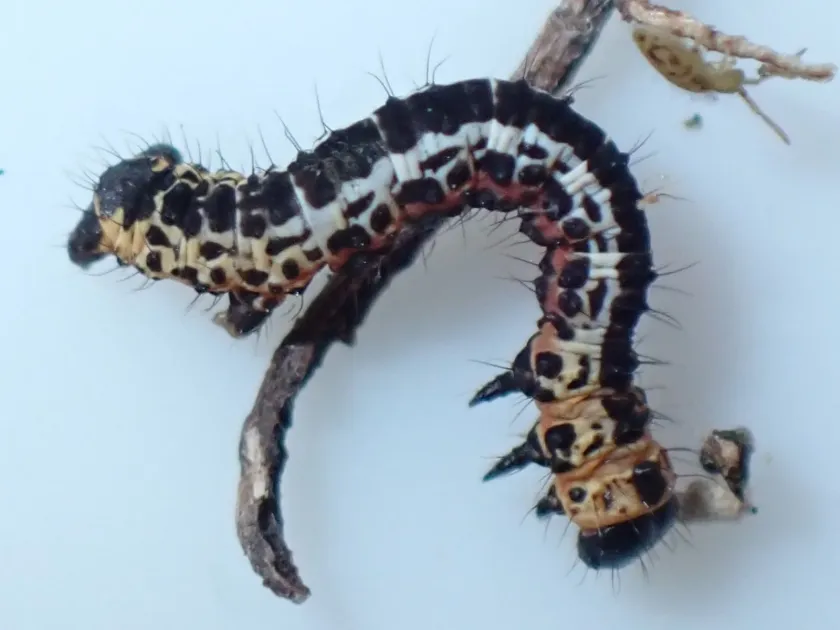
The larvae are approximately 40 mm long and exhibit a striking color pattern featuring black spots and a distinct orange stripe along the back. The pupa is black with yellow rings, often found in sheltered areas near the host plant during the dormant season.
What it damages
This pest primarily attacks berry-bearing shrubs, with a strong preference for gooseberries and various types of currants. In cases of significant infestation, the larvae can cause severe defoliation of the host plants.
The larvae consume leaves, starting by creating small holes and progressing to total skeletalization of the foliage. This heavy feeding pressure weakens the plant's vigor, reduces fruit production, and hinders the development of next season's growth.
When it appears
Adult moths typically fly during the summer months, usually from late June through August. During this period, females deposit eggs on the undersides of leaves, ensuring that the emerging larvae have immediate access to food.
Overwintering occurs as young larvae, which construct protective silken cocoons attached to fallen leaves or twigs. As spring arrives and temperatures rise, they emerge to feed on developing buds and young leaves before entering the pupal stage.
Signs of infestation
Early spring signs include notched or missing leaf edges on newly opened buds. Observing these symptoms early allows for timely intervention before the pest population expands across the entire shrub canopy.
In mid-summer, significant leaf damage is the primary indicator, often accompanied by the presence of silken threads and larval droppings on the leaves. The complete loss of foliage on individual branches is a clear sign that a control program is urgently needed.
Control measures
Cultural control strategies include removing and destroying fallen leaves in autumn to eliminate overwintering sites. Cultivating the soil around the base of the bushes helps expose and kill pupae, effectively reducing the next generation's population.
Chemical control should be implemented using selective insecticides during the early larval stage for maximum effectiveness. Always ensure that the chosen products are safe for local pollinators and are applied according to the manufacturer's recommendations for berry crops.
Taxonomy
- Latin name
- Abraxas
- Order
- Lepidoptera (butterflies)
- Family
- Geometridae
- EPPO code
- ABRXSP
Discussion
No discussions yet — be the first.