
Mottled umber
Agriopis
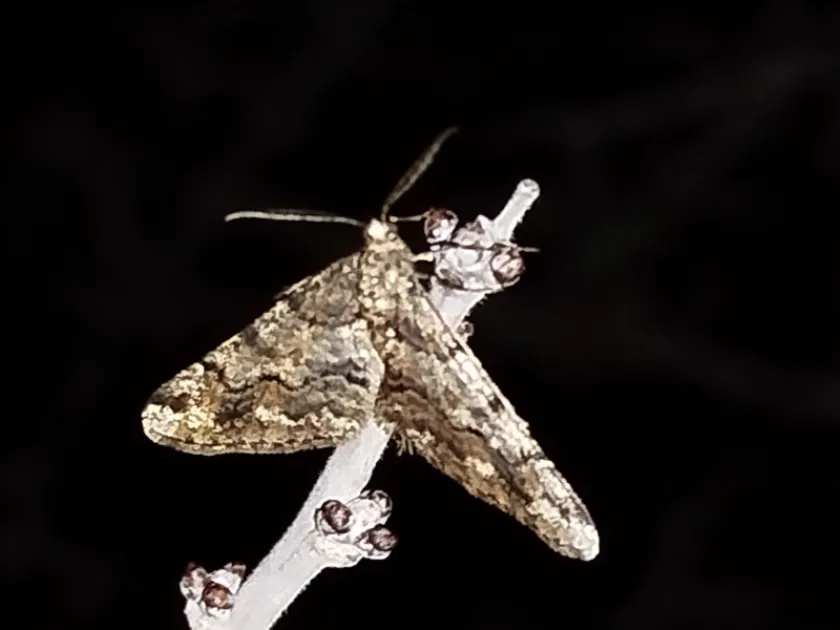
Description
How to identify
The Mottled umber (Agriopis marginaria) is a moth belonging to the Geometridae family. This species displays extreme sexual dimorphism, where males are winged with a span of 30-35 mm, while females are wingless and have a spider-like appearance.
The larvae, known as loopers, typically reach a length of 30 mm. Their coloration ranges from yellowish-green to brown, often featuring subtle longitudinal lines that provide excellent camouflage against tree branches and leaves.
Pupae are found in the soil at the base of host trees. They are chestnut-brown, smooth, and possess a cremaster that anchors them within the soil substrate during the summer dormancy period.
The adult moth is unique for its late-season flight activity. While most insects are dormant, these moths emerge during mild weather in late autumn and early winter to mate and lay eggs.
Eggs are typically deposited in bark crevices or near buds. This placement ensures that larvae are positioned perfectly for immediate access to food as soon as they hatch in the spring.
What it damages
The Mottled umber is a common defoliator in orchards and woodlands. Primary host plants include Rosaceae species, such as apples, pears, and plums, which are economically significant crops.
During the early spring, larvae cause severe damage by consuming developing buds. This activity often destroys the entire potential crop, as buds are hollowed out before they can open.
As larvae mature, they feed voraciously on the foliage. In cases of high infestation, they can cause complete defoliation, leaving only the veins of the leaves, which severely stresses the tree.
The reduction of leaf area hampers the tree's photosynthetic capacity. This leads to weakened growth, poor fruit quality, and increased susceptibility to fungal diseases and winter damage.
In addition to orchard trees, this species is a polyphagous feeder, affecting various deciduous trees like oak, birch, and lime, which allows it to thrive in diverse environments.
When it appears
The species completes one generation per year. The adult flight period occurs late in the year, typically between October and November, depending on the local climate.
The overwintering stage is the egg. Eggs remain on the tree bark throughout the winter, surviving freezing temperatures due to their physiological adaptation and protected location.
Larvae emerge in the spring, coinciding with the bud-burst stage of host fruit trees. This synchronization is critical for the survival of the early larval instars.
The feeding phase of the caterpillar lasts for about 4 to 6 weeks. Once fully developed, they descend to the ground to pupate in the soil by mid-June.
The insects spend the rest of the summer and early autumn as pupae in the soil, awaiting the drop in temperature that triggers adult emergence.
Signs of infestation
The most visible sign of an infestation is the presence of larvae moving in a characteristic looping motion across the leaves during the spring season.
Small silk threads used by the larvae to secure leaves, combined with accumulated frass, are clear indicators of feeding activity in the canopy.
Buds that fail to develop or exhibit uneven, hollowed-out edges are typical symptoms of early larval feeding on fruit trees.
In late autumn, careful inspection of trunks may reveal the wingless females climbing toward the branches to lay their eggs.
Visible patches of thinned or skeletonized foliage across the orchard are indicators of heavy infestations that require management intervention.
Control measures
Implementing sticky bands around tree trunks in early autumn is an effective way to prevent wingless females from climbing to the branches to lay eggs.
Regular cultivation of the soil under the canopy during the summer can disrupt the pupation process and expose pupae to predators.
Biological control using Bacillus thuringiensis (Bt) sprays can be highly effective against young larvae while preserving beneficial insect populations.
Chemical control should be applied based on economic thresholds, typically targeting the period when buds are opening to prevent damage to future flowers.
- Use of pheromone traps for monitoring male flight activity
- Manual removal of egg clusters on small trees
- Encouraging natural bird predators in the orchard
Taxonomy
- Latin name
- Agriopis
- Order
- Lepidoptera (butterflies)
- Family
- Geometridae
- EPPO code
- BGRISP
Discussion
No discussions yet — be the first.