
Magpie moth
Abraxas grossulariata
Description
How to identify
The Magpie moth (Abraxas grossulariata) is a member of the Geometridae family, recognized for its distinct appearance in both adult and larval stages.
Adult moths have a wingspan of about 40–50 mm, featuring white wings with black spots and yellow bands, resembling the plumage of a magpie.
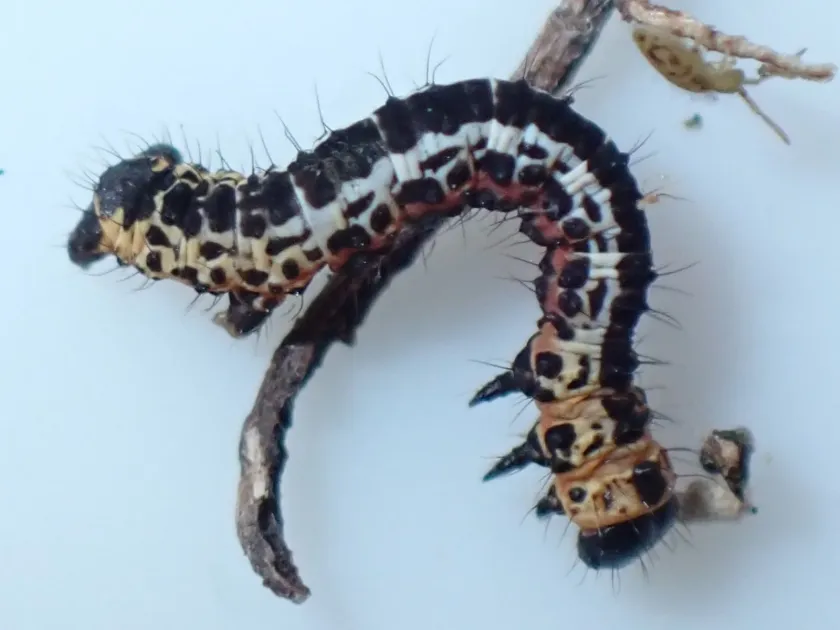
The larvae, known as caterpillars, are cream-colored with bold black spots and a prominent orange stripe along the back, making them highly visible.
These insects overwinter as young larvae in cocoons spun from silk, attached to the leaves and twigs of their host plants.
The life cycle consists of one generation per year, with the emergence of moths occurring in mid-summer after a pupation phase.
What it damages
The primary hosts of the Magpie moth are gooseberry and various species of currants, including black, red, and white currants.
The damage is caused primarily by the caterpillars, which voraciously feed on the leaves of host shrubs during the spring months.
Severe infestations can lead to total defoliation of the bushes, which significantly reduces the plant's ability to produce fruit and store energy.
Weakened plants show reduced growth, diminished winter hardiness, and lower yields in both current and subsequent growing seasons.
While the focus is on leaves, high populations of caterpillars can also damage developing buds and young berries, impacting overall fruit quality.
When it appears
Caterpillars emerge from their winter hideouts in early spring, precisely when the host plant buds begin to swell and burst open.
Active feeding peaks during late spring; once fully grown, the caterpillars pupate in woven cocoons attached to leaves or stems.
The adult moth flight period typically starts in late June and lasts through August, during which time mating and egg-laying take place.
New larvae hatch by the end of the summer, feeding briefly on leaves before creating protective winter quarters for the cold months.
Understanding this seasonal timing is critical for implementing cultural and chemical control measures at the most vulnerable stages.
Signs of infestation
The most evident sign is the skeletonization of leaves, where only the veins remain after the soft tissues have been consumed.
You may spot silk webbing between leaves, which the caterpillars use for both protection and securing their overwintering nests.
The caterpillars themselves are easily detected on the leaves due to their bright, high-contrast coloration throughout the day.
A sudden decrease in foliage density during the late spring indicates an active population of Magpie moth larvae on the site.
Early observation of young caterpillars in late summer helps in preparing control strategies before the primary damage occurs the following spring.
Control measures
Manual collection of larvae is an effective, non-toxic method for home gardens, especially if performed early in the season.
Cultural practices, such as clearing debris and raking fallen leaves in the autumn, help destroy overwintering sites for the larvae.
If the population threshold is exceeded, application of appropriate insecticides is recommended, keeping in mind the safety of pollinators.
- Utilizing biological control agents like Bacillus thuringiensis sprays.
- Promoting natural predators like insectivorous birds and predatory wasps in the garden.
- Ensuring proper plant spacing and pruning to reduce the likelihood of heavy infestations.
Integrated Pest Management (IPM) strategies emphasize combining monitoring with physical and biological control to minimize chemical reliance.
Taxonomy
- Latin name
- Abraxas grossulariata
- Order
- Lepidoptera (butterflies)
- Family
- Geometridae
- EPPO code
- ABRXGR
Discussion
No discussions yet — be the first.