
Xanthorhoe moth
Xanthorhoe
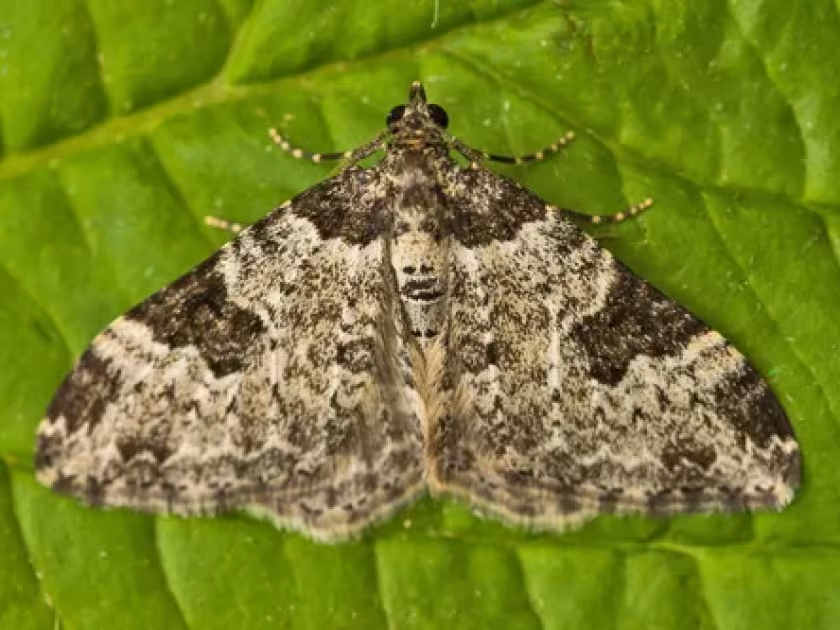
Description
How to identify
The Xanthorhoe moth belongs to the Geometridae family, commonly known as carpet moths, characterized by their diverse and intricate wing patterns that provide excellent camouflage against natural surfaces.
Adult moths typically have a wingspan ranging from 25 to 35 mm, with wing colors dominated by grey, brown, and ochre tones, often featuring complex transverse bands.
The larvae, known as inchworms, possess a distinctive locomotion method, moving by looping their bodies, which makes them difficult to detect as they blend in with plant stems.
The life cycle encompasses a complete metamorphosis: egg, larva (caterpillar), pupa, and adult, with the pupal stage usually occurring in the soil or within debris.
Identification often requires checking the underside of leaves and stems during dusk, as these moths are predominantly nocturnal in their behavior.
What it damages
Xanthorhoe larvae are polyphagous, feeding on a variety of plants, though they show a marked preference for members of the Rubiaceae family and certain wild vegetation.
Caterpillars cause damage by consuming leaf tissue, creating irregular holes, or skeletonizing leaves, which significantly reduces the plant's photosynthetic capacity.
Heavy infestations can lead to severe defoliation, stunted growth, and developmental delays, especially in younger, more vulnerable plants during the peak growing season.
In addition to foliage, larvae may feed on flower buds and emerging shoots, causing physical deformation and potential yield loss in agricultural or ornamental settings.
The cumulative damage caused by multiple generations can weaken the plant, making it more susceptible to environmental stress and secondary pathogen infections.
When it appears
The flight period for adult moths typically begins in late spring, continuing through the summer months depending on local temperature and climate zones.
Larval activity is most intense during early to mid-summer, when temperatures are optimal for rapid growth and frequent feeding cycles.
Depending on the latitude, the species may undergo one or two generations per year, with the second generation often appearing in late summer or early autumn.
Nocturnal behavior makes light traps an effective tool for monitoring adult populations and predicting potential infestation outbreaks in managed areas.
The pupal stage is the primary overwintering phase, during which the insect remains dormant in the soil until environmental triggers signal the start of spring.
Signs of infestation
Early signs of infestation include small, irregular holes in the leaf surface, which gradually expand as the larvae grow and consume more tissue.
Finding the caterpillars themselves is a key sign, especially if they are observed in their resting position—straightened out to mimic small twigs or branches.
The presence of frass (caterpillar droppings) on leaves beneath the feeding sites is a reliable indicator of active larval populations within the crop canopy.
In some cases, leaves may appear curled or webbed together, providing shelter for the larvae during the day to avoid predation and heat exposure.
Visible yellowing or wilting of specific plant parts, occurring without a clear drought-related cause, should prompt a detailed inspection for pest presence.
Control measures
Cultural practices, such as autumn soil cultivation or tilling, are effective in disrupting the pupal stage and reducing the population size for the following season.
Managing weeds, particularly host plants like bedstraw (Galium), is crucial to reducing the primary food source and breeding grounds for the moth.
Biological control, including the use of B. thuringiensis or beneficial parasitoids like Trichogramma wasps, provides an eco-friendly way to manage larval populations.
Chemical control should be used as a last resort, focusing on targeted application of registered insecticides only after exceeding the economic injury threshold.
- Use light traps for seasonal population monitoring.
- Promote biodiversity to encourage natural predators.
- Regularly scout plants for early signs of defoliation.
Taxonomy
- Latin name
- Xanthorhoe
- Order
- Lepidoptera (butterflies)
- Family
- Geometridae
- EPPO code
- XANOSP
Discussion
No discussions yet — be the first.