
Xanthochilus saturnius
Xanthochilus saturnius
Description
How to identify
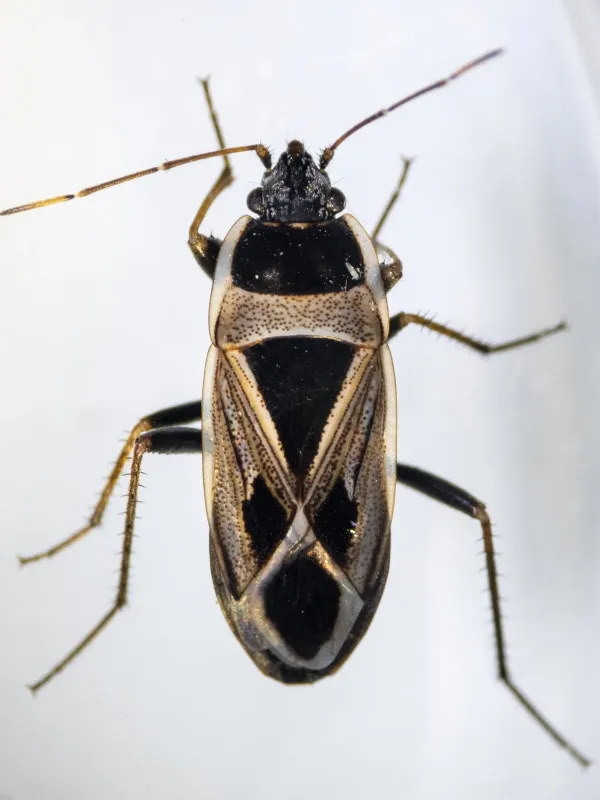
Xanthochilus saturnius is a species of ground bug belonging to the family Rhyparochromidae within the order Hemiptera.
These insects are characterized by their flattened bodies and developed hemelytra, which are typical adaptations for their life in soil litter.
Adults are typically dark-colored, ranging from brownish to black, allowing them to blend into the soil and organic matter environment.
The life cycle involves incomplete metamorphosis, moving from eggs to five nymphal instars before reaching the adult stage.
Entomologists identify this species by examining the specific morphological features of the head, pronotum, and wing membrane venation.
What it damages
This species primarily targets cereal crops, including wheat, barley, and rye, which are vital for agricultural production.
The bug also utilizes wild grasses as alternative hosts, which facilitates its survival throughout the year and population growth.
Damage occurs when the bug uses its piercing-sucking mouthparts to feed on plant juices, specifically targeting the vascular tissues.
In high-pressure scenarios, the pests can migrate to vegetables or forage crops, causing significant yield losses in affected areas.
The most severe damage is observed during the grain-filling stage, which directly impacts the quality and quantity of the harvest.
When it appears
Emergence of overwintered adults typically occurs in early spring as soon as soil temperatures reach an optimal thermal threshold.
Peak feeding and reproductive activity are concentrated in late spring and early summer, aligning with the vegetative stages of cereal crops.
The number of generations per year can vary depending on the climatic zone, often peaking when crops are most vulnerable.
As autumn approaches, adults seek shelter in plant debris, hedge rows, and soil crevices to prepare for the winter hibernation period.
Survival rates during the winter are heavily dependent on the availability of suitable hibernation sites and the severity of soil freezing.
Signs of infestation
The first signs of infestation include the appearance of shriveled and deformed grains within the spikelets during development.
Visual inspection of the stem base may reveal microscopic puncture marks, which indicate where the insects have been feeding.
Affected plants often display chlorotic leaves and reduced vigor compared to healthy plants, leading to patches of stunted growth.
In cases of severe infestation, the ears may become entirely empty, a condition often referred to as whiteheads in cereal fields.
Regular field scouting using sweeping nets is recommended to detect the presence of nymphs or adults before significant damage occurs.
Control measures
Implementing a proper crop rotation strategy is essential to break the life cycle and reduce the population of Xanthochilus saturnius.
Deep autumn plowing is a highly effective mechanical control method that destroys the overwintering sites of the bugs.
Eliminating weeds along field margins and irrigation canals helps remove secondary food sources and reduces overall pest pressure.
Chemical control involving systemic insecticides should be applied based on economic threshold counts during the vegetative season.
Integrated Pest Management (IPM) practices, including the use of pheromone traps if available, help in monitoring and timing the interventions.
Taxonomy
- Latin name
- Xanthochilus saturnius
- Order
- Hemiptera (bugs, aphids, leafhoppers)
- Family
- Lygaeidae
- EPPO code
- XANCSA
Discussion
No discussions yet — be the first.