
Clear-winged grasshopper
Vitrina pellucida
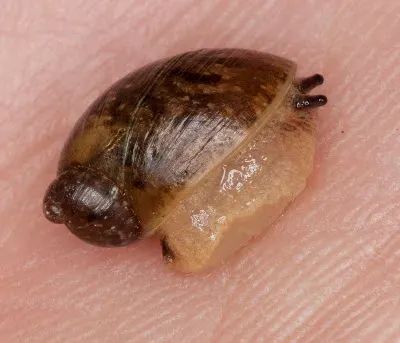
Description
How to identify
The Clear-winged grasshopper (scientifically known as Camnula pellucida, synonym Vitrina pellucida) belongs to the order Orthoptera and the family Acrididae. This medium-sized insect is typically yellowish-brown with dark, mottled patterns on its wings.
The defining feature of this species is the presence of a translucent or clear section on the hind wings, which gives it its common name. They possess powerful hind legs designed for jumping and robust wings that facilitate long-distance flights during migration.
Nymphs, or immature stages, resemble adults but lack functional wings. Their coloration can vary, often adapting to the density of the population or the surrounding environment to provide camouflage against predators.
This species prefers open grasslands, pastures, and agricultural fields. While they can exist in low densities, they have the potential to form dense, swarming populations when environmental conditions trigger their gregarious behavior.
Entomologists identify this species by examining the morphology of the pronotum and the specific venation patterns of the wings. Proper identification is crucial for distinguishing them from other grasshopper species in the field.
What it damages
The Clear-winged grasshopper is a significant polyphagous pest, meaning it feeds on a wide range of plants. It shows a strong preference for cereal crops, including wheat, barley, oats, and rye, which makes it a major threat to farming.
During outbreaks, these grasshoppers can cause devastating losses to pastures, vegetable gardens, and even ornamental plants. Massive swarms are capable of stripping entire fields of vegetation in just a few days.
The insects consume all aerial parts of the plant, including leaves, stems, and seed heads. In severe infestations, even the tougher fibrous parts of the plants are eaten, leading to complete destruction of the crop yield.
The level of economic damage is directly correlated with the population density of the grasshoppers. Even moderate infestations can result in significant yield reductions of 20–30 percent, while full outbreaks can destroy 100 percent of the harvest.
Adult winged individuals pose the greatest threat due to their high mobility. Their ability to migrate across large distances makes it difficult for farmers to predict where damage might occur next.
When it appears
The life cycle of the Clear-winged grasshopper consists of the egg, five nymphal stages, and the adult stage. The species overwinters in the egg stage, which is deposited in the soil within protective egg pods.
Nymphal emergence typically occurs in the spring when temperatures consistently rise. The nymphal development period lasts for 40 to 60 days, during which the insects feed voraciously to reach maturity.
The peak feeding and damage period occurs from June through July. This is when the population transitions from early nymphal stages to the highly destructive adult stage, which is ready for reproduction.
Adults remain active throughout the mid-to-late summer months. This phase is characterized by intense movement and potential migration to neighboring fields, spreading the infestation to new areas.
As summer draws to a close, females begin laying eggs in the soil, usually in areas with firm, undisturbed ground or along fence lines. Once the egg laying is complete, the adult generation dies off, leaving the next generation to overwinter.
Signs of infestation
The first signs of a grasshopper infestation are small, irregular holes or "notches" appearing on the edges of cereal leaves. As the nymphs grow larger, these bite marks become more pronounced and widespread.
A clear indication of high grasshopper activity is the sight of numerous insects jumping away as a person walks through the field. Furthermore, a distinct, buzzing sound can often be heard in areas with heavy infestations.
Affected fields may appear as if they have been mechanically mowed or "stripped" in patches. This is a tell-tale sign that a large colony has been feeding intensely, leaving only stems behind.
The accumulation of grasshopper droppings (frass) on the leaves and soil surface is a reliable indicator of active feeding. These small fecal pellets are easily visible beneath the damaged plants.
Increased activity of birds, particularly predators hovering over specific field sections, often signals the presence of a grasshopper colony. Monitoring these avian behaviors can help farmers locate hidden pest populations early.
Control measures
The primary agronomic control method is deep autumn tillage. By turning the soil, egg pods are exposed to harsh winter temperatures, which effectively kills them and reduces the spring population significantly.
Chemical control involves the application of registered insecticides effective against orthopterans. It is highly recommended to apply these treatments during the early nymphal stages when the insects are most susceptible.
Regular field monitoring using counting frames is essential for success. This practice allows farmers to detect pest thresholds early and perform targeted treatments, preventing the need for broad-scale spraying.
Biological control, such as using entomopathogenic fungi or supporting natural enemies like birds and parasitic wasps, can help manage populations in an environmentally friendly manner.
- Deep autumn plowing to expose eggs.
- Systematic field monitoring for nymphal stages.
- Application of approved insecticides at economic thresholds.
- Maintenance of clean field margins to limit breeding sites.
- Use of biological control agents where appropriate.
Taxonomy
- Latin name
- Vitrina pellucida
- Order
- Molluscs
- Family
- Vitrinidae
- EPPO code
- VITRPE
Discussion
No discussions yet — be the first.